

AI & THE SURVEILLANCE STATE
Example China
A creepy reality coming to the city near you
[ Disclaimer: This review has been researched by Claude, the AI from Anthropic, with mayor editing by me to reduce length and improve readability. ]
There is a scene playing out in cities across China every day.
A driver runs a red light. Before they reach the other side of the intersection, a camera has captured their face, matched it to their national ID, deducted points from their personal profile, and sent a text message to the relevant authorities.
The whole sequence takes under two minutes.
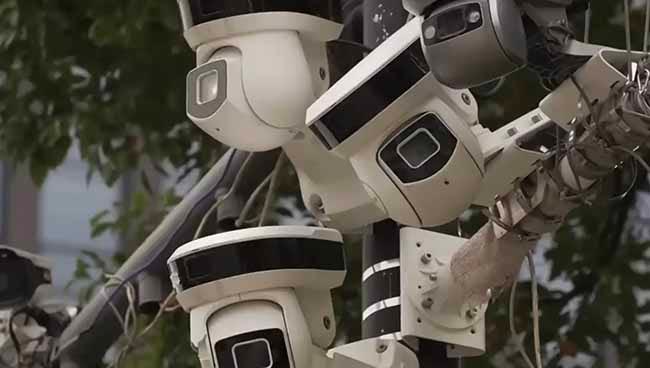
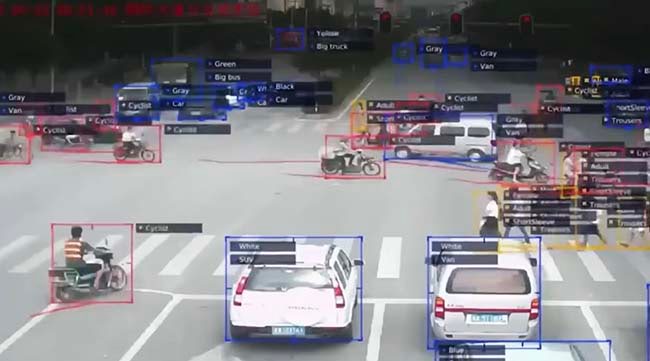
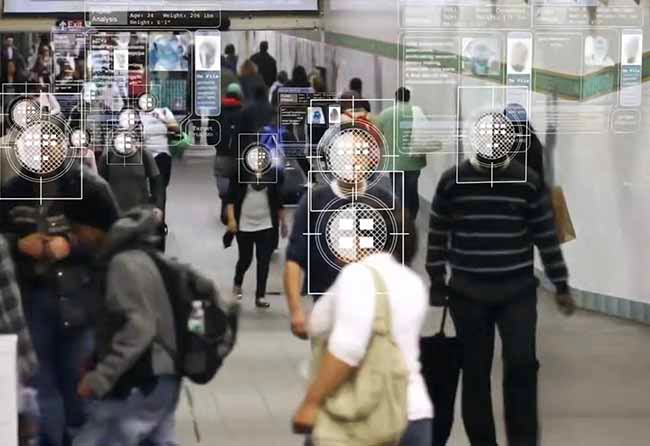
This is not science fiction. It is current infrastructure. And it is expanding.
What China Has Actually Built
China operates an estimated 600 million surveillance cameras.
Estimates suggest there are roughly 2 million surveillance cameras in the “smart city” of Shenzhen, the mayor Tech hub in China. This makes it one of the most heavily monitored cities in the world, averaging about 159 cameras per 1,000 residents.
This vast network includes public Skynet systems, AI-enabled facial recognition hubs, traffic monitors, and private security systems across the city’s commercial and residential areas.
Many are equipped with AI-powered facial recognition capable of identifying individuals with 98.5% accuracy. The system is not a single unified database but an interconnected web: cameras, financial transaction records from mandatory digital payment platforms like Alipay and WeChat Pay, internet behavior monitored through the national firewall, and social media activity — all feeding into what is called the Social Credit System.
The 2025 update to China’s Social Credit framework formalized cross-ministry data sharing.
A company or individual flagged for a tax violation, a labor dispute, or an environmental infraction is now automatically flagged across all other government systems simultaneously.
A bad score in one area blocks access in others: travel restrictions, loan eligibility, school enrollment for children, eligibility for government contracts.
Mandatory use of digital payment platforms creates a complete financial transaction history, linking every purchase to identity and location.
Over 27 million travel restrictions have been imposed on blacklisted individuals.
The system extends to experimentation with emotion recognition in schools and workplaces — AI attempting to detect whether someone is frustrated, distracted, or, by the system’s definition, dishonest.
In Hangzhou, the city’s AI platform analyzes traffic, social behavior, and emergency incidents in real time.
Efficiency gains are real. So is the integration of that data into social credit calculations.
In August 2025, a Chinese university proposed using OpenAI’s GPT models as a reasoning tool in a system to predict “social governance incidents” based on an individual’s personality traits, long-term emotional states, and exposure to what the system defines as “negative cultural influences.”
A private company in Shenzhen has proposed using Meta’s open-source Llama model to monitor social media for negative sentiment towards the government as an urban safety tool.
What it points at is a state with the technical capacity for comprehensive behavioral monitoring of its population, and the explicit intention to use that capacity to shape the behavior of its citizens.
The problem of exporting Surveillance Technology
The more consequential story may not be China’s domestic surveillance – after all, China is a one-party authoritarian state – but the export of its surveillance technology into the wider world.
Through the Belt and Road Initiative and bilateral commercial agreements, Chinese AI surveillance infrastructure — cameras, facial recognition software, network equipment, and the accompanying technical standards — has been installed across Africa, Southeast Asia, Central Asia, Latin America, and Eastern Europe.
Over time, recipient countries find themselves locked into Chinese technical ecosystems that are difficult and costly to replace..
Researchers have found that China exports AI surveillance systems to autocratic states and weak democracies disproportionately, and that these regimes are more likely to import these technologies during periods of domestic unrest and increased repression.
The technology follows the need for control.
What This Means for us
The tools for comprehensive population surveillance now exist, are affordable, and are being deployed at scale by governments that have explicitly stated their intention to use them for social control.
The same technology that makes a city’s traffic flow more efficiently can, with a policy decision, be redirected toward monitoring political dissent.