
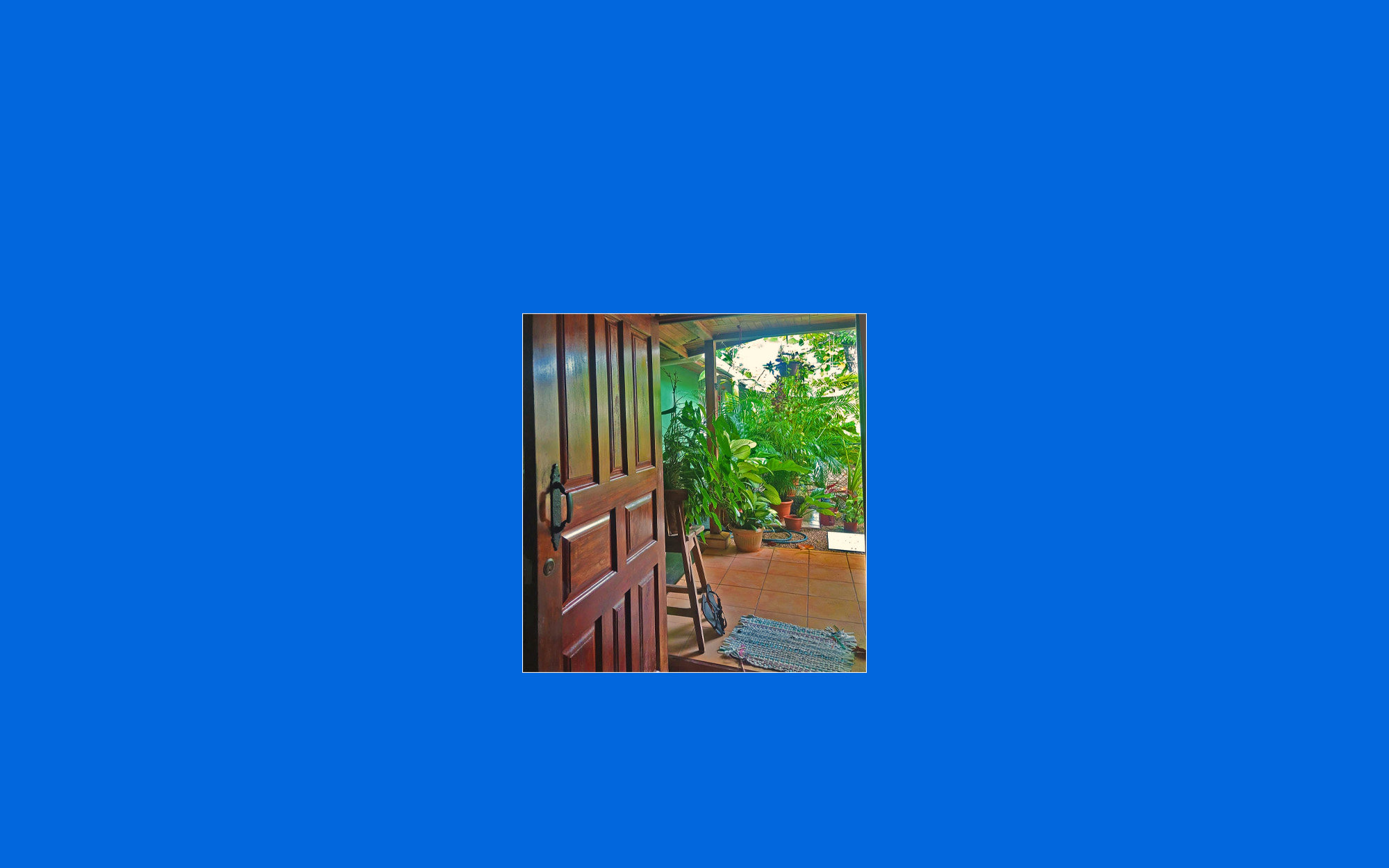
Aloha
To live with my doors wide open
This is my metaphorical reality
~
~~
~
My little house has a nice wooden door
A solid one
Yet I choose to live with my doors wide open
They say I should be careful
and not such a fool
One day I might get robbed
or killed in my sleep
They say
You gotta secure yourself
Or you might get mugged
The stock market may crash
your Bitcoin account hacked
Your bank may default
Or you might loose your wallet
Or a bomb could fall on your head!
“Just shut your doors, in god’s name!”
“Protect yourself, for heavens sake!”
I know they are right
In their own little ways
But I still live
With my doors wide open
I like it that way
Eyes wide open
So I might see what I need to see
I like it that way
Mind’s wide awake
For the insights that come to hit me in the face
I like it that way
Heart’s wide open
For a fellow traveller to walk in
Aloha
Welcome
My house is your house
“In lak’ech”:
I am another you
“Hala ken”:
You are another me
You are another me
I am another you
I am another you
You are another me
I like it that way
Front door open
Back door open
You are welcomed to come
You are welcomed to go
Namaste
I bow to the Wholeness in You
I greet God in You
~
~~
~
“In lak’ech, hala ken” is considered a Mayan way of greeting.
“In lak’ech” means “I am another you,” and the response “hala ken” means “you are another me”. This greeting expresses unity and oneness, and the expression is often compared to “Namaste.”
“Namaste” is a greeting from India and South Asia that can be translated as “I bow to you” or “the divine in me honors the divine in you”. It is used to say hello and goodbye, and to show respect. The word comes from the Sanskrit words namaḥ (“bow”) and te (“to you”).
“Aloha” is the Hawaiian word for love, affection, peace, compassion and mercy, that is commonly used as a greeting.
It can be used to welcome or bid farewell to someone also. It has a deeper cultural and spiritual significance for native Hawaiians, who use the term to define a force that holds together existence.
Aloha is also considered central to the traditional Hawaiian practice of hoʻoponopono.
Hoʻoponopono is a traditional Hawaiian practice of reconciliation and forgiveness.
Similar forgiveness practices are performed on islands throughout the South Pacific, including Hawaii, Samoa, Tahiti and New Zealand.
Traditional hoʻoponopono is practiced by Indigenous Hawaiian healers, often within the extended family by a family member.
From Wikipedia
~
~~
~
Consider The Lilies
Faith
And the folly and the wisdom of an unsecured life