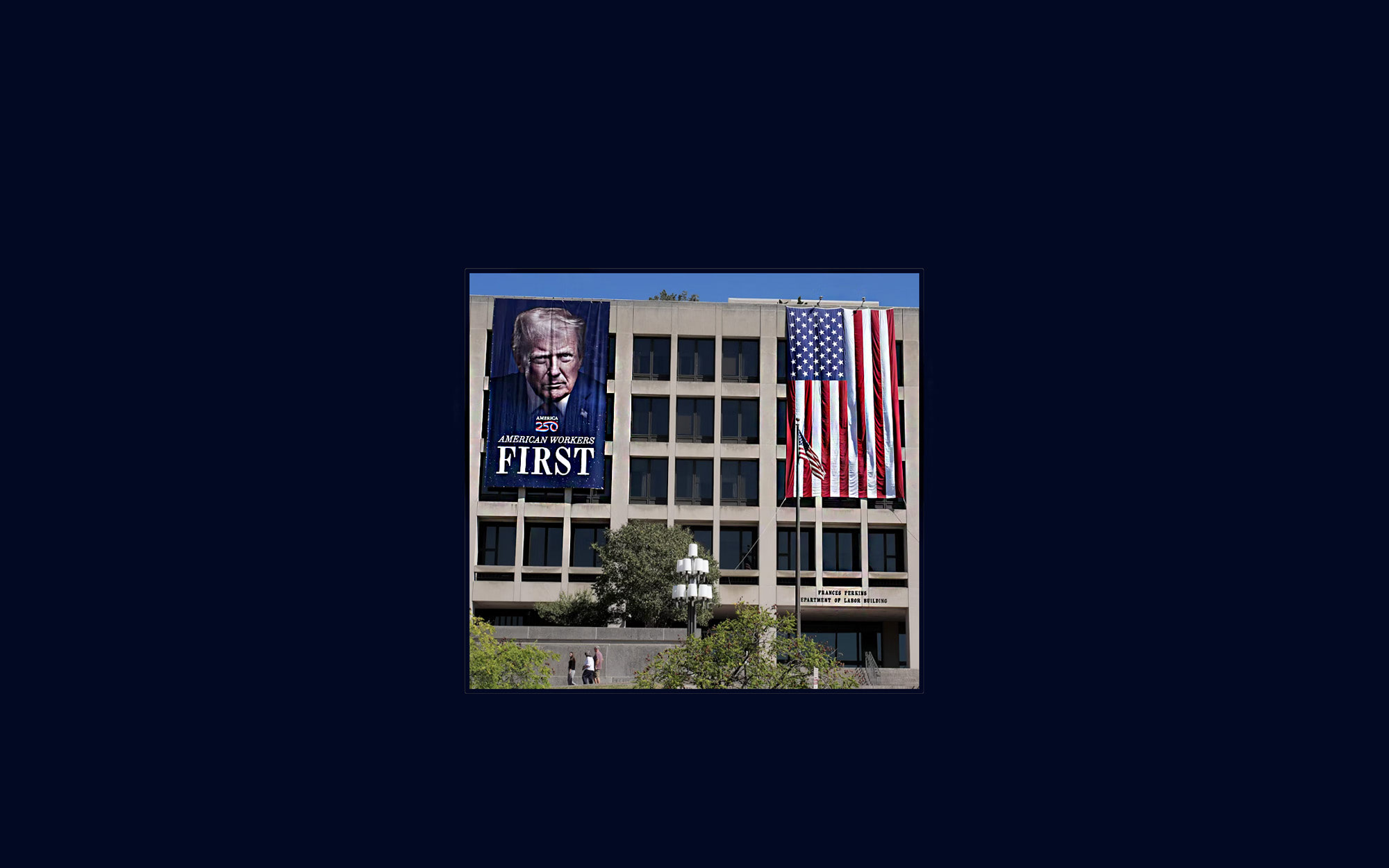
Archetypes of unrestrained cruel power
Trump and Hitler
seen thru C.G. Jung’ teaching on Archetypes
[Press PLAY to listen to a reading of this article.]
When i got into my teenage years in the early 60s, talk about Hitler was a bit of a unacknowledged taboo in our family, a “hush hush” when i tried to ask about their experiences in the war and such.
Only much later on did i understand the unresolved inner drama of my parent’s generation, that stemmed from the absolute cruel, and absolute manipulative power of Hitler’s “Third Reich”.
Now, its 2025, they are all dead and i live far away in Costa Rica. Why on earth i would I want to even think about a monster like Hitler?
The answer is simple:
– The unstoppable rise of populist politicians, authoritarian heads of state and even dictatorial leaders and state systems that i witness over the recent 10 years make me very sensitive to such ugly smells.
– The clear and present danger of a person like Donald Trump on the helm of the – still – most powerful and influencial nation on earth – the USA – makes it necessary for me to look at the deeper level of this trend:
The lure of the Strongman Leader, the Führer.
[ Declaration: i have not studied the history of the Third Reich and the history of the political system of the United States since the Civil War in any academic or scholarly fashion. I base my contemplation on documentaries, on regular reading of quality newsmedia as well as conversations with people “on the ground”.
Obviously also on my own discernment, analytical ability and intuitive knowing.
Since i intend to view this issue thru the lens of Archetypes and Carl Jung’s analysis of Hitler and the Third Reich, i want to say that i am not a trained Jungian analyst. But i have read enough of Jung’s books to understand all the important elements of his teachings. ]
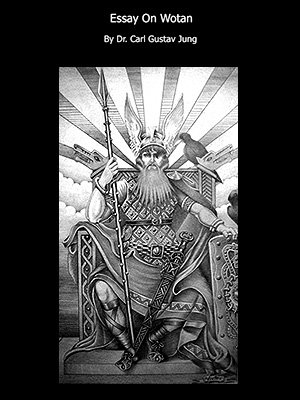 I have stumbled upon Jung’s writing about the “Wotan Archetype” and it made me understand a lot about my father and the whole story of the German and Austrian people in the Third Reich.
>> Download: On Wotan – by C.G. Jung
Trumps coming into power again in 2025 and his blatant show of disruption and hunger for power and revenge is deeply concerning me. Even more worrying is what i see happening in the US society now every day, a seemingly unstoppable march towards an authoritarian kind of a nation.
By doing this contemplative analysis I hope to gain a perspective that goes deeper than simply a political analysis or a psychological understanding of those two individuals. I also wish to find a deeper understanding of the forces that are in play in the context of humanity’s collective consciousness and evolution.
I am already sweating while i am formulating my intent! What have i gotten myself into here!
~~~
Archetypes of unrestrained power – Hitler and Trump.
Through the lens of Jungian Psychology about Archetypes I want to look at those two figures whose presence shook their worlds and still does—Adolf Hitler and Donald J. Trump. They are separated by time, culture, and circumstance, yet both stepped into roles larger than themselves. They did not just lead; they became symbols, channels through which deeper forces spoke/speak.
It is about seeing how both men tapped into archetypal energies rising from the collective unconscious. Jung had words for things like that:
shadow, projection, possession, ego-inflation.
He warned long ago: when societies lose consciousness, they do not produce wise leaders. maybe even produce monsters.
Germany after the First World War was humiliated, broken, hungry for a story to redeem itself. America in the 21st century is restless in a different way—fragmented, polarized, drowning in media and spectacle. Both climates gave birth to archetypal figures.
Hitler was swallowed whole. If you see him speak, even on film, it is obvious that he became the Wotan archetype—a storm-god’s mask, the nation’s suppressed unconscious embodied.
Trump is different. He plays with the archetypes. He uses them like costumes—the warrior, the savior, the persecuted king, the good dictator. He never dissolves into them. He holds the strings, polishes the mask, and performs.
Hitler became the myth; Trump plays and manipulates with myth.
Jung’s Depth Psychology Framework
My understanding of Jung’s psychology gives me some basis for this inquiry. Beneath the personal unconscious, he said, lies the collective unconscious—a reservoir of inherited images, archetypes, universal patterns. They show up in dreams, myths, and, at times, in the mass movements of nations.
When not integrated consciously, these forces drive and sometimes overwhelm the ego. They seize people. They seize leaders. Jung called such figures “men without a self”—mediums through which archetypes speak. Hitler was such a man. Jung saw him as an empty vessel overtaken by Wotan. Not thinking, but unconsciously obeying.
It is important to understand Jung’s perspective of “the shadow“. This simply means, that what a person—or a nation—cannot admit, it projects outward.
Hitler became the carrier of Germany’s shadow: rage, inferiority, vengeance. Jews and other minorities became the screen for this projection, the “Other” that had to be purged.
As an antidote, the medicine against this, Jung proposed individuation: the painful process of integrating shadow, resisting inflation, becoming whole.
But Hitler embodied the opposite. He was inflated, possessed, dissolved into myth. Trump too shows inflation—but in the form of persona, not possession. He plays the part without the inward struggle.
—
Hitler as Archetypal Vessel
To see Hitler through Jung’s eyes is to see a man emptied of himself, filled instead by an ancient god. Jung wrote of Wotan—the storm-god, the frenzy, the destructive inspiration of war—awakening in the German soul. Hitler was its instrument.
He did not think; he obeyed. He spoke as if possessed, and the nation followed, swept into the same current. His ego dissolved into a mythic figure, indistinguishable from the “destiny” of Germany. In Jung’s language: he ceased to be an individual and became an archetype in action.
The shadow projection was total. Germany’s unacknowledged chaos was projected onto Jews, Roma, Slavs, the “impure.” The Holocaust was not just politics gone mad—it was myth turned monstrous, blood demanded by the unconscious god Wotan.
Germany itself was possessed. The torchlight rallies, the swastika, the chants—ritual enactments of archetypal frenzy. Jung saw it as a nation in trance, dreaming with open eyes, overcome by forces it had not integrated.
—
Trump as Persona and Projection Surface
Trump, in contrast, did not dissolve (yet). He built himself as a mask. A curated persona amplified through media. He is the patriarch, the disruptor, the trickster, the savior—depending on the day. He thrives on projection: people see in him what they want, or what they fear.
Where Hitler embodied myth, Trump performs it. His medium is not the storm-god but the screen. Twitter, TV, Truth Social, rallies—these are his stages. He senses what his base craves and delivers it in archetypal shorthand: “Only I can fix it.” “We fight like hell.” “You’re fired.” “Lock her up.”
He does not reflect inwardly. No individuation, no confrontation with the shadow. His ego inflates instead, defended by denial and spectacle. Deflect. Distrackt. Attack.
Archetypes are not integrated, only brandished. He is not overtaken by myth, but he uses fragments of it that he waves around at rallies, before the cameras.
—
Both Hitler and Trump drew power by embodying—or manipulating—archetypes during times of crisis. Both became channels for unconscious energies. Both offered mythic narratives of purity, restoration, destiny.
Hitler’s mythic possession unleashed world-shaking violence. Trump, bound by democratic structures and media’s churning wheels, bullies, threatens, destabilizes but does not annihilate. His power is episodic, opportunistic, and mediated by screens.
—
What are the consequences for society, when such kind of leaders are in power?
Jung warned that Archetypes rise in times of fear and fracture, shaping movements more than policies do.
People regress. They project shadows. They long for saviors. Leaders inflate, fed by mass psychology. Institutions bend under mythic urgency. This is how Weimar collapsed. This is how the institutions of America’s democracy are now tested every day.
The cure, the medicine, the potential healing according to Jung, is individuation, the becoming conscious of shadow aspects. Leaders must resist inflation, confront their shadows, integrate unconscious drives.
Citizens too must see their role in projection. Without such psychological growth, democracy is fragile. It becomes a theater for archetypes rather than a deliberate structure for freedom and cooperation.
—
I believe that a modern Democracy depends:
– not only on agreed-upon laws but on consciousness,
– On leaders who have integrated their shadows.
– On citizens who can think for themselves, who can see through projection.
– And who are willing to collaborate.
Without this, the cycle repeats—new vessels, new myths, the same old possession by unconscious forces.
Jung gave us a psychological map to follow. If we want to resist mass regression, we must walk that path inward—to individuation, integration, and wholeness.
Otherwise, the archetypes will return, demanding their due.
And history will be destined to repeat itself.
~
~~~
~
Now, to bring this article to a close – no conclusion, since Jung is all about process, not goal – i will attempt a quick intuitive analysis of America’s shadow aspect.
Let me say that i love many aspects of the American Soul and the land and the Ancestors. Many important impulses in my life have come from this nation.
Nevertheless, recently – with Donald Trump being the perfect example of “The Ugly American” – i have become rather critical and even harsh, whne it comes to “those gringos from up north.”
😎
America’s Shadow – a draft analysis:
Historically, the shadow of the United States of America is built on dissonance: a nation that declared itself (Statue of) Liberty’s bright light while it exterminated indigenous peoples and chained millions in slavery. The myth of exceptionalism was born joined by the hip with genocide and servitude.
That contradiction has never been acknowledged, metabolized, integrated; it remains buried, denied, projected outward—onto enemies foreign and domestic. That is why America oscillates between the language of freedom and the practice of domination.
At its core, America’s shadow arises from its dominant persona: bright, confident, moralistic, exceptional. This self-image of superiority creates a correspondingly dark, unconscious counterpart. The more America insists on its virtue, the darker the hidden shadow grows.
Traits of the Shadow
– A refusal of introspection, leading to projection of unacknowledged flaws onto outsiders.
– Mistrust of intuition and feeling, producing rigid, materialistic, and often violent responses to problems.
– A tendency to moralize, judge, and force others into its mold while failing to examine its own actions.
– Denial, which blocks change, allowing unconscious drives to dominate collective behavior.
Historical Expressions
– Genocide of Native peoples, slavery, broken treaties—proclaiming liberty while enacting oppression.
– Wars framed as liberation that masked domination, from the Philippines to Vietnam to Iraq.
– Exceptionalism—claiming moral leadership while exempting itself from its own standards.
Contemporary Expressions
– A political and economic system tilted toward wealth and power, eroding democracy into plutocracy.
– Health care and social structures run as business ventures, devaluing care and compassion.
– Consumerism, addiction, and materialism as compulsive substitutes for inner meaning.
– Violence normalized—in culture, policy, and incarceration.
Psychological Dynamics
– A culture and way of life that is outward, pragmatic, rationalizing, efficient—yet suppressing inward reflection, ambiguity, and feeling.
– This creates a compensatory shadow that is intuitive, inward, feeling-based—qualities the culture represses and projects as weakness or threat.
– By denying its flaws and projecting them outward—onto enemies, immigrants, minorities, or adversaries—America avoids self-confrontation.
Consequences
– The shadow becomes pathological: collective neurosis, addictions, violence, gun culture, hypocrisy.
– Denial of shadow prevents growth, keeps democracy brittle, and fuels cycles of projection.
– Exceptionalism intensifies the problem: the brighter the self-image, the darker the shadow, and the more dangerous the eventual backlash.
~
~~
~
I imagine that good old Carl Gustav (Jung) would sum it all up like that:
A one-sided nation that refuses its shadow invites a sudden, compensatory reversal. The unconscious will force balance, often violently, if not addressed consciously.
America’s vulnerability is not only external but internal: an astonishing weakness against collective possession.

By now, most of the original dwellers of this land are long dead and gone, and the voices of Native American Elders easily forgotten. We have not much of a written record that could still tell us of their wisdom.
But here are a few quotes that have been preserved. Maybe America should start listening again to such voices from people that have lived on this land for longer than most can imagine.
“Humankind has not woven the web of life. We are but one thread within it. Whatever we do to the web, we do to ourselves. All things are bound together. All things connect.”
– Chief Seattle, Duwamish
“I do not think the measure of a civilization is how tall its buildings of concrete are, but rather how well its people have learned to relate to their environment and fellow man.”
– Sun Bear, Chippewa
“Only when the last tree has been cut down, the last fish caught and the last stream poisoned, will we realize we cannot eat money”
– a Cree proverb
“We will be known forever by the tracks we leave”
– a Dakota proverb
“Honor the sacred. Honor the Earth, our Mother. Honor the Elders. Honor all with whom we share the Earth:-Four-leggeds, two-leggeds, winged ones, Swimmers, crawlers, plant and rock people. Walk in balance and beauty.”
– Native American Elder