

Love
~
Part 2
The Heart
~
The Heart as the Seat of Love
Anahata – the Heart Chakra
The Chakra System, Subtle Energy Vortexes, Vibrations and Frequencies. Nada Brahma, the World as Sound.
~
The Heart as Anchor Point and Passageway to the Soul
~
A contemplation on the many Ways of Love
~
~~
~
Where to start? I know where we ended in Part 1, The human-kind of Love. We ended with “agape”.
agápē
The highest level of Love we human beings may attain is agape, an ancient Greek word that I love very much. It sounds like a clear bell in my mind.
Agape refers to a pure, unconditional, and selfless love. It is love that’s not based on attraction, merit, or reciprocation.
Agape is not merely an emotion, it is also an act of the will. It involves choosing to love, even when it’s difficult or when the other person may not be deserving of it. It is often expressed through acts of selfless service, compassion, and sacrifice.
Agape sees the highest potential in the other person and seeks the highest good and well-being for him, her or it, regardless of their actions or character. It’s a love that gives without expecting anything in return.
In Early Christianity, agape has also been called Divine Love. The word is used to describe the love of God for humanity.
mettā
In the Pali Canon – the earliest teachings of the Buddha – God is not really mentioned, Buddha was silent about God and metaphysical questions. But he emphasized the practice of Universal Love, called mettā in Pali language.
Mettā translates to all-inclusive love, loving-kindness and universal benevolence. It is a core concept and practice within Buddhist philosophy as well as a Meditation technique as well as an active practice in everyday life.
Mettā is an expansive and unconditional goodwill towards all beings, without distinction. It’s a warm, benevolent attitude, wishing well-being and happiness for oneself and others.
The practice of mettā involves actively cultivating an attitude that is free from anger, hatred, resentment, and ill-will. It means letting go of negative emotions that arise in relation to others.
In mettā meditation practice I am reciting heartfelt wishes such as:
“May all beings be happy. May they live in safety and joy… . May they all be happy.”
In essence, mettā is about developing a boundless heart that genuinely wishes for the well-being and happiness of all, seeing interconnectedness rather than separation.
I would say, let’s bring some more mettā into our world and some agape on top of that! ; )
~
~~
~
The Heart as the “Seat of Love”
I think every child knows that when it comes to love, the heart is involved… somehow.
We feel warmth and elation in our chest when we are in love.
Our heart breaks when our lover leaves us.
We grieve for our much-loved pet.
These may not be the highest forms of love yet, but they clearly point to the central involvement of the heart in the affairs of love.
In my view, it is not really our physical heart—our faithful blood pump—that we are talking about, but “the metaphorical heart.”
Many language idioms and common expressions use the word “heart” to convey a range of emotions and characteristics—from sincerity and kindness to sadness and determination.
I think of some of my favorites like: “follow my heart,” “heart of gold,” “I wear my heart on my sleeve,” “heartwarming,” and so on.
Positive Emotions and Characteristics:
• Follow your heart: To act according to your emotions and desires.
• Have a heart of gold: To be kind, generous, and compassionate.
• Heartfelt: Sincere and deeply felt.
• Heartwarming: Uplifting and comforting.
• Have a heart: To be kind, merciful, or reasonable.
• Heart and soul: To put all your energy and enthusiasm into something.
• From the bottom of one’s heart: To express something with utmost sincerity.
• Have your heart in the right place: To have good intentions.
• Take heart: To be encouraged or feel hope.
• Heart to heart: A sincere and intimate conversation.
Negative Emotions and Characteristics:
• Break someone’s heart: To cause deep sadness or emotional pain.
• Eat your heart out: To be envious or jealous.
• Heavy heart: Feeling sadness or grief.
• Hardhearted: Showing no sympathy or compassion.
• Take something to heart: To be deeply affected or upset by something.
Diverse other meanings:
• Change of heart: To change your opinion or feelings.
• Cross my heart: A promise to tell the truth.
• Wear your heart on your sleeve: To openly display your emotions.
• In a heartbeat: Immediately.
• Know something by heart: To know something from memory.
• Get to the heart of the matter: To understand the most important part of a situation.
• Pour your heart out: To express your feelings openly and honestly.
• Set your heart on something: To want something very much.
• Have your heart miss/skip a beat: To be startled or surprised.
• Tug at your heartstrings: To evoke strong emotions, often sadness.
From an esoteric and spiritual perspective, we are not talking about the physical heart—or even about “heart” in a metaphorical sense. We are actually talking about the Heart Chakra.
For the sake of clarity, in this article I will try my best to indicate such subtle distinction in this way:
– “heart” – meaning the physical heart.
– “Heart” – when i want to indicate a metaphorical meaning.
– “Heart Chakra or Heart Center” – indicates the metaphysical realities, the subtle energy vortex of the auric realm. Invisible to the human eye but perceivable to clairvoyants, advanced Reiki practitioners and energy healers.
The notion of an actual chakra system is common knowledge in Eastern traditions, as well as in some Western esoteric schools. Obviously, such a view is not acknowledged by traditional Western science—for various reasons.
Mainly focused on exoteric phenomena and what can be measured in some way, scientists generally dismiss the existence of subtle energy bodies: etheric, astral, mental, soul, and spirit bodies permeating our physical body. The whole invisible anatomy of us!
Invisible indeed to our eyes and most technical instrumentation—with the rare exception of Kirlian photography. But for folks who have clairvoyant sight, the aura is a fact. They can perceive the subtle realm with “inner eyes” and communicate such extrasensory perceptions in accurate language.
To my knowledge, Rudolf Steiner was one such extraordinary clairvoyant, way back in the 1920s. More about him later in this article.
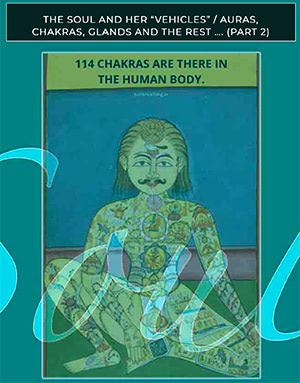
In Hindu texts going back to the early Vedas, the subtle bodies of the auric field have been described and mapped in great detail—along with the system of chakras connecting those interweaving energy fields.
If you’re interested in this topic in more detail, have a look at this blog post that I wrote a while back:
The soul and her vehicles – auras, chakras, glands and the rest.
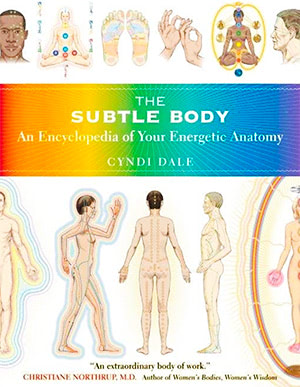 You are also welcome to download this comprehensive book that goes into great detail about everything related to the subtle energy anatomy of us humans:
The Subtle Body – An Encyclopedia of Your Energetic Anatomy.
Now, for this article about Love, I will try to focus on the Heart Center, the Heart Chakra in the center of our chest. Also called Anāhata
Anāhata, in Sanskrit, is the fourth primary chakra according to Hindu Yogic, Shakta, and Buddhist Tantric traditions. Known as Qalb in the Sufi tradition of Muslim mysticism, where the Heart is seen as the center of the human personality..
Metaphysics and esoteric teachings speak about this etheric energy vortex as the “Seat of Love” in a human being. It is also seen as the connector of our subtle energy system—our auric bodies—with the higher realms of soul and spirit.
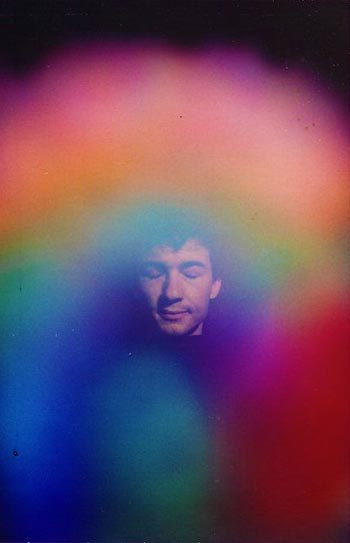
Inside this chakra, the phenomena of love extends into the realm of energetic vibrations.
When the Anāhata Center is activated and balanced, it enables us to freely give and receive Love energy—fostering compassion and healthy relationships.
For someone with clairvoyant sight, this exchange of “Heart energy” can be perceived as literal streams or waves of green and hues of pink energy—exchanges that can be actively directed by intent.
~
~~
~
New Age sound therapists on YouTube claim that each chakra resonates with specific frequencies. The Heart Chakra, they say, vibrates at approximately 528 Hz—widely known as the “miracle tone” or “love frequency” on the so-called Solfeggio scale.
I am actually not prone to believe everything that people claim—especially not in the context of unfounded New Age-y hype—but I am always open to explore and investigate, and to use my own system as the guinea pig for experimentation… fine-tuning my own psycho-somatic perception of vibrations.
Once upon a time, way back, I experimented quite a lot with chanting certain old mantras, as well as with Tibetan and crystal singing bowls and electronic sound generation—making my Heart Chakra resonate by singing aaaaaaa-sounds until I fell off the chair. 😉 Kidding! 😉
You’re welcome to try that for yourself [here].
Singing Bowls and Tibetan Standing Bells
Tibetan Standing Bells and Singing Bowls come in many sizes and intonations and are used in some Buddhist religious practices to accompany periods of meditation and chanting. They are often played by striking the bowl but also can be played by rotating a suede covered mallet around the outside rim to produce a sustained musical note.
Nowadays Singing Bowls are widely used for music making, meditation and relaxation, and have become popular with music therapists, sound healers and yoga practitioners.
Crystal Singing Bowls
Crystal singing bowls are sound instruments crafted from quartz crystal, known for producing pure, sustained tones used in practices like sound baths and meditation. Crystal Bowls are made by heating and shaping quartz silica sand and can be fine tuned to specific frequencies, which makes them useful for vibrational healing purposes. Unfortunately very expensive, they have become quite commercialised in New-Age circles.
My experience with Crystal Singing balls: I loved them very much, but they are very easy to break! And breaking they did! So now, they are no more 🙄.
Electronic Pure Sine Wave Generators
I have used such devices to make ambient music as well as investigate the effects of pure sound and specific frequencies on my psychosomatic system. Sine waves are the most harmonious mathematical forms of waves and the electronic generation makes it possible to fine tune the frequencies over a vast spectrum.
Electronic pure sine wave generators, particularly those producing the Schumann resonance frequency of 7.83Hz, are sometimes used for vibrational healing applications, with the aim to promote relaxation, reduce stress, and improve sleep quality.
This App invites experimentation!
Solfeggio frequencies
Solfeggio frequencies are a set of six or nine musical tones believed to have healing properties, often associated with spiritual and emotional benefits. These frequencies are rooted in the ancient Solfeggio scale, which was originally used in music education.
The history and origins of Solfeggio Frequencies.
Solfeggio frequencies are actively incorporated into various contemporary sound healing, meditation, and personal well-being practices. Common applications include listening to music specifically tuned to these frequencies, utilizing tuning forks, and participating in sound baths. People often use these practices with the intention of promoting relaxation, reducing stress, fostering emotional balance, and enhancing spiritual connection.
The Internet and especially YouTube is full of videos claiming all kinds of extraordinary “over the top” effects in connection with those frequencis, so a great amount of discernment is recommended.
As always, my attitude is to hold anything possible as a hypothesis. But then i check with my own intuition, my common sense as well as doing my intellectual due diligence—internet background check—instead of blindly believing such claims.
~
~~
~
Whatever instruments of investigation we may use—musical instruments, organic sounds, electronic frequency generators or our own body and voice—the fact is that waves, vibration, and sound is something very essential at the core of reality. We may only “hear” or perceive a tiny tiny fraction of the whole spectrum of vibration, but for me this is very clear:
The World Is Sound
Nada Brahma
Here are a few aspects of Nada Brahma. You. may want to download the classic book The World Is Sound by Joachim-Ernst Berendt.
 Sound as the Source:
Nada Brahma posits that the universe, at its core, is a manifestation of vibrations and sound. It’s not just about auditory experience, but about understanding that every being, thought, and emotion is a frequency in the grand cosmic symphony.
Vedic and Yogic Roots:
The concept is deeply rooted in Vedic philosophy and yogic traditions, where sound is viewed as a creative force and a means to connect with the divine.
AUM/Om:
The sacred syllable AUM (or Om) is often associated with Nada Brahma, representing the primordial sound and a way to align with the universal rhythm.
Harmony and Oneness:
By attuning oneself to the universal vibration, Nada Brahma suggests that one can experience a sense of harmony and oneness with the cosmos.
Inner and Outer Sound:
It encompasses both external sounds and the internal vibrations within the body, encouraging a mindful listening experience.
Connection to Healing:
Sound has been used for healing and transformation in various spiritual practices, resonating with the body’s natural frequencies.
Nada Yoga:
Nada Yoga is a yogic path that explores consciousness through sounds, aiming to harmonize the body’s energies with their natural vibration.
The Universe is Sound
The concept “The Universe is Sound” refers to the idea that the universe, in its fundamental nature, is composed of vibrations and frequencies, and that sound, in its broadest sense, is a key aspect of its structure and evolution. This concept is explored in various fields, including cosmology, physics, and spirituality, often drawing connections between sound, energy, and the creation and existence of the cosmos.
Sound as a Fundamental Force:
Some theories suggest that the universe originated from a primordial sound or vibration, and that everything within it, from matter to energy, is ultimately a manifestation of these vibrations.
Baryon Acoustic Oscillations:
Cosmological models, like the one describing baryon acoustic oscillations, explain how sound waves in the early universe, formed from pressure fluctuations in the plasma, influenced the distribution of matter and ultimately shaped the large-scale structure of the universe.
Sonification of Astronomical Data:
Scientists use sonification, the process of translating data into sound, to explore astronomical data from sources like the Chandra X-ray Observatory and other NASA telescopes. By converting complex data into sound, they can gain new insights into the universe and make it accessible to people with visual impairments.
The Role of Gravitational Waves:
Gravitational waves, predicted by Einstein’s theory of general relativity, are another form of cosmic sound that can carry information about the universe’s history, including the earliest moments after the Big Bang.
In essence, the idea that the universe is sound is not about literal audible sounds, but rather about the fundamental role of vibrations and frequencies in shaping the cosmos and our understanding of it.
I have mentioned the 528 Hz sound frequency here, because it has been claimed for its ability to actually increase cellular energy on the level of the DNA. You may have to experiment and feel for yourself if there is a reality to it or not. Or if all this chakra-singing-and-sounding is just some New Age hocus pocus trickery that makes you feel good. 😉
The ancient systems of subtle energy anatomy state that the Anahata Energy Center is associated with the thymus gland. This gland is located in the center of the chest, behind the sternum, and plays a vital role in our immune system.
When our Heart Chakra fully activated—when the vortex is spinning, so to say—we experience emotional well-being and feelings of love, compassion, and empathy. Our chest may literally feel like it’s expanding. 😃
Even if you are not a clairvoyant, such perceptions move Love from a purely abstract or emotional concept to a quantifiable, vibrational force with direct physical and psychological impacts. It suggests a mechanism through which Universal Love operates within the human system and the physical world. Such essential pathways, intelligent channels of energy, have been studied and described by yogis, mystics, and sages throughout the ages.
If Love has a location in the body that you can literally feel—and if it may even have a measurable frequency—that implies that cultivating loving states through meditation, compassionate acts, or selfless service literally alters one’s energetic field and potentially influences physical reality, aligning with the idea of “raising one’s vibration” for spiritual evolution.
If we explore that further, we see that it also provides a practical, experiential path to connect with Divine Love—the transpersonal state of Universal Love beyond our human sphere.
The Anahata Chakra, the fourth primary energy center, holds a unique position within the subtle anatomy, acting as a crucial bridge between the lower, more physically oriented chakras and the upper, spiritually focused ones. Its significance extends beyond mere energy regulation; it is considered essential for emotional balance, love, and compassion.
~
~~
~
In Sanskrit, the word Anahata translates to “unhurt, unstruck, and unbeaten,” indicating a state of inherent purity and pristine condition.
The concept of Anahata Nad refers to the Vedic understanding of “unstruck sound”—a celestial or unmanifested sound that is not produced by the physical striking of two objects. This may point to a profound state of openness that emerges when we achieve detachment and can perceive life’s contradictory experiences with equanimity.
In the Heart Center—Anahata—there is the potential to integrate opposing forces, achieving a harmonious outcome without direct confrontation. The heart sees opposing forces as inherently unified. Duality is not real on the level of Anahata. This points to the spiritual truth that reality is non-dual, and that the Heart Chakra serves as a gateway to this realization.
The purity of the Heart is its natural and intrinsic capacity for integration of conflicting opposites, allowing it to remain “unhurt” despite external challenges or contradictions.
Which is just another way to describe the core qualities of Universal Love.
In the spiritual literature, Anahata is deeply linked to a spectrum of positive qualities, including love, compassion, charity, psychic healing, balance, calmness, serenity, understanding, empathy, inclusiveness, integration of opposites, unity, clarity, purity, kindness, and forgiveness.
Vedic traditions associate the Anahata Chakra with the element of air. This element is linked to the mind due to its intangible and swiftly moving nature, mirroring the qualities of thought.
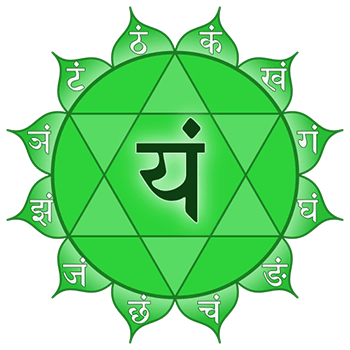 In a symbolic way, Anahata is drawn as a lotus flower with twelve petals, from which energy is said to flow in twelve distinct rays.
Within this lotus, a region is formed by the intersection of two triangles, creating a six-pointed star representing the union of male (Purusha) and female (Prakriti) principles.
This also forms two overlapping pyramids, illustrating the merging of spiraling upward Earth-Kundalini energy and spiraling downward Spirit-Soul energy within the heart. In some spiritual traditions this is called the Merkabah, often depicted as a Star Tetrahedron, which is a spiritual concept and symbol representing a divine light vehicle or energy field believed to connect the spirit and body to higher realms.
The traditional color associated with Anahata is green, symbolizing harmony, love for nature, compassion, purification, balance, and health.
~
~~
~
I present this information as is—as it is written in countless esoteric texts and expressed in a variety of yogic traditions and practices throughout the ages.
Please take from it what resonates with you, and leave the rest as it is.
~
~~
~
The Heart transcends Karma
A unique aspect of Anahata is its capacity to make decisions that transcend the conventional laws of karma.
In contrast to the lower chakras—where human actions are often entangled by unfinished trauma, karmic patterns, and fate—Anahata allows us to make choices based on our higher self, rather than being driven by unfulfilled emotions or lower desires.
The activation of the Anahata Chakra is thus understood to be causally linked to the transcendence of karmic bounds. Expressions like “clearing karmic debt” hint at such possibilities.
The system and practice of Karma Yoga is based on the understanding that selfless service cleans and purifies the “rap sheet of past sins.” This is only possible when we do every action in a selfless and humble way, detached from the outcome of the action—which are the inherent qualities of the Heart Center.
The Heart as the Central Organ of Spiritual Growth
Everything I have said above indicates that the heart chakra is not simply a center of feelings and emotions, but also signifies a very special place of spiritual maturing and the possibility of free will—where my individual actions can align with my higher purpose, effectively transforming or overriding karmic patterns.
The Anahata Chakra’s inherent quality is Love, which can be directed either “upwards” toward the Divine or “outwards” toward the material world.
In our Heart, this critical, free-willed distinction is possible. When the energy of the heart moves inward and upward, it transmutes into Devotion, facilitating the experience of God.
When this same energy flows downward and outward into the world—mainly caused by habit or external influences—it manifests as Emotion.
Due to the dualistic nature of Maya—the illusory nature of the world—emotions are seen as binding individuals to the delusive world through pairs of opposites such as love–hate, peace–unrest, and pleasure–pain.
The spiritual aim of “working with the Heart” is to neutralize these likes and dislikes by transmuting the energy into Divine Love at its source—a process that leads toward true spiritual growth.
The cultivation of Heart Energy must be consciously directed toward the Divine or Universal, rather than toward specific attachments, to achieve spiritual transformation.
The challenge lies in the “extremely fine” distinction between these two forms of love. Impersonal, expansive Love is understood to allow for a full experience of God within oneself—and the recognition of God reflected in other beings.
The Bhakti Yoga tradition of India, the ecstatic love poetry of Sufi mystics, as well as the “burning heart” icons and anecdotal stories about Christian saints, all point toward this specific junction in a person’s spiritual development.
If you are reading some poetry by Rumi or Hafiz—or even Teresa of Ávila—you might think you are reading the poems of someone who is fully and completely Love-intoxicated. Or lovesick.
🤪🙃🥰
This is love: to fly toward a secret sky,
to cause a hundred veils to fall each moment.
First, to let go of live.
In the end, to take a step without feet;
to regard this world as invisible,
and to disregard what appears to be the self.
Heart, I said, what a gift it has been
to enter this circle of lovers,
to see beyond seeing itself,
to reach and feel within the breast.
Mevlana Jelaluddin Rumi
Turkey (1207 – 1273)
Love came
flowed like blood
beneath skin, through veins
emptied me of my self
filled me
with the Beloved
till every limb
every organ was seized
and occupied
till only
my name remains.
the rest is It.
Abu-Said Abil-Kheir
Turkmenistan (967 – 1049)
The love of God, unutterable and perfect,
flows into a pure soul the way that light
rushes into a transparent object.
The more love that it finds, the more it gives
itself; so that, as we grow clear and open,
the more complete the joy of heaven is.
And the more souls who resonate together,
the greater the intensity of their love,
and, mirror-like, each soul reflects the other.
Dante Alighieri
Italy (1265? – 1321)
He who knows Love–becomes Love, and his eyes
Behold Love in the heart of everyone,
Even the loveless: as the light of the sun
Is one with all it touches. He is wise
With undivided wisdom, for he lies
In Wisdom’s arms. His wanderings are done,
For he has found the Source whence all things run–
The guerdon of the quest, that satisfies.
He who knows Love becomes Love, and he knows
All beings are himself, twin-born of Love.
Melted in Love’s own fire, his spirit flows
Into all earthly forms, below, above;
He is the breath and glamour of the rose,
He is the benediction of the dove.
Elsa Barker
US (1869 – 1954)
Obviously, mystical Love, Love for the Divine—Universal Love—flows through the ages and centuries. With the same intensity and ecstasy as ever, no matter the culture, religion or circumstances.
The Heart—our Heart—by its very nature is capable of such agonies, ecstasies and exultations as the best of such divine-love-intoxicated poems can express. In my experience, Anahata is a very mysterious and paradoxical “organ” that can channel a Love that is “in the world but also beyond it”.
~
~~
~
I think that the devotional development of the Heart Chakra should ideally occur after serious work with the lower chakras. Without proper balance in the lower chakras, people on the devotional Bhakti Yoga path may become overly enthusiastic, airy—or even “spiritually spaced out.”
You may have seen that with the Hare Krishna people, who often acted rather childishly, dancing through the streets of Praha or any other Western or Eastern city, past or present.
[ Apologies to all Krishna devotees—that’s just my personal opinion. ]
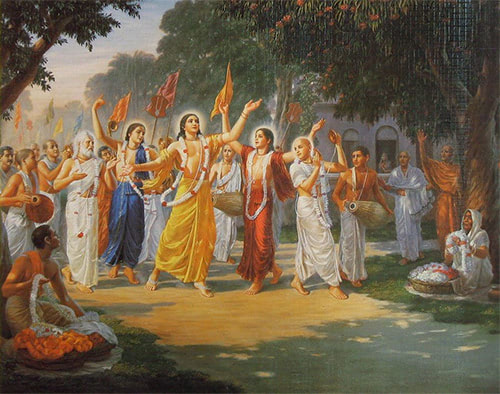
Spiritually inclined individuals—particularly those with a devotional nature—often find their consciousness naturally centered in the Heart Chakra.
Repetition of mantras (Japa), devotional singing (Kirtan), selfless service, and various meditation techniques have been used in cultivating the Heart Quality—enabling Love to expand and encompass all humanity, moving beyond limited affiliations to specific groups.
More contemporary approaches to “working with the Heart” may also include therapy to release unresolved trauma, grief, fear or heartbreak in order to “open the Heart Lotus to full bloom.”
Fear in its many forms turns out to be a essential blockage to experience and manifest Love. The teachings of “A Course In Miracles” – ACIM – offer a effective and practical psychologic-spiritual method to deal with our demons of fear.
~~~
A balanced Anahata Chakra is associated with a rich variety of positive emotional and mental states. When we harmonize our Heart Chakra, we can experience Unconditional Love for ourselves and for others, as well as deep feelings of deep compassion and authentic empathy.
Our Heart-centered relationships then have a foundation based on trust, inner peace, and emotional stability—even when we experience challenging circumstances.
A well-functioning Anahata also enhances the capacity for forgiveness and the release of negative emotions—enabling us to let go of past wounds and live with greater kindness.
~~~
On the other hand, an imbalanced Heart Chakra can manifest through a range of detrimental psychological and even physical symptoms. Grief, a tendency to cling to old losses, fear, ignorance, and excessive expectations in relationships are some that come to mind.
We may experience deep feelings of loneliness, emotional detachment, isolation, jealousy, possessiveness, envy, and an inability to express appreciation. Difficulties in forming close relationships, insecurity, unforgiveness, depression, anger, and hatred are also psychological indicators of heart-energy imbalance.
~~~
What I am saying is:
Our Heart is not only rose-tinted glasses and little pink hearts in the air. It needs some serious discernment—and a lot of consciousness.
Then the heart is able to do the quantum leap into the soul, the divine realms.
~
~~
~
The Heart as the “Anchor of the Soul”, the “Doorway to God”
Some spiritual teachers have expressed just that. Already the Upanishads of Vedic times spoke of “a tiny flame” residing in the Heart. Anahata has been revered as the sacred seat of the Jivatman (the individual soul) and Parashakti (the Supreme Energy).
In modern times, Adi Da Samraj (1939–2008), an American spiritual teacher, offered a unique and radical non-dual teaching that profoundly emphasizes the importance of the Heart Center on the spiritual path. He located the Soul’s anchor on the right side of the Heart Chakra.
José Trigueirinho Netto (1931–2018), a Brazilian spiritual teacher, also taught specifically about such a Heart-to-Soul channel located on the right side of the chest.
And my dear friend and longtime companion Suan has developed her own ways to help her clients to find and travel this upward channel from Heart Center to the Soul—and further on to the Monad of Pure Spirit.
Obviously, we are not just talking about words from old books, or stories about saints and long-dead mystics.
No, I am talking real experience—real transformative experience 💡 .
~
~~
~
Experience—even full bodied and integrated experience—is not so easily translated into adequate sentences. And this is more so than ever when we wish to talk about Universal Love, the Divine, The Ultimate and such…
Such realms are not easy to describe in concrete and specific words, since language evolved in our 3D/4D world of material existence—of objects and subjects. It is not ready-made for the subtle, higher-dimensional realms of Spirit.
And yet exactly that is what we will attempt to do in the following article:
~
~~
~
On Love – from The Prophet by Kahlil Gibran
Then said Almitra, Speak to us of Love.
And he raised his head and looked upon the people, and there fell a stillness upon them. And with a great voice he said:
When love beckons to you, follow him,
Though his ways are hard and steep.
And when his wings enfold you yield to him,
Though the sword hidden among his pinions may wound you.
And when he speaks to you believe in him,
Though his voice may shatter your dreams as the north wind lays waste the garden.
For even as love crowns you so shall he crucify you. Even as he is for your growth so is he for your pruning.
Even as he ascends to your height and caresses your tenderest branches that quiver in the sun,
So shall he descend to your roots and shake them in their clinging to the earth.
Like sheaves of corn he gathers you unto himself
He threshes you to make your naked.
He sifts you to free you from your husks.
He grinds you to whiteness.
He kneads you until you are pliant;
And then he assigns you to his sacred fire, that you may become sacred bread for God’s sacred feast.
All these things shall love do unto you that you may know the secrets of your heart, and in that knowledge become a fragment of Life’s heart.
But if in your heart you would seek only love’s peace and love’s pleasure,
Then it is better for you that you cover your nakedness and pass out of love’s threshing-floor,
Into the seasonless world where you shall laugh, but not all of your laughter, and weep, but not all of your tears.
Love gives naught but itself and takes naught but from itself.
Love possesses not nor would it be possessed;
For love is sufficient unto love.
When you love you should not say, “God is in my heart,” but rather, “I am in the heart of God.”
And think not you can direct the course of love, for love, if it finds you worthy, directs your course.
Love has no other desire but to fulfil itself.
But if you love and must needs have desires, let these be your desires:
To melt and be like a running brook that sings its melody to the night.
To know the pain of too much tenderness.
To be wounded by your own understanding of love;
And to bleed willingly and joyfully.
To wake at dawn with a winged heart and give thanks for another day of loving;
To rest at the noon hour and meditate love’s ecstasy;
To return home at eventide with gratitude;
And then to sleep with a prayer for the beloved in your heart and a song of praise upon your lips.
~
~~
~