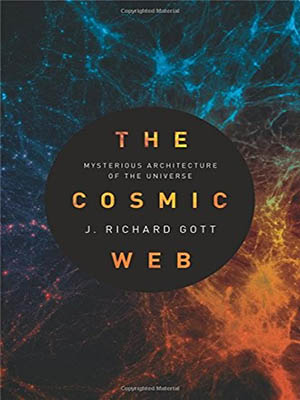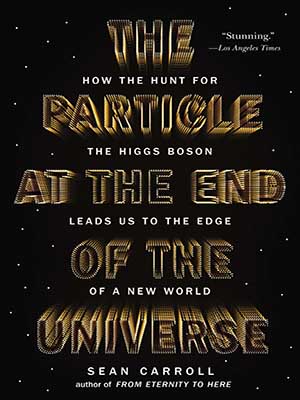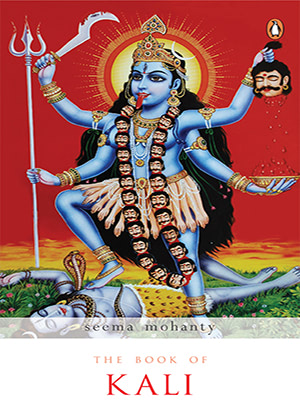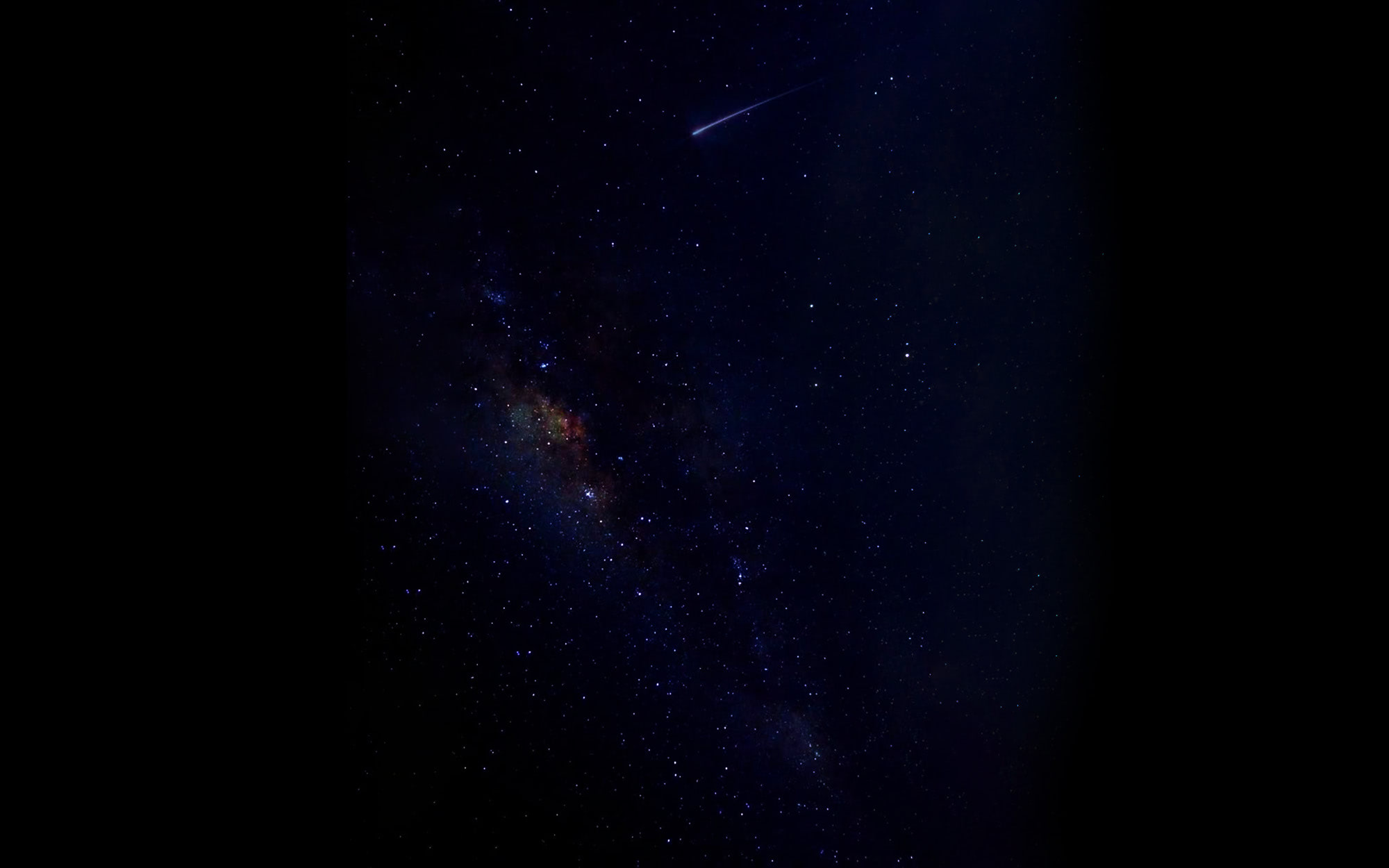
this is a (mostly) visual meditation of things that are hard to comprehend
Cosmic Nebulas – Mysterious Birthplace of Stars
Cosmic nebulas are enormous clouds of dust and gas – sometimes spanning hundreds of light-years – in Interstellar Space of the Cosmos. They are essential to the life cycle of stars, functioning as both “stellar nurseries” where new stars are born and as the remnants of dying stars.
Composition and Location
Nebulas are primarily composed of hydrogen and helium gas, along with trace amounts of heavier elements and cosmic dust. Although vast in size – sometimes spanning hundreds of light-years – their density is extremely low, far less dense than any vacuum created on Earth.
They exist in the space between stars within a galaxy, known as the interstellar medium.
Nebula’s Role in the Universe
•Star Formation: Gravity causes clumps of gas and dust within a nebula to collapse and heat up, eventually forming protostars. The material not incorporated into the star may form planets and other objects in a new solar system.
•Chemical Enrichment: Dying stars expel elements produced during nuclear fusion (like carbon, nitrogen, and oxygen) into space through nebulae, enriching the interstellar medium with the heavy elements necessary for subsequent generations of stars and planets to form.
Types of Nebulas
Astronomers classify nebulae into several types based on how they form and how they interact with light:
• Emission Nebulae: These nebulae glow with their own light because they are made of gas that has been ionized (energized) by ultraviolet radiation from nearby hot stars. The Orion Nebula is a famous example.
• Reflection Nebulae: These clouds do not emit light but are near enough to stars to reflect their starlight, appearing blueish in color. The Witch Head Nebula is a well-known reflection nebula.
• Dark Nebulae: These are dense clouds of dust and gas that block light from luminous objects behind them, appearing as opaque silhouettes or “holes in the sky”. The Horsehead Nebula is an example.
• Planetary Nebulae: Formed during the final stages of a low-to-intermediate mass star’s life (like the Sun), as it sheds its outer layers to form an expanding shell of gas around a central white dwarf star. Their name comes from their planet-like appearance through early telescopes, not an actual connection to planets. The Helix Nebula is an example.
• Supernova Remnants: These are the expanding clouds of gas and dust produced by the explosive death (supernova) of a massive star. The Crab Nebula is a prime example.
Nebulae are among the largest structures in the universe and they have the most amazing shapes, sizes, and colors. New stars are born within them and they are the graveyard for remnants of dying stars.
Lets imagine for a moment how it would feel to fly thru such enormous nebulas of gas and … stardust.
It is easy to forget that our bodies are made of such stardust. As is all the rest that we can see around. And we usually don’t think about the fact that our beautiful Earth is but a tiny spark in this infinite cosmos.
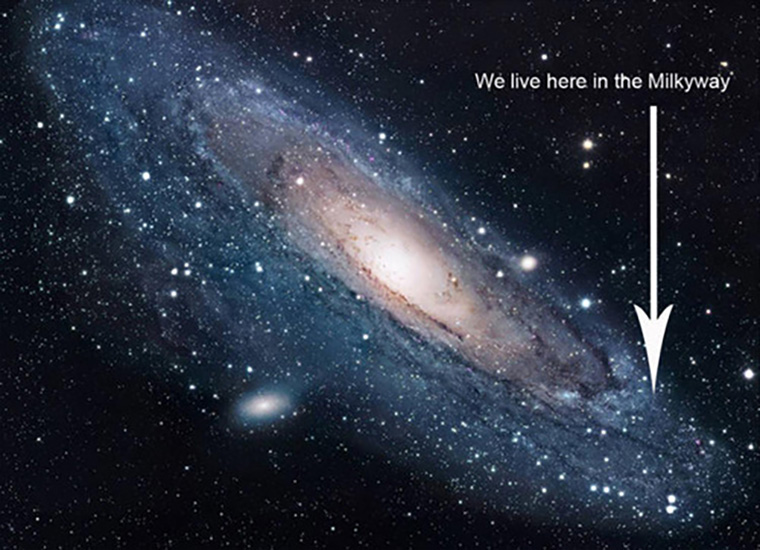
Earth is only a part of this solar system of our sun, which is one of hundreds of billions of other star systems in our home galaxy, the Milky Way. And our galaxy is just one of 2 trillion galaxies in the observable universe.
That are 2,000,000,000,000 galaxies 👽! At least this is what the newest deep-field observations say.
This estimate refers to the observable universe, but the total number of galaxies in the entire universe is unknown, as the universe could be … infinite.
Infinite?
Maybe there is an end to this universe, an edge. That is my big question.
[ In my terminology, i use the word “Universe” for the physical aspect of the Cosmos. You and me and all the rest.
For me the word “Cosmos” includes all of that, but also the invisible, the meta-physical, the higher dimensional spiritual aspects of Creation. ]
What Deep-Space Astronomy, Cosmology and theoretical Physics can tell us.
The Observable Universe and Its Horizons
The observable universe extends approximately 46.5 billion light-years in every direction, despite being only 13.8 billion years old. This apparent paradox arises because space itself has been expanding while light traveled toward us. This horizon is not a physical barrier but a fundamental limit imposed by the finite age of the universe and the speed of light.
Flatness of the Universe
Current observations indicate the observable universe is spatially flat. This means parallel lines remain parallel, and the geometry follows Euclidean rules. The most recent Planck data confirms this flatness with remarkable accuracy.
This finding is both stunning and puzzling. Inflation theory—proposing exponential expansion moments after the Big Bang—explains how any initial curvature was stretched to undetectable levels. Without inflation, achieving such precise flatness would require extraordinarily fine-tuned initial conditions. Yet a flat universe means total energy effectively equals zero: positive and negative energies perfectly balanced.
Topology: The Global Shape Mystery
While flatness describes local geometry, topology addresses the universe’s global structure—whether it’s finite or infinite, and how it connects to itself.
Recent work by the COMPACT collaboration challenges previous assumptions. Their 2024 study found that many exotic topologies—including twisted variations where opposite sides of space connect at different orientations—haven’t been ruled out.
The universe might resemble a three-dimensional torus, or more complex shapes where traveling far enough brings you back rotated.
Multiverse and Eternal Inflation
Eternal inflation theory proposes that quantum fluctuations create regions inflating at different rates. Areas with faster inflation dominate, producing a hypothetically infinite multiverse of “bubble universes.”
Stephen Hawking offered an alternative before his death: using the holographic principle to define boundaries that produce finite universes without requiring an infinite multiverse.
Penrose’s Cyclic Cosmos
Roger Penrose’s Conformal Cyclic Cosmology (CCC) proposes the universe iterates through infinite cycles called aeons. Each aeon’s infinite future connects mathematically to the next aeon’s Big Bang through conformal rescaling—when all mass decays leaving only radiation, the universe becomes scale-invariant, allowing time’s end to become indistinguishable from a new beginning.
Penrose predicts observable signatures: “Hawking points” in background radiation representing supermassive black holes from previous aeons. While controversial, CCC addresses the profound entropy problem—how the universe begins in extraordinarily low-entropy states—by having black holes act as entropy sinks enabling cosmic reset.
A 2025 paper introduces gravitational wave epochs explaining how crossover between aeons occurs naturally, with geometry remaining smooth except at discrete points representing final black hole evaporations.
[ Penrose’s Conformal Cyclic Cosmology is – by the way – very close to what is written in the Rig Veda, the oldest known Vedic Sanskrit tex of Hinduism. And his view of the function of Black Holes is very much in resonance with my own intuition. But more about those mysterious lack Holes later! ]
Speculative Frontiers
The holographic principle suggests our three-dimensional universe might be a projection from a two-dimensional boundary. Some propose our universe exists within a black hole. Cosmic looping suggests traveling far enough returns you to your starting point, making the universe finite yet boundless like a sphere’s surface.
What It All Means
Modern cosmology recognizes no evidence for a boundary to the universe itself—only boundaries to what we can observe. If the universe is flat and infinite, the observable region represents an infinitesimal fraction of total reality. Alternatively, exotic topologies could make it finite while appearing homogeneous within our patch.
Upcoming experiments including the Euclid space telescope and advanced gravitational wave detectors will test these theories with unprecedented precision. We may inhabit a universe with no edge, extending infinitely in space and time. We might live in one bubble of an infinite multiverse. Or the cosmos might cycle through infinite aeons, each lasting trillions of years.
Theoretical frameworks offer radically different visions: eternal inflation’s multiverse landscape, string theory’s compactified dimensions, Penrose’s cyclic aeons, or exotic topologies with twisted connections. Each has mathematical rigor yet faces empirical challenges and philosophical puzzles.
My Conclusion???
The universe may have no edge in any conventional sense, yet it possesses boundaries of observability structuring our experience of cosmic reality. Whether finite or infinite, simply connected or multiply connected, cyclical or singular, the inquiry reveals both the power and limits of human comprehension when confronted with ultimate questions.
What distinguishes modern cosmology from ancient speculation is methodology: rather than declaring mysteries unknowable, researchers devise clever observational tests and systematically explore possibilities. Precision measurements have transformed cosmic geometry from philosophy to empirical science, even as answers grow more subtle and wondrous.
Understanding these boundaries—their nature, implications, and perhaps their ultimate transcendence—remains one of humanity’s greatest intellectual adventures.
The Mystery of the presence of Black Holes in our Universe
Of all the mind-boggling structures that are occupying Deep Space, Black Holes are the most fascinating ones for me. Well, maybe with the exception of the Big Bang event, that started it all – as far as we think we know🤓.
A Black Hole is a region of space that has a gravitational field so intense that no matter or radiation can escape.
A Black Hole is created after the death of a very massive star. The core of the star collapses in on itself, causing a supernova – a massive explosion of the star’s outer layers.
All of the former star’s matter is then concentrated into a single tiny point – known as a Gravitational Singularity.
The gravity of a black hole is so strong that nothing – not even light – can escape its pull.
In case you have watched the 2014 movie Interstellar, you will know what this means.
[ If not – go watch it, it is superb and scientifically very accurate! ]
Cosmologists distinguish between Stellar black holes, which are the most common and contain about 10 times the mass of our Sun.
And there are Supermassive black holes, which are found at the centre of most galaxies and can be millions or even billions of times more massive than the Sun.
In 2017, the first direct image of a supermassive black hole was captured by a group of ground-based telescopes around the world acting in unison, effectively creating a single Earth-sized telescope that is called the “Event Horizon Telescope”.
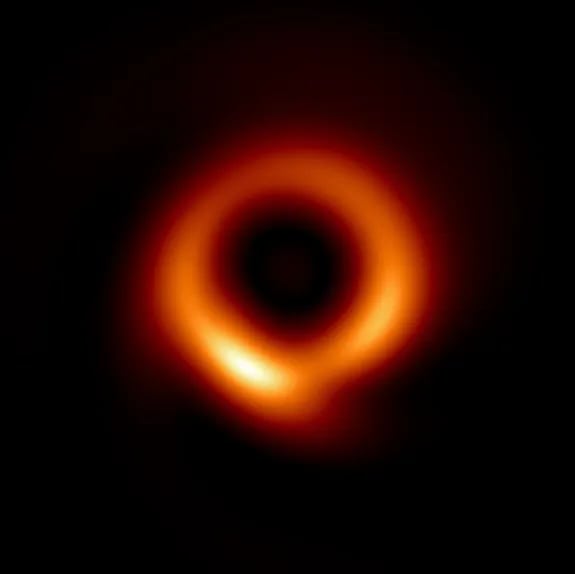
Beyond the cosmological information and quantum theory about Black Holes, this structures have a deep metaphysical and spiritual relevance like nothing else besides the Big Bang.
There are many parallels and correlations with Vedic Cosmology and the Buddhist understanding of Emptiness.
Of course, the Goddess Kali of Hinduism comes to mind.
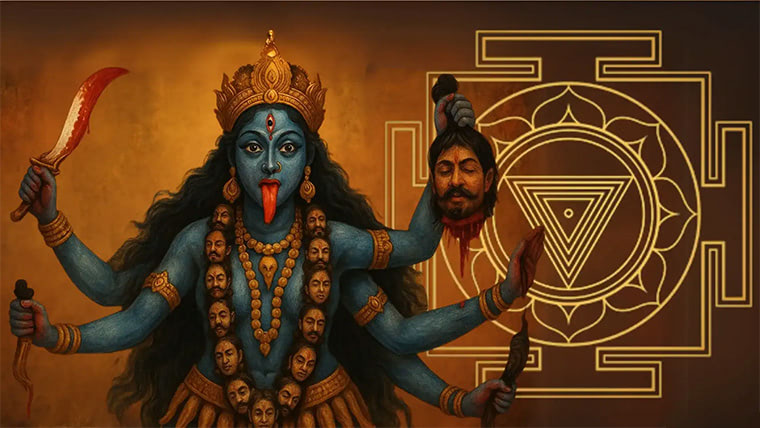
More about all of that in the following text.
What We Actually Know About Black Holes
Between 2019 and 2025, black holes went from theoretical abstractions to observed reality. We’ve photographed two of them—those stunning orange rings around dark voids you’ve probably seen. We’ve detected nearly 300 black hole collisions through gravitational waves (ripples in spacetime itself). These aren’t just cool discoveries—they’re proof that Einstein was right about gravity warping the fabric of reality.
Black holes come in different sizes: stellar-mass ones (a few times heavier than our Sun), supermassive monsters at galaxy centers (millions to billions of times the Sun’s mass), and possibly primordial ones formed seconds after the Big Bang. They all share one feature: an event horizon—the point of no return where gravity becomes so strong that nothing, not even light, escapes.
The Beautiful Weirdness
Here’s where it gets trippy: black holes aren’t just cosmic vacuum cleaners. They’re engines. The spinning ones (which is most of them) create jets of matter shooting out at near light-speed, powering entire galaxies. They warp time so severely that if you watched someone fall into one, you’d see them slow down, redshift, and essentially freeze at the horizon—while from their perspective, they’d fall right through in finite time.
And they’re not eternal. Stephen Hawking discovered they slowly evaporate through quantum radiation, eventually disappearing completely. This created a 50-year-old puzzle: if black holes destroy everything that falls in, where does the information go? Quantum mechanics says information can’t be destroyed, but general relativity says it vanishes.
The breakthrough came recently: information doesn’t disappear—it escapes through subtle quantum connections we couldn’t see before. The interior of the black hole becomes quantum-entangled with the radiation outside in ways that transcend our usual notions of “inside” versus “outside.” Reality at this scale is fundamentally nonlocal—separated things remain mysteriously connected.
The Cosmic Parallels
Now here’s where physics and ancient wisdom start rhyming in surprising ways.
Buddhist emptiness (śūnyatā) teaches that nothing has independent existence—everything arises through relationship. Quantum entanglement shows particles don’t have definite states until measured; they exist in relationship to observers and other particles. Black holes take this further: their horizons mark boundaries where our conventional categories (inside/outside, past/future, observer/observed) break down entirely.
Hindu cosmology describes pralaya—cosmic dissolution cycles where the universe periodically dissolves back into undifferentiated potentiality before manifesting again. Black holes are localized versions: regions where matter returns to near-singularity conditions, while paradoxically seeding new structure through their gravitational influence on galaxy formation. Destruction enabling creation.
Kali, whose name derives from “kāla” (time), embodies this principle. She’s black like the void, destroys what must end, transcends time itself—just as black holes are black, devour matter, and freeze time at their horizons. Both represent terrifying but necessary cosmic functions: clearing space for renewal.
The phenomenology is striking too. Mystics describe ego death and void states—loss of boundaries, timelessness, ineffability, irreversibility. Event horizons share these qualities: crossing one means losing all conventional reference frames, experiencing time and space differently, entering a state you cannot describe to those who haven’t experienced it, and never returning.
What We Don’t Know (And Why That Matters)
Let’s be clear: physics doesn’t prove mysticism, and meditation doesn’t reveal black hole interiors. These are different ways of knowing, both valuable in their domains.
But they’re asking similar questions:
What is the nature of ultimate reality? What happens at boundaries where our usual concepts fail? How do destruction and creation relate? What’s the role of the observer?
Three Nobel laureates—Roger Penrose, John Wheeler, Freeman Dyson—seriously explored consciousness-cosmos connections, though their ideas remain controversial and unproven.
Penrose suggested quantum processes in brain cells might link awareness to spacetime geometry. Wheeler proposed physical reality emerges from information, with observers participating in bringing the universe into existence.
These aren’t fringe figures—they’re among physics’ greatest minds admitting we don’t have answers yet.
The honest truth: we don’t know what happens at singularities where physics breaks down. We don’t fully understand how information escapes. We can’t reconcile quantum mechanics and gravity. We don’t know if consciousness is fundamental or emergent. And we’re okay not knowing—because mystery isn’t failure; it’s where real understanding begins.
Why This Matters
Black holes aren’t just exotic objects “out there.” They reveal something fundamental about reality:
•Space and time aren’t fixed containers but dynamic, malleable, emergent from deeper quantum structures.
•Information and entropy connect deeply—the universe’s maximum information content depends on surface area, not volume (the holographic principle)
•Separation is an illusion at quantum scales—entanglement creates connections transcending space.
•Boundaries are where transformation happens—at horizons, conventional reality ends and something else begins.
Ancient contemplative traditions intuited these principles through direct experience. Modern physics discovered them through mathematics and observation. The convergence isn’t proof of equivalence—it’s consilience: different paths approaching the same mountain from different sides.
The Invitation
Black holes teach humility. They mark the limits of our theories, the boundaries of the knowable, the places where reality becomes genuinely strange. Standing at those boundaries—whether through equations or meditation—we encounter mystery not as obstacle but as invitation.
The physicist brings telescopes and math. The mystic brings awareness and surrender. Both approach the void with reverence. Both discover: the deepest truths can’t be grasped, only experienced.
You don’t need a PhD to appreciate this. You just need curiosity and willingness to sit with not-knowing. To look up at the night sky and recognize: those invisible monsters holding galaxies together, slowly evaporating through quantum whispers, folding spacetime into impossible geometries—they’re not separate from you.
You’re made of stardust that’s been through stellar furnaces. The atoms in your body were forged in supernovae that created black holes. The same quantum fields permeating “empty” space also constitute your flesh. The observer and observed, as quantum mechanics reveals, cannot be cleanly separated.
Black holes show us: reality is stranger, deeper, more interconnected than our everyday perception suggests. And that strangeness, that depth, that mystery—it’s not a bug. It’s the feature.
This is how an artist imagines how it may feel to approach a Black Hole with a spaceship. It is not mere phantasy, but based on scientific calculations and observations.
The Big Bang.
Or how it all began.
Or maybe not?
The “Big Bang Theory”, its just a theory with a terrible name, isn’t it?
There was not really a “banging sound”, just fire, extremely rapidly expanding out of The Singularity. And the expansion has not stoped for 13.8 billion years.
Obviously, there were no “years” “back then” that would measure time. No time as we know it now. But it helps to create a picture about what happened.
This is what Cosmologists tell us about our origins. Its the Greatest Story ever told. Maybe we can call it the equivalent to the Seven Days of Creation in the Bible, Genesis 1.
The seven days of creation in the Bible, as described in Genesis, include six days of God creating the world and all living things, followed by a seventh day of rest.
On the first day, light was created;
on the second, the sky;
on the third, dry land and plants;
on the fourth, the sun, moon, and stars;
on the fifth, sea creatures and birds;
and on the sixth, land animals and humans.
The seventh day was a day of rest.
The Origin Story of our Universe
According to Science
The Big Bang is the leading scientific theory for the origin of the universe, explaining that the cosmos began approximately 13.8 billion years ago as an extremely hot, dense point that expanded and cooled, creating all matter, space, and time.
It was not an explosion in space, but the rapid expansion of space itself. Over billions of years, the universe has continued to expand, leading to the formation of galaxies, stars, and planets from the initial gas and dust.
What happened directly after the Big Bang?
(first fractions of a second) > The Early Universe
The universe was a super-hot, dense soup of fundamental particles like quarks and electrons. Some theories suggest a period of rapid expansion called “inflation” occurred, during which the universe grew enormously.
(first few minutes) > Nucleosynthesis
As the universe cooled, protons and neutrons fused to form the first atomic nuclei, creating hydrogen, helium, and trace amounts of lithium.
(approx. 380,000 years later) > Recombination
The universe had cooled enough for electrons to be captured by the atomic nuclei, forming the first stable, neutral atoms. This event, called recombination, allowed light to travel freely for the first time, creating the Cosmic Microwave Background (CMB) radiation we can still detect today.
(hundreds of millions of years) > Structure formation
Gravity began to pull together the gas of hydrogen and helium that filled the universe. Over billions of years, this gas and dust clumped together to form galaxies, stars, and planets.
Then we showed up. 😎
Compiled from Wikipedia
The Physics and The Metaphysics of the Beginning of All
A Journey Through Physics, Metaphysics, and the Ultimate Mystery of Cosmic Origins
The Event Itself: What We Know and What We Don’t
The Name That Almost Wasn’t
Let’s be clear: “Big Bang” is a terrible name. Fred Hoyle coined it in 1949 as mockery—he opposed the theory and wanted to ridicule it.
The name suggests an explosion into space, but that’s wrong. Space itself expanded. There was no sound, no center, no “outside.” The universe didn’t blow up—it breathed itself into existence.
So what should we call IT?
Hindus call it Brahma’s awakening.
Vedantins speak of the unstruck sound.
Steiner described the Logos manifesting through sacrifice.
Each tradition attempts to name the unnameable—the transition from absolute potentiality to actual existence.
What We Know
The universe began approximately 13.8 billion years ago in an extraordinarily hot, dense state and has been expanding ever since.
This isn’t speculation! Multiple independent lines of evidence converge with stunning precision:
Cosmic Microwave Background: Fossil light from when the universe was 380,000 years old, now cooled to 2.7 Kelvin. The Planck satellite mapped it with exquisite precision, revealing temperature fluctuations of only 1 part in 100,000—the seeds of all cosmic structure.
Primordial Nucleosynthesis: In the first three minutes, protons and neutrons fused into the first atomic nuclei. Predicted abundances—75% hydrogen, 25% helium—match observations across billions of years.
Hubble Expansion: Galaxies recede from us with velocity proportional to distance. This isn’t motion through space—space itself stretches. And recent observations reveal something stranger: the expansion is accelerating.
Large-Scale Structure: The cosmic web of galaxies, filaments, and voids matches predictions from simulations starting with quantum fluctuations in the early universe.
The First Moments
Working backwards, cosmologists reconstruct the universe’s history until hitting fundamental barriers:
380,000 years:
Universe becomes transparent.
Cosmic Microwave Background photons begin free streaming. This is the farthest back we can “see.”
3-20 minutes:
Big Bang Nucleosynthesis.
Temperature ~1 billion Kelvin. First atomic nuclei form.
10⁻⁵ seconds:
Quark-Hadron transition.
Quarks condense into protons and neutrons.
10⁻³⁶ to 10⁻³² seconds:
Inflation.
Universe expands by factor of 10²⁶ or more in a fraction of a second. Quantum fluctuations stretched to cosmic scales.
< 10⁻⁴³ seconds:
The Planck Era.
General relativity and quantum mechanics both essential but incompatible. Physics breaks down. We don’t know what happened.
t = 0:
The Singularity.
Infinite density. All known physics fails. This is the boundary.
Before the Big Bang?
Stephen Hawking proposed that near the Big Bang, time becomes space-like. The universe has no temporal beginning—just as Earth’s surface has no edge. You can travel backward in time indefinitely without reaching a first moment. This sidesteps “why is there something rather than nothing?” by denying there was ever nothing.
There are more theories but they remain speculative physics at the edge of current understanding.
The Space Question
What is the universe expanding into? Nothing. The universe isn’t expanding into anything—space itself expands.
Imagine ants on an inflating balloon’s surface. As it inflates, ants move apart, but no ant is at the center and no edge exists. They aren’t moving through space—the space between them grows. Our 3D universe works similarly.
Does a “outside” exist?
More theories:
Infinite Universe: If spatially infinite, no edge exists. “Outside” is meaningless. Inflation naturally produces this.
Finite but Unbounded: If closed topology (like a 3-sphere), the universe has finite volume but no boundary. Traveling far enough in one direction returns you to start.
Multiverse Embedding: Some string theory models propose our universe as a 3D “brane” embedded in higher-dimensional “bulk” space. Other universes exist in the bulk. However, these higher dimensions remain purely theoretical.
We can’t observe “outside” even if it exists. Questions about what’s “beyond” are metaphysical, not physical—like asking what happened before time began.
Ancient Wisdom Meets Modern Physics
Vedic Cosmology: Cycles Within Cycles
Hindu texts describe a universe undergoing eternal cycles of creation, preservation, and dissolution. The timescales are extraordinary:
•One Day of Brahma (Kalpa): 4.32 billion years
•One Night (Pralaya): 4.32 billion years of cosmic rest
•One Brahma Lifetime: 311 trillion years
Each Kalpa contains nested cycles—14 Manvantaras, each containing 71 Mahayugas, each containing 4 Yugas. We’re currently in Kali Yuga (began 3102 BCE), in the 51st year of the current Brahma—approximately 156 trillion years into the current cosmic cycle.
The correspondences are striking. 4.32 billion years per Kalpa is remarkably close to Earth’s 4.5 billion year age.
Hindu texts describe multiple simultaneous universes, each with its own Brahma—anticipating multiverse concepts by millennia.
The Rig Veda (10.129) questions origins: “Neither being nor non-being was as yet…Time was not, for it lay asleep in the infinite bosom of duration”—similar to modern questions about time’s emergence.
Pralaya (cosmic dissolution) isn’t catastrophic ending but necessary pause. Matter returns to unmanifested potential, awaiting re-manifestation. Modern physics parallels exist: entropy in closed systems, heat death scenarios, cyclic cosmological theories.
Anthroposophy: Rudolf Steiner’s clairvoyant Vision
Rudolf Steiner described seven “planetary incarnations“—successive evolutionary states of our solar system (not physical planets but developmental conditions):
Old Saturn (warmth), Old Sun (light), Old Moon (water/desire), Earth (solid matter, human “I” consciousness), Future Jupiter, Venus, Vulcan.
Each develops one aspect of human constitution. Earth’s mission: awaken inpidual self-awareness and moral freedom.
Steiner’s evolution through stages parallels the universe evolving from simple (radiation) to complex (atoms, molecules, life, consciousness).
His “as above, so below” Hermetic principle resembles holographic theories where microcosm reflects macrocosm.
For Steiner, Christ’s incarnation was the central cosmic event—the Logos entering physical matter, bridging spiritual and material realms. This wasn’t merely historical but metaphysical.
Theosophy: Blavatsky’s Synthesis
Helena Blavatsky’s Secret Doctrine (1888) synthesized Hindu-Buddhist cosmology with Western esotericism. Three fundamental propositions:
1 – An omnipresent, eternal Principle beyond thought—source of all universes
2 – Periodicity as universal law—cycles of activity (Manvantaras) alternating with rest (Pralayas)
3 – All souls journey through matter, evolving consciousness across countless incarnations
Writing in 1888, decades before Hubble, Blavatsky described:
• Expanding/contracting universe in eternal cycles
• Infinite universes beyond our own
• Time/space emerging from timeless “Duration”
•” Great Breath” of universal expansion/contraction
Her statement “Time was not, for it lay asleep in the infinite bosom of duration” parallels modern recognition that time itself began with the Big Bang.
Where Physics and Metaphysics Touch
Cyclical Time: Hindu yugas, Blavatsky’s Manvantaras, Steiner’s epochs, Penrose’s Conformal Cyclic Cosmology, bouncing universe models—all describe renewal through cycles.
Emergent Complexity: Steiner’s planetary evolution (warmth → light → water → solid) parallels cosmic evolution (radiation → plasma → atoms → molecules → life).
Consciousness and Cosmos: Three Nobel laureates—Roger Penrose, John Wheeler, Freeman Dyson—seriously explored consciousness-cosmos connections.
Wheeler’s “participatory universe” suggests observers help bring reality into being. Penrose proposes quantum processes in neurons link consciousness to spacetime geometry. These aren’t mystical fantasies but serious physics, though controversial and unproven.
Holographic Principles: “As above, so below” corresponds to modern holographic principle: maximum information in any region scales with boundary area, not volume. Each part contains information about the whole.
Maya and Quantum Reality: Eastern concept of Maya (appearance vs. reality) parallels quantum mechanics: no observer-independent reality, measurement creates outcomes. Both say: what appears solid is mostly empty space, vibrating fields, probability waves.
Void and Vacuum: Buddhist sunyata (emptiness), Hindu Brahman (unmanifest potential), quantum vacuum—all point toward paradox. “Nothing” is pregnant with potentiality. The quantum vacuum seethes with virtual particles and zero-point energy.
The Ultimate Question
Why is there something rather than nothing?
Even if we explain the Big Bang, inflation, quantum fluctuations—why do physical laws exist? Why does mathematics describe reality?
The Anthropic Response: We observe fine-tuned universe because only such universes produce observers. In a multiverse, this explains fine-tuning without design—but trades one mystery for another.
The Eastern Answer: The question is wrong. Being/non-being is false duality.
Ultimate reality (Brahman, Dharmakaya, Tao) transcends existence/nonexistence. As Nagarjuna taught: manifest and unmanifest are one. Why does it manifest? Because that’s its nature—like asking why water is wet.
The Honest Answer: We don’t know. .
Perhaps ultimate reality transcends concepts of cause/effect, being/nonbeing. These are categories of mind, not necessarily reality-in-itself.
Living in an Originating Universe
Why does this matter? Because cosmology shapes meaning.
If universe emerged from quantum fluctuation and will end in heat death, if consciousness is epiphenomenon—one could conclude nothing matters.
But: If Wheeler’s participatory universe has merit, if observers help bring reality into being, then consciousness isn’t accidental. We’re the universe becoming aware of itself. Carl Sagan: “We are a way for the cosmos to know itself.” Not metaphor—potential literal truth.
Buddhist Middle Way: Neither eternalism (permanent self) nor nihilism (meaningless void). Reality is empty of inherent existence yet appears through dependent origination.
Cosmology confirms this: nothing permanent, nothing independent, yet appearances function.
Mystical Response: If universe arose from no-thing-ness, our true nature is that groundless ground. Meister Eckhart: “The eye through which I see God is the same eye through which God sees me.”
Scientific Humanism: Meaning isn’t cosmic given but human creation. We are rare instances of matter experiencing beauty, love, understanding.
Bertrand Russell: “Brief and powerless is Man’s life…yet he sees as from a mountaintop.” Our finitude intensifies meaning.
Perhaps all contain partial truth. The challenge: hold multiple perspectives simultaneously, knowing each is incomplete.
Conclusion
We’ve journeyed from 10⁻⁴³ seconds to 13.8 billion years, from quantum foam to galaxy clusters, from equations to mysticism.
Scientifically: Big Bang model is extraordinarily successful. Inflation solves multiple problems but faces theoretical challenges. Quantum cosmology offers frameworks for addressing singularity. Frontiers remain: quantum gravity, dark energy, consciousness, why anything exists.
Metaphysically: Ancient traditions anticipated cosmic cycles, vast timescales, interconnection. Modern physics validates some intuitions. Consciousness-cosmos relationship remains profound mystery. Multiple wisdom traditions converge on ultimate reality transcending being/nonbeing.
Existentially: Universe’s origin story shapes meaning-making. Multiple valid responses exist. Integration offers richest understanding. Mystery is feature, not bug.
IT—the Big Bang, the First Breath, Brahma’s Awakening—remains fundamentally mysterious. We’ve pushed boundaries from macroscopic expansion to quantum fluctuations to speculative pre-Big Bang scenarios. But every answer reveals deeper questions.
This is as it should be. Science advances by questioning, spirituality deepens by wondering, wisdom grows through not-knowing.
The universe didn’t happen to you. It happened as you.
The more we know, the more we realize how much we don’t:
Dark energy: 68% of universe—unknown.
Dark matter: 27%—never directly detected.
Quantum measurement: century-old problem—no consensus.
Consciousness: emerges from matter—mechanism unknown.
Initial conditions: why this universe?—no answer.
This isn’t failure. It’s invitation.
Every generation rediscovers the cosmos is stranger, deeper, more mysterious than imagined. What will the next revolution reveal?
We don’t know. And that unknowing is the threshold—doorway to wonder, humility, continued investigation.
The universe began 13.8 billion years ago—or didn’t, if eternal. It emerged from nothing—or always existed.
It will end in heat death—or bounce forever.
All we know for certain:
IT is. Here.
Now.
Manifesting as galaxies and butterflies, black holes and human hearts, supernovae and these words you’re reading.
And you—consciousness reading about consciousness contemplating cosmic origin—you’re not witness to the story. You are how the story tells itself.
The Big Bang? Just one name for IT. And IT remains, as always, beyond naming.
( Deep Research and synthesis by Claude – Anthropic )
Maybe it looked just like that, when everything and the rest burst into being. Maybe not at all. We will never know, at least not from theories or artistic speculation.
But for me this is not the point here.
My own contemplation of such grand questions that probe essential realities are more like a playful exercise to stretch my mind, to expand the reaches of my consciousness into the Unknown. To dare to go where there are no certainties possible.
And go with open mind, leave concepts behind. Even spiritual concepts, even scientific theories that might have helped me to get a approximate understanding of it all.
With such kind of an attitude and curiosity i hope you approach my article(s).
“Stay hungry, stay foolish,”
Steven Jobs 2005