
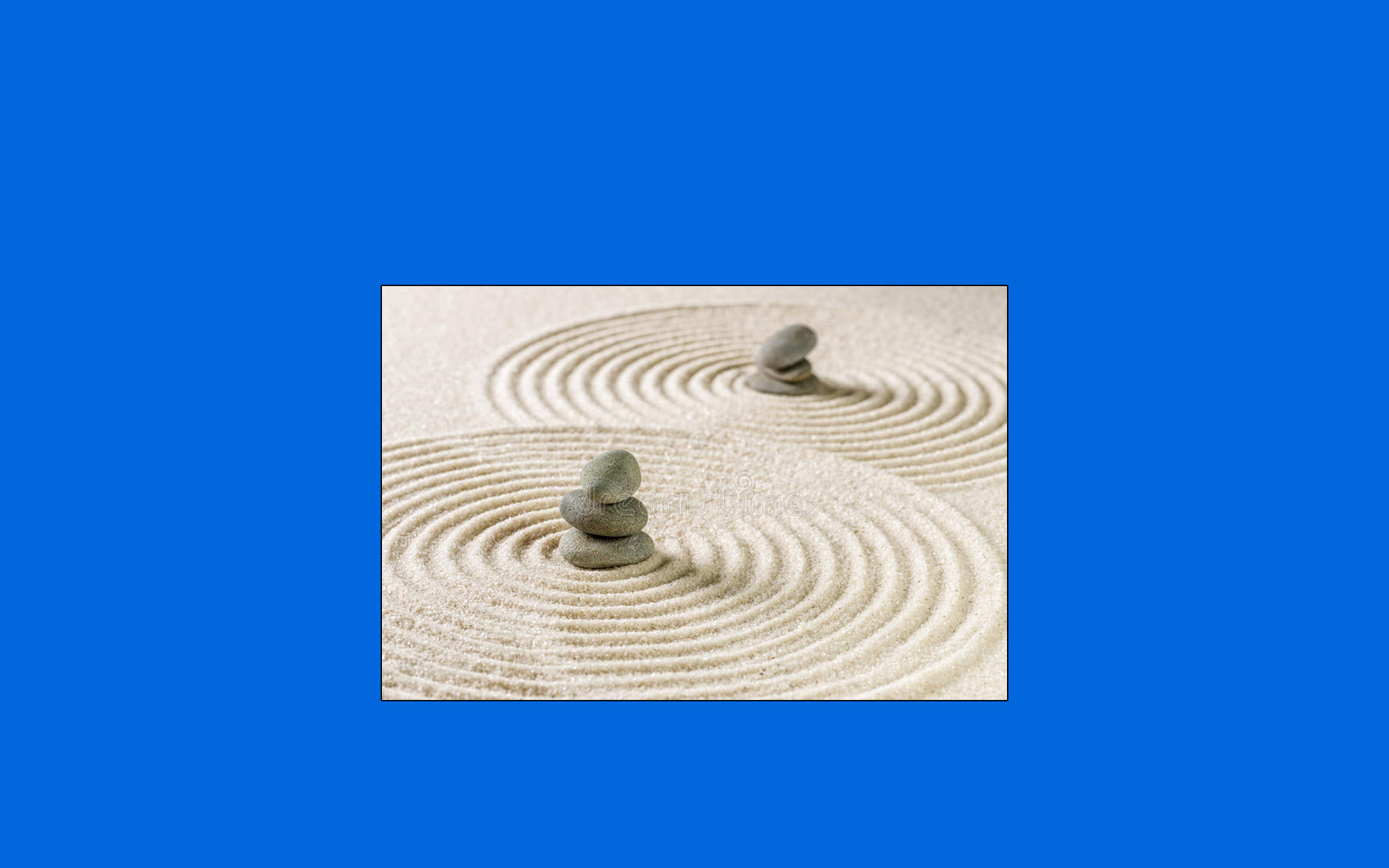
The circles of Oneness
sympathy, empathy and compassion
egocentric, group-centric, world-centric, cosmos-centric
In Lak’ech Ala K’in
I am another you / You are another myself
traditional Mayan greeting
You are not a drop in the ocean. You are the entire ocean in a drop
Rumi
The eye with which I see God is the same eye with which God sees me
Meister Eckhart
I and The Father are One
A carpenter named Jesus
~
~~
~
I know, those are all beautiful expressions, often spoken with the best of intentions.
Sayings that look good on Instagram, often with soothing background music.
But how real are those words?
How can we live up to such good intentions when push comes to shove in real life?
~
~~
~
Intellectual concepts are abstract, words often touch only the surface of things.
What we really need is the ability to feel.
On a very practical level, for me this topic is all about feeling, resonating, and instinctively picking up energies that may escape the words….
Intuitively knowing in an instance what another being is experiencing.
Or the world.
And yet, in this article i will try to give it some kind of a structure, maybe even a map.
Because pure feeling states can leave you in a kind of nowhere-land.
And you may not know what’s going on, actually …
A map might help!
But we know a map is not the territory, right?
So, here are a few guideposts so we may know what we are talking about:
sympathy
a feeling or expression of support and agreement
the act of showing understanding for someone or for a particular situation
the “feeling towards another”
empathy
the ability to sense other people’s emotions, coupled with the ability to imagine what someone else might be thinking or feeling.
the ability to perceive another person’s perspective, to understand, feel, and possibly share and respond to their experience
the “feeling as another”
compassion
a strong feeling of sympathy and sadness for the suffering or bad luck of others and a wish to help them
allowing oneself to be moved by suffering and following the impulse to actively help alleviate and prevent it.
In Buddhism, compassion is the heartfelt wish to relieve the suffering of all beings, paired with the courage to act.
~
~~
~
Now, after all the definitions are figured out, let’s get practical!
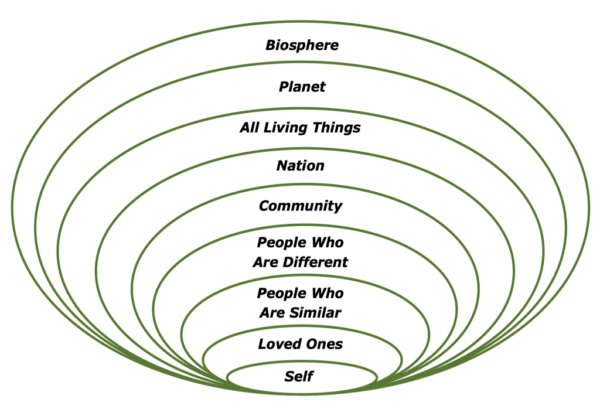
These terms that I have laid out in the title of the article aren’t just ascending rungs on some theoretical meta-philosophical ladder – they are concentric circles of recognition, each one dissolving a subconscious boundary that separates us from a greater oneness with our fellow beings and the world.
Sympathy
Keeps us at our safe spot.
I stand on my side of the river and feel bad about the person drowning on the other side. I might even throw them a rope. But I don’t get wet. My brain and nervous system registers: “That is terrible for them.”
But the ego-boundary holds: me here, them there.
The river – obviously – is metaphoric. The person “over there” may be the neighbor whose son suffered a car accident or the Palestinian babies who are still starving to death. We may send a letter of sympathy or a silent prayer in church.
This is ego-centric consciousness trying its best.
And sometimes that is all we have got. No shame in it – sympathy has launched a thousand charity initiatives, started prayer circles, and organized fundraisers.
It is the gateway emotion to lift us out of indifference.
But here is what sympathy can’t do: it cannot remove the distance.
We remain fundamentally separate, observing suffering from a position of relative safety.
Which is why sympathy can also solidify into pity, or worse, into that subtle subconscious superiority of “thank god that’s not me.” There is a fine line here.
Empathy
Here it gets dangerous (for the ego 🤓)
With empathy, I see the drowning person on the other side … and wade into the river. I feel the cold. My nervous system responds, my body feels their distress, and suddenly the boundary between “my pain” and “their pain” starts dissolving. I feel their horror and fear of drowning; deeply unconscious evolutionary survival fears are triggered …
This is group-centric consciousness waking up – realizing that the membrane between self and other is more permeable than we thought.
Empathy is the resonance. The tuning fork vibrates when another tuning fork is struck nearby. We don’t just observe the drowning person – we taste the panic in our own throat. I guess our collective memory or some reincarnational memory is activated.
We realize that we already know the suffering of the other.
I think that empathy also has a shadow side. You can drown as well.
Empathic overwhelm is real, even a term in psychotherapy. Healthcare workers burn out. Activists collapse. Sensitive souls get swamped by the world’s pain and forget they’re allowed to take a break, to come up for air.
Psychotherapy also can tell about another shadow of empathy: that empathy without boundaries can become performative, a kind of emotional voyeurism . “I feel you, I feel your pain!”
Compassion
This is what happens when empathy grows muscles and a spine.
I am in the river, alright. I feel the cold, yes. But I have not forgotten how to swim.
Compassion is empathy married with practical wisdom – the ability to be with suffering without being consumed by it – and then to act skillfully from that place.
This is world-centric consciousness – the circle expands beyond our family, our loved ones, our tribe, your nation, your species.
We see the drowning person, the suffering animal, the dying forrest, the melting glaciers and recognize: this is not separate from me, but I am also not identical to their drowning.
The Buddhist teachings call it near-enemy-awareness. The “near enemy” of compassion is pity – too distant – and empathy’s near enemy is emotional entanglement – too close.
Compassion finds the middle way.
It says: “I feel you, I know your suffering. And I am going to help. And I am not going to martyr myself in the process.”
But even compassion has edges, its fault lines. Because at this stage, you are still making a choice about who deserves your compassion, your care.
The refugee, yes. But the ICE border guard arresting and deporting them? The bully policeman? The mosquito biting your arm?
I think many good people live at this place. And it’s a good place to live. Compassion makes the world a less brutal place to live in.
Compassion is what the world needs, just like the baby needs the mother’s breasts.
Buddhism is not perfect, but it has a lot of Compassion baked into its teachings.
This is why I love the Buddha’s ways.
~
But now, there is one more line to cross, one more circle to expand into. And I think that this one is infinite and all-encompassing.
Cosmos-centric
Where everything collapses into ONEness
At a certain point on our journey of expansion into consciousness, the boundaries dissolve completely.
Not in some blissed-out way of spiritual bypassing, but in a recognition and realization so total, that it rewires how we move through the world.
We are not in the river anymore. We are the river. We are also the drowning person. We are the water as well. We are the observer on the shore. We are the rope. We are the fear and the rescue and the silence after it is over and we both have drowned.
In Lak’ech Ala K’in – I am another you, you are another me – stops being a greeting and becomes a statement of the fact.
For me, this does not mean that I love everyone equally in some pink-glassy way. It means that I recognize that everyone, me, the other, the river is the manifestation of One Consciousness.
Call it Lila, call it, like the Upanishad: Tat Tvam Asi – “You Are That”
It is hard to understand, I acknowledge that, but it is not my wisdom. Tat Tvam Asi is one of the oldest statements of spiritual reality that is known to us.
There is just this – the whole catastrophe of living, the whole celebration, breathing itself into form and dissolving again.
On that level of consciousness, compassion becomes effortless.
Not because you’re trying to be good, but because we know that harming another is felt as harming ourselves.
I guess that the mystics of the world live in this consciousness. So do certain psychonauts on their inner journey.
And maybe the rest of us touch it in fleeting moments: when holding a very young child, when watching someone die, sometimes when dissolving boundaries while making love, when staring at the night sky ….
Or when getting the shit kicked out of us by life – until the ego finally says “Ok, fine, I give up.”
~
~~
~
But one thing I have learned and seen many times: you cannot skip steps.
You can not Instagram your way to cosmos-centric consciousness. You cannot think your way there. You can not use cosmos-centric consciousness/unity-consciousness/cosmic consciousness as the new mega concept to talk about.
We have to feel our way through the distance that sympathy maintains, the overwhelming sensation of empathy, and compassion’s skillful engagement before the final circle-line of dissolution even makes sense.
Where ocean and drop …
“You are not a drop in the ocean. You are the entire ocean in a drop.” Said Rumi.
Let’s not even try to explain that in some logical way!
And even when we know that state, we don’t live there permanently. We orbit. We touch it, lose it, and find it again. Because we are still human, still embodied, still paying rent and getting annoyed at some people and arguing with people we love.
The circles I have tried to put into the sand are not real fixed lines, no circles, no destinations. They are a spiral staircase; you keep walking, each time around a little wider, a little more permeable, a little less convinced that “I” and “you” were ever actually separate to begin with.
~
~~
~
So, how shall we practice all of that?
In my experience, understanding helps; seeing the big picture is a big bonus. Even when we know that this is only a map.
We can start simple. Noticing when we are in sympathy mode – feeling for someone from a safe distance.
Don’t judge it. Just notice.
Then we can try to drop in one more level. What would it feel like to actually be them/the others right now? Not to think about their experience, but to let our body register it. That is feeling-empathy.
Then let us ask: What do they actually need? Not what would make me feel better about their suffering, or what could i spare, but what would really serve them? And then go and do things to give them what they need. That is compassion.
And every once in a while, when life cracks us open – let the question dissolve entirely.
Let there be no “me helping them.”
Just … spontaneous movement.
Just response.
Just the universe rearranging itself through these particular beings – us.
That’s the circle completing itself.
That is In Lak’ech Ala K’in for real.
🌀
In case you have appetite for more, feel free to dive into those related articles:

UP THE JAKOB’S LADDER INTO THE HEAVENS
THE ASCENT OF HUMAN CONSCIOUSNESS IN 12 STAGES
TRANSITIONING FROM EGO AND SELF-CENTEREDNESS
TO A WORLD-CENTERED CONSCIOUSNESS
FROM INTEGRAL WORLDVIEW
TO COSMIC CONSCIOUSNESS
AND ULTIMATE UNITY