[Press PLAY to listen to a reading of this article.]
The experience of the bright and gentle Spiritual Light
at the Ground of Being
Contemplating the Spiritual Light Across Mysticism,
Near-Death Experiences, and Quantum Theory.
~
listen ➡
Itinerary / a map & overview / shortcuts to specific chapters
- Itinerary / Chapter Overview
- My personal journey “in the Light”
- What Do I Mean by “Spiritual Light”?
- Spiritual Light Across Diverse Traditions
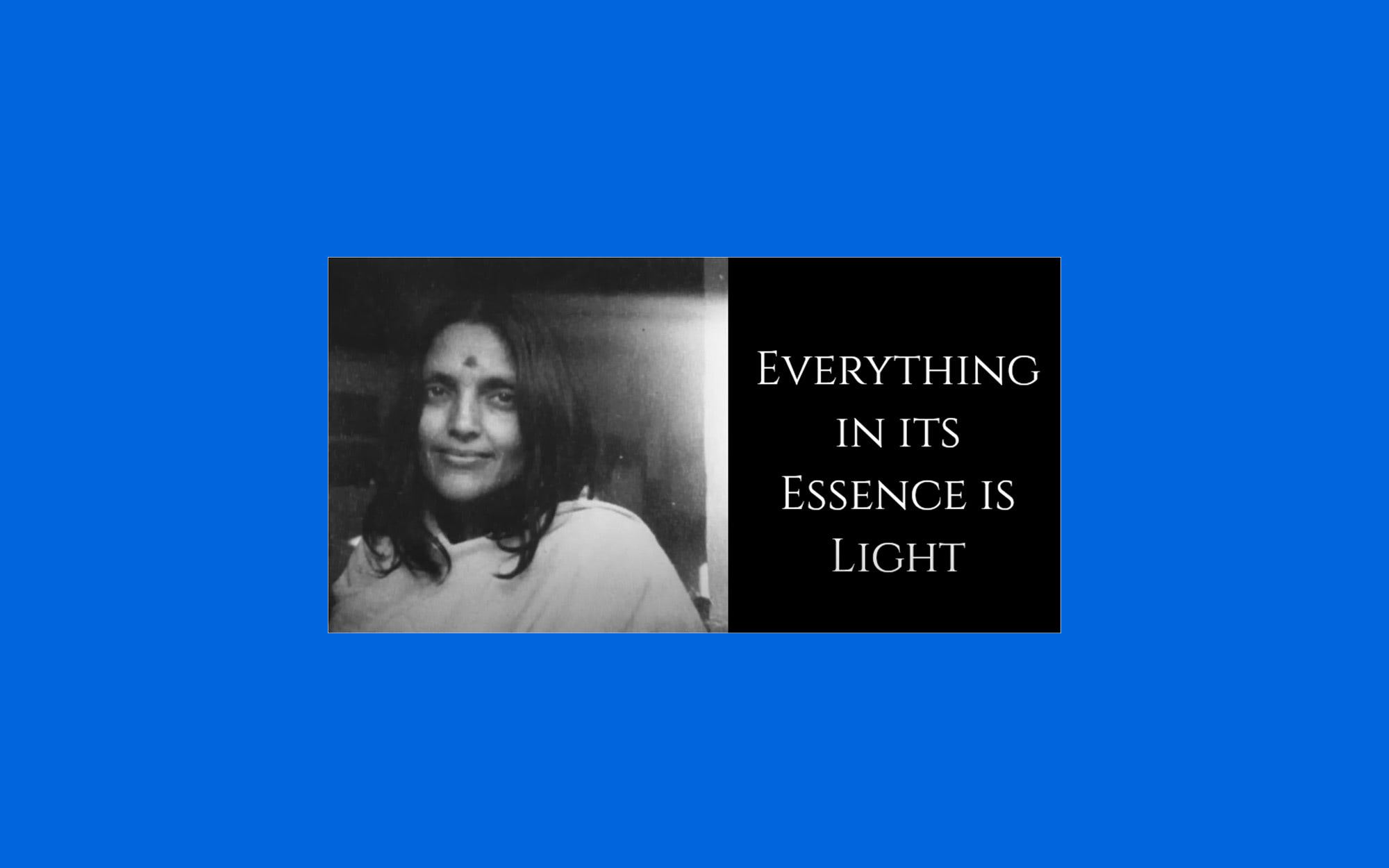
- Anandamayi Ma – Everything in Its Essence Is Light.
- Prem Rawat – Meditation on Light
- Surat Shabd Yoga – Sound and Light
- Adi Da Samraj – The Bright
- Background Luminosity in Buddhism
- Near-Death Experiences and the Soft Light
- Spiritual Light and Quantum Theory
- Spiritual Light in the Context of Quantum Physics – A deep dive into the unity of Matter and Spirit
- My personal Conclusion
Itinerary / a overview
shortcuts to specific chaptersx
- Itinerary / Chapter Overview
- My personal journey “in the Light”
- What Do I Mean by “Spiritual Light”?
- Spiritual Light Across Diverse Traditions
- Anandamayi Ma – Everything in Its Essence Is Light.
- Prem Rawat – Meditation on Light
- Surat Shabd Yoga – Sound and Light
- Adi Da Samraj – The Bright
- Background Luminosity in Buddhism
- Near-Death Experiences and the Soft Light
- Spiritual Light and Quantum Theory
- Spiritual Light in the Context of Quantum Physics – A deep dive into the unity of Matter and Spirit
- My personal Conclusion
listen ➡
My personal journey “in the Light”
In this little article I would like to look back on my life journey and remember different important events and realizations that I had, all connected to the reality of Spiritual Light , and what happens when you “quietly attend to it”.
Along the way, I will also share fragments of information that are not always common knowledge but deserve to be.
~
In my late teens, I found a small book tucked away in the university library. The English was way too complicated for me to read back then, but one image struck me. A photo of a woman, faded and simple, somehow glowing from within. It gave me goosebumps.
Her name was Anandamayi Ma.
~
A few years later, in my early twenties, I met a young Indian guru—he was actually younger than me—who introduced me to a meditation practice he called “Knowledge.”
His name was Prem Pal Rawat. He had begun giving spiritual talks as a child and had inherited the role of spiritual teacher from his father. His father had sent to the West with the message of inner peace, but he spoke without leaning on traditional scripture or cultural frames. That made me curious.
He rarely explained much, so I went looking on my own—through meditation and books, trying to understand what I was experiencing with his meditation practice.
One part of the practice involved “opening the third eye” and experiencing an inner light. That was the part I focused on and I meditated on that Light regularly for nearly two years.
~
Over time my reading widened into Eastern metaphysics, and I started to recognize the contours of my practice within a lineage: Surat Shabd Yoga, a tradition rooted in Sikh mysticism, going back to Guru Nanak in the 15th century.
In that context, I found actual explanations for the light and sound that I had been meditating on. More about that i will share later on.
~
Eventually, my spiritual path and search shifted. I “arrived” at the clarity and simplicity of early Buddhist teaching—especially the Vipassana tradition. And it has remained my home to this day, throughout most of my adult life.
What drew me there wasn’t any promise of spiritual experience, but the practice of clear seeing—witnessing whatever arises, including the so-called spiritual. Nothing is rejected, nothing clung to.
From that kind of awareness, a different light emerges—not as an experience, but as a quiet abiding. A presence that feels like “clear light.” Not mystical, not metaphor. Just what remains when you stop holding on to anything.
I may try to find better words for that later in this article.
Let’s now have a look at how this thread of “spiritual light” appears in different traditions: Buddhist luminosity, near-death reports, and maybe even quantum theory. Stay with me.
~
~~
~
listen ➡
What Do I Mean by “Spiritual Light”?
“Spiritual light” is not about physical brightness. It points to something deeper—something that shows up across mystical traditions, philosophies, and religions. It is often described as a revelation of the Divine or the Ground of Being.
Across the world’s traditions, light serves both as symbol and structure. It represents presence, insight, grace. In mystical experience, it often comes with a sense of vastness, clarity, or homecoming.
listen ➡
Spiritual Light Across Diverse Traditions
The presence of a luminous, inner, or Divine Light is a recurring motif across many spiritual paths, each interpreting its nature and significance through its unique metaphysical framework and practices.
listen ➡
Anandamayi Ma
“Everything in Its Essence Is Light.”
Born in 1896 in rural Bengal, Anandamayi Ma lived as a radiant spiritual figure within the Bhakti tradition. Her life was marked not by doctrine, but by presence—many described her as saturated with grace. People around her spoke of miracles, healing, and a sense of deep peace in her presence.
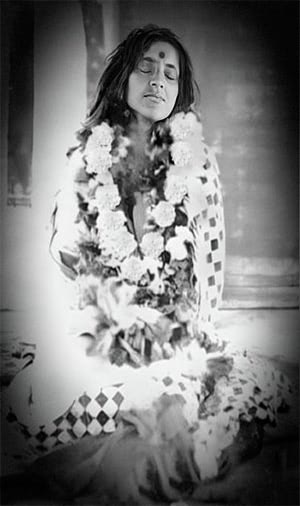 One pivotal moment came in 1922, when she experienced what she called a spontaneous initiation. She described it as her whole body becoming light, a blissful current flowing head to toe.
This experience shaped her teaching. She often referred to herself in the third person, calling her body “this one” or “this little girl”—a way to show detachment from ego. And she would say, over and over again: “Everything in its essence is light.”
For her, the world as we normally perceive it is like a dream. The suffering we experience comes from imagining we are separate from the whole. But there is only One. Call it Christ, Kali, Krishna, or Allah—it is the same light, shining through every form.
She spoke without theory. Her insights came from a state she described as “beyond the mind.” But they were clear. To her, light was not a metaphor. It was reality.
~
listen ➡
Prem Rawat
Meditation on Light
Prem Rawat—sometimes called Maharaji—was born in 1957. By the time he was eight, he had taken over his father’s spiritual role and began offering teachings focused on peace through inner experience.
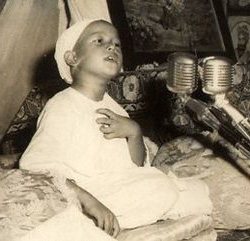 He taught a practice he called “Knowledge”—a set of four meditation techniques. One of these focused on light, involving inward pressure toward the “third eye,” aiming to open up to an awareness of internal illumination.
He rejected traditional religious structures, preferring direct experience over scriptures. His approach was quiet, personal, and non-dogmatic.
The light he spoke of was experiential, not symbolic. It was something to be seen—inside. He avoided framing his teaching as a religion and left the interpretation to each practitioner.
In that sense, his method mirrors other esoteric lineages. There is secrecy, there is practice, and there is a turning inward. No belief required—just a willingness to look.
listen ➡
Surat Shabd Yoga
Sound and Light
This Indian practice shares roots with Sikh mysticism and the ancient nāda yoga tradition. It teaches that both light and sound are doors to the divine.
In this system, “Surat” means attention, and “Shabd” refers to sacred sound or vibrational current. Together, they point to a practice of focusing inward—especially at the third eye—to perceive the inner sound and light that arise when the mind grows still.
Initiation by a living teacher is often emphasized. But the real core is this: the divine is already present. You do not need to invent it. You just need to learn how to listen—and see.
This meditation sees light and sound not as analogies, but as direct perceptual interfaces with ultimate reality. Two portals, same source.
listen ➡
Adi Da Samraj
“The Bright”
Adi Da, born Franklin Jones in New York in 1939, emerged in the 1970s as a provocative spiritual teacher. He called his path Adidam and described his awakening using a unique term: “The Bright.”
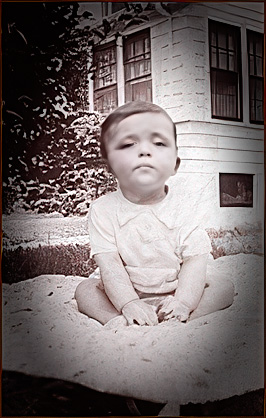 He claimed to have been born in a state of full realization, only to “sacrifice” that state as a child to fully embody human suffering—and later, to reawaken to it consciously. His realization of “The Bright” returned in 1970.
What he called “The Bright” was not an idea, but a direct experience of consciousness as radiant, whole, and self-existing. It was awareness without division—light before form. He described it as “prior to experience,” inherently full, silent, spaceless, and luminous.
For Adi Da, this light was not just a mystical vision. It was the essence of what is real. It radiated from the heart—not metaphorically, but literally—and revealed that everything is a modification of the One Divine Being.
His teaching was unapologetically radical: there is no difference between you and God. There is only the Divine. Everything arises from and returns to the same conscious light.
~
listen ➡
Now I ask my friend Cora—the LLM from OpenAI—to talk about Spiritual Light in Buddhism as well as during Near Death experiences.
Background Luminosity in Buddhism
In Buddhist traditions, especially in the Mahayana and Vajrayana schools, we find the idea of the “luminous mind.” This is not poetic language. It refers to a specific quality of awareness that is clear, open, and innately radiant.
The Pali canon contains references to this light—samadhi states where the mind becomes bright and soft, or the pure awareness that remains when defilements are cleared away.
Later texts go further. The Lankavatara Sutra connects this luminous mind with Buddha-nature itself. The light is not added—it is what remains when everything else falls away.
In Vajrayana—the Tantric esoteric schools of Buddhism—especially Dzogchen, the “clear light” is seen as the fundamental ground. It is what emerges in deep meditation, in deep sleep, orgasm, and the death process. Training to recognize it during those moments is considered one of the highest practices.
All Tibetan Buddhist systems agree that this clear light nature of the mind is non-conceptual and inherently free from mental afflictions. Vajrayana practices, such as dream yoga, specifically train practitioners to lucidly enter deep sleep to recognize the luminosity of death, aiming for the attainment of Buddhahood.
Luminosity here is not a visual experience—it is a quality of mind itself. And its discovery is not an attainment. It is a return.
listen ➡
Near-Death Experiences and the Soft Light
Near-Death Experiences (NDE) are subjective phenomena reported by people who have gone through critical conditions, such as cardiac arrest, severe head injury, or states of shock, where they were on the brink of death.
These experiences often include a range of common components: an out-of-body experience, a sensation of passing through a dark tunnel, encounters with brilliant or soft lights, meeting deceased relatives or spiritual beings, and sensing a border or point of no return.
Accounts of near-death experiences from all over the world share one element in common: light. Often described as soft, all-embracing, or impossibly bright—this light is perceived not just with the eyes, but with the whole being.
People even report meeting the light. It is often felt as loving, intelligent, and somehow deeply familiar.
For many, this encounter rewires them. Their values shift. They report transformative aftereffects, including increased happiness, reduced materialism, greater empathy, and a diminished fear of death. The light seems to show them something more real than life itself.
EEG scans show theta wave activity during these episodes—often associated with memory and altered states. But beyond brain mechanics, the consistency of these reports across cultures suggests something more than biology at play.
From a spiritual perspective, the light encountered in NDEs is often interpreted as representing the presence of a loving Creator, or a spiritual guide such as Christ, depending on the individual’s religious background.
This spiritual interpretation is reinforced by attributing qualities to the light that are traditionally associated with the divine: omnipresence, omniscience, and omnipotence. The consistent reports of profound peace, unconditional love, and a sense of unity in the presence of this light further contribute to its spiritual significance beyond explanations from neuroscience or psychology.
Whether interpreted religiously or neurologically, this soft light seems to mark a threshold—a boundary where what we think we know begins to dissolve.

listen ➡
Spiritual Light and Quantum Theory
This last part is where things get strange and very very interesting! With the potential to finally unify science and spirituality.
Quantum physics changed everything. It revealed that the world we see and touch is not the full picture. Beneath the seemingly surface, there is something much more fluid, subtle, and abstract.
Particles are not solid things. They behave like waves—forms without mass, shape without substance. Max Born showed that these are “probability waves”—structures made of pure information. They don’t carry energy or matter, yet they shape the material world.
This changes the rules. Reality, at its base, may not be material at all. It may be more like thought. Or mind.
Quantum theory also introduces “nonlocality”—the idea that two particles can influence each other across space, instantly. It implies a kind of connectedness that defies our ordinary sense of cause and effect. Wholeness, not separation, is fundamental.
Some physicists now suggest that consciousness is not an accident of brains, but a property of the cosmos itself. C.G.Jung called this “Unus Mundus”—one world, beneath the appearance of many. A ground where mind and matter, symbol and atom, dream and particle all emerge from the same invisible field.
Virtual quantum states—non-material patterns that guide how matter behaves—mirror Jung’s archetypes. Both are invisible, formative structures that shape reality from behind the scenes.
From this view, the inner light described in mystical traditions might not be fantasy. It could be a way of perceiving these subtle structures directly—forms of intelligence that precede manifestation.
Some thinkers even propose a quantum model of the soul: a vibrational field of information that persists beyond the body. This soul could interact with other fields, access shared memory—Akashic Records—and reflect the same unified field from which all things arise.
In this vision, light is not just metaphor. It is structure. It is presence. It is the common language of science and spirit, atom and awareness.
I understand this “Realm of Quantum Reality” only a little bit, lately i have tried to inform myself about it with the help of my “AI friends”.
So here i ask the Gemini Large Language Model from DeepMind to go deeper into “the matter” and explain in detail how The Spiritual Light relates to the Quantum World.
listen ➡
A contemplation of the intersection of spiritual light and quantum theory represents a frontier of inquiry, challenging classical materialistic paradigms and suggesting a deeper, non-material foundation for reality and consciousness.
Traditional Western science has historically viewed the world as composed solely of “solid, massy, hard, impenetrable, moveable Particles,” leading to a segregative worldview where non-material aspects were often dismissed. However, the advent of quantum physics in the 20th century profoundly shifted this perspective, revealing that the basis of the material world is, paradoxically, non-material.
Quantum physics postulates a realm of the universe that is invisible and non-material, consisting of “forms” rather than “material things”. Electrons, for instance, are not merely tiny particles but “standing waves or forms”.
Max Born’s discovery further explained these as “probability waves,” which are dimensionless, empty, and carry no mass or energy, but rather information on numerical relations. Despite their non-material nature, the interference of these probability waves fundamentally determines the visible order of the world, including the formation and interaction of molecules.
This leads to the conclusion that the underlying basis of reality is non-material, a concept that resonates with ancient philosophies such as Pythagoras’s idea that “all things are numbers” and Plato’s view of atoms as mathematical forms, and a underlaying blueprint of reality known as the “Platonic Solids”.
A central concept in quantum phenomena is “wholeness,” which suggests that seemingly separate entities can be interconnected and act instantaneously across vast distances, a phenomenon known as “nonlocality”.
Elementary particles, when observed in a vacuum, transition from a localized material state to a non-material wave state, becoming “pure forms, patterns of information, something mindlike or thoughtlike”. These “Entities” in their wave state exist in a “state of potentiality” outside the empirical world, implying that the entire visible world is an “emanation out of a non-empirical cosmic background,” which is the primary reality.
The “thought-like” nature of these forms in the cosmic potentiality leads to the profound suggestion that “consciousness is a cosmic property,” implying that the universe itself is conscious and that human thinking is an integral part of this cosmic mind.
This aligns remarkably with Carl Gustav Jung’s archetypal concept of “Unus Mundus”, which assumes an underlying unity to the multiplicity of the empirical world, where “everything divided and different belongs to one and the same world, which is not the world of sense”.
The parallels between quantum physics and psychology are further drawn through the concept of “virtual states” in quantum chemistry. These are empty, invisible, non-material forms of atoms and molecules that, despite being empty, are real because a molecule can transition into them and become visible. They represent the “logical structure of a system, which contains its future empirical possibilities” and steer chemical reactions, demonstrating that “invisible virtual states are real” and act like “inner images” guiding molecular actions.
This is directly compared to Jung’s belief that archetypal images exist in our consciousness as manifestations of unknowable pure forms of archetypes. The conclusion drawn is that “Psychology is the physics of the mind: Quantum physics is the psychology of the universe,” suggesting a fundamental equivalence between the mental and the physical at a deeper level.
Jung’s concept of the collective unconscious—a non-personal realm of forms (archetypes) that spontaneously appear in consciousness and influence imagination, perception, and thinking—is seen to be in perfect agreement with the quantum universe.
Just as molecules are guided by the wave forms of their quantum states, biological evolution is viewed as the adaptation of minds to increasingly complex archetypes within the cosmic potentiality. The “molecular wave functions have no units of matter or energy” and are “pure, non-material forms,” akin to Jung’s archetypes.
The appearance of the term “virtual states” in both mystical and quantum contexts points to a connection between minds and a “cosmic realm of thoughts: the realm of Jung’s archetypes”. This perspective proposes that archetypes can be understood as the virtual state functions of our mind, and virtual quantum wave functions as the archetypes of physical reality, both originating from a “cosmic consciousness”.
The quantum theory of the soul proposes that the soul is the content of information within one’s quantum vibrational field. This framework suggests several predictions: the soul is the essence of existence, may continue its journey after the physical body ceases to function, can be eternal and unlimited, can connect with and affect other souls remotely, and supports the existence of “Akashic Records” as a universal quantum vibrational field carrying information about everything.
This theory supports the spiritual perspective of monism, where soul, spiritual heart, mind, energy, and matter are different aspects of one existence—the quantum vibrational field—and endorses panpsychism, suggesting that everything possesses a certain level of soul and consciousness.
In this model, the spiritual heart acts as the receiver/emitter of information, and the mind processes this information, directing energy to move and transform matter, which then manifests as our observed experience.
This integration of science and spirituality suggests that quantum physics offers a compelling framework for understanding spiritual phenomena, including the nature of spiritual light, as manifestations of a fundamental, conscious, and interconnected reality.
Quantum Physics—for me—is definitely a field hard to grasp with any deeper understanding! But I feel the importance of what is expressed here: That finally, after ages of separation (in our minds) of matter and Spirit, worldly and sacred, Heaven and Earth, spiritual and secular the two shall meet. And stand on one and the same ground.
We may have used very different terminology and explain our ultimate view in different words. But we slowly may arrive at the one place that is real beyond all ideology.
listen ➡
My personal Conclusion
For me, all this is still hard to fully grasp. Quantum theory can be dense, elusive, strange. But it points to something I feel strongly:
That spirit and matter were never separate. That sacred and ordinary are made of the same light. That what we call God, or consciousness, or mind, or source, is the same field from which all arises.
And when we sit still—quiet, attentive—we can begin to feel it.
The bright and gentle light.
The ground of being.
The real.