Anni Albers and the Women of Bauhaus
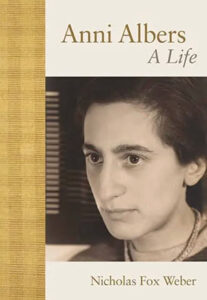
When Annelise ‘Anni’ Fleischmann arrived at the Bauhaus in 1922, she wanted to work with glass. Yet Walter Gropius, the famous founder of Bauhaus, sent her to the weaving workshop instead — where all the women went, whether they wanted to or not.
 “Women’s hands,” he said, were “naturally suited” to the loom. Then as now, women had it not so easy in a Men’s World.
She could have left. But she stayed.
What the men meant as a easy controllable exile, Anni transformed into revolution. The loom became a site of radical thinking and a new art-form was born — not in spite of the limitation, but through it. Fine Art Weaving, Abstract Textile Art.
Beside her worked other strong women, Gunta Stölzl, Otti Berger — women whose names are sadly almost forgotten now.
But together, they literally wove modernism into the world: textiles that absorbed sound, reflected light, aligned with the new style of architecture that Bauhaus pioneered. They coded patterns into cotton and silk in a way that other abstract visual artists painted on canvas.
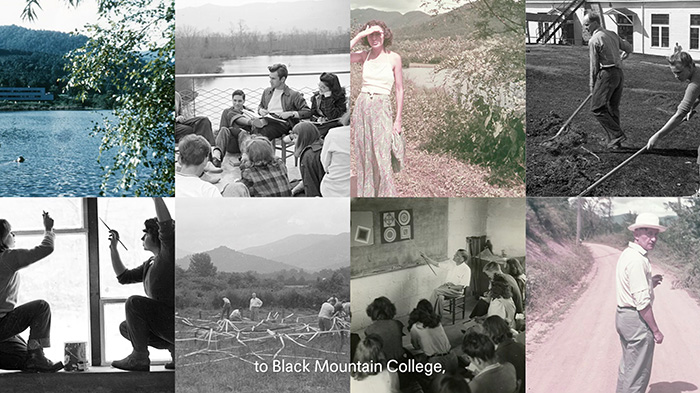
In 1933, Anni and her Painter-husband Josef Albert fled the Nazi to Black Mountain College in the USA, carrying the Bauhaus spirit to America.
Sixteen years later, she became the first textile artist ever given a solo exhibition at MoMA, the Museum for Modern Art in NYC.
~
~~
~
I feel that weaving and code writing have a lot in common, sometimes code even looks like abstract weaving.
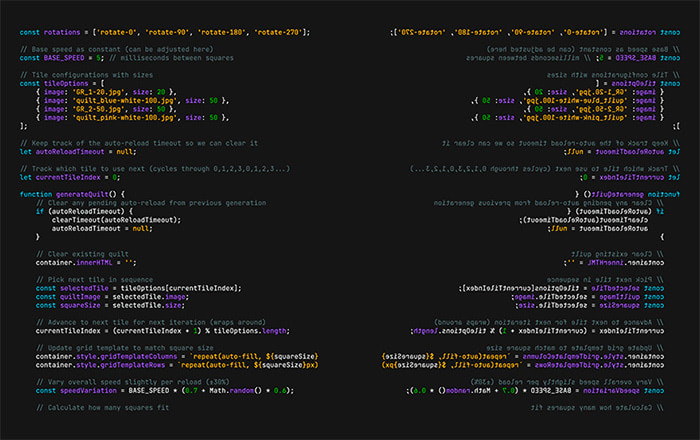
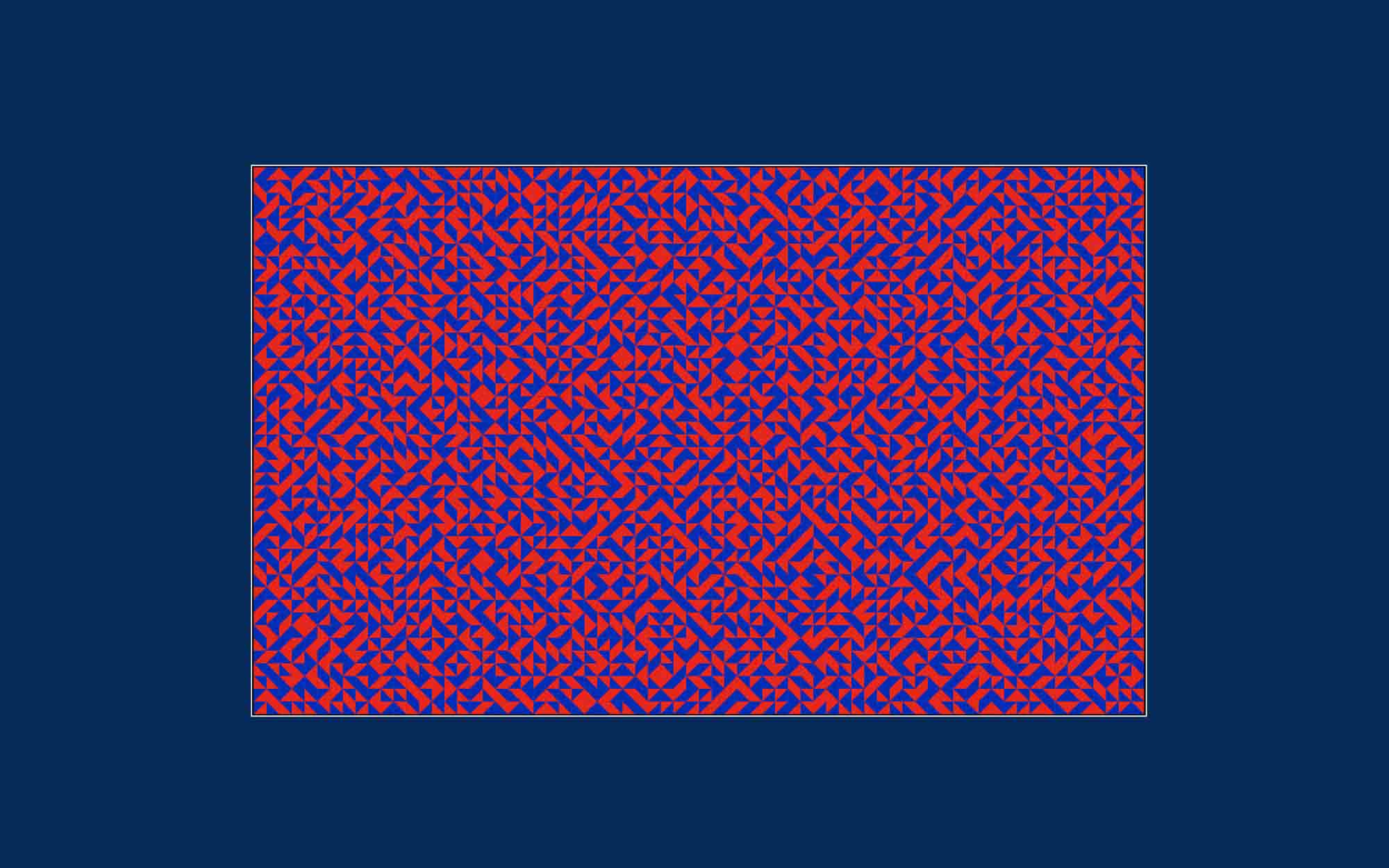
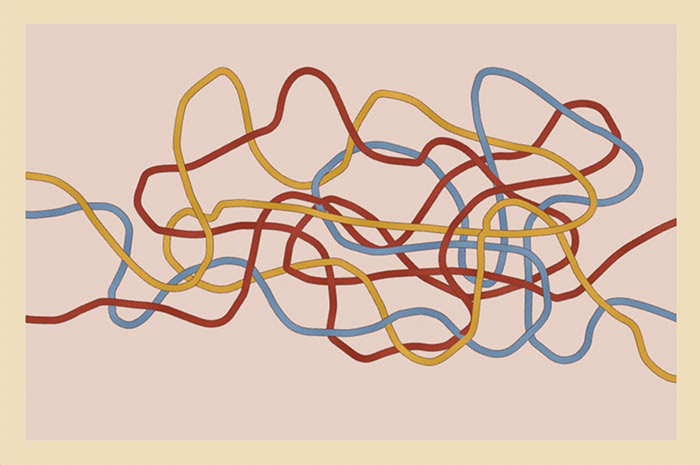
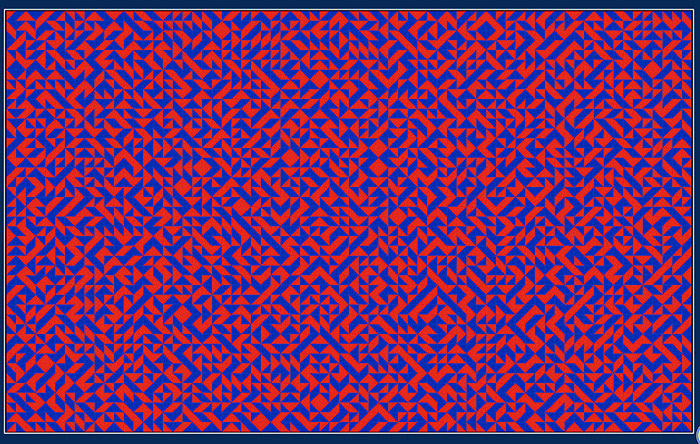
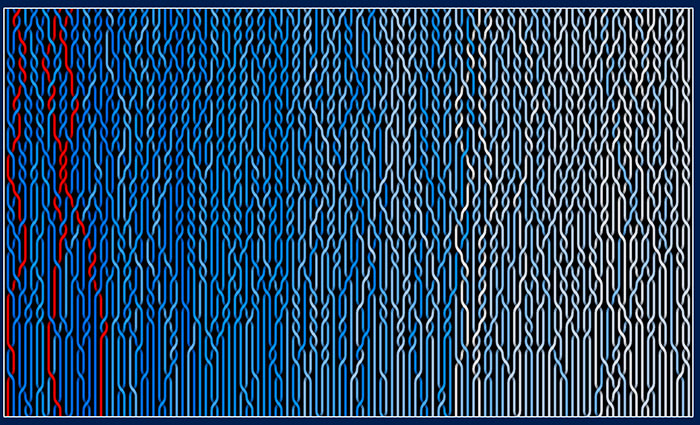
I got inspired to “recreate” some of Anni’s weavings and works of gouache on paper in code, and animate them to bring them to life.
Josef and Anni Albers / Artists – short documentary