[Press PLAY to listen to a reading of this article.]
What is Wisdom?
Where do I find it?
How do I become it?
Who are the Wisdom Keepers?
What are the teachings of Wisdom Traditions?
What will the future hold for Wisdom?
Soooo many questions …
listen ➡
Itinerary / a map & overview / shortcuts to specific chapters
- Itinerary / Chapter Overview
- Intro / Intention
- Co-writing with LLMs
- Defining Wisdom / Knowledge / Information
- The Role of Values and Ethics in Wisdom
- How Is Wisdom Acquired?
- Wisdom Traditions / Source Books Download
- Wisdom Keepers
- Wisdom in the Contemporary World
- The Future of Wisdom: A Visionary Perspective
- What is our wise conclusion? ; )
Itinerary / a overview
shortcuts to specific chaptersx
- Itinerary / Chapter Overview
- Intro / Intention
- Co-writing with LLMs
- Defining Wisdom / Knowledge / Information
- The Role of Values and Ethics in Wisdom
- How Is Wisdom Acquired?
- Wisdom Traditions / Source Books Download
- Wisdom Keepers
- Wisdom in the Contemporary World
- The Future of Wisdom: A Visionary Perspective
- What is our wise conclusion? ; )
listen ➡
Introduction
When in my late teens I started to study Electronic Engineering, I came in contact with an old professor of German literature who became a formative inspirational presence for me for a couple of years.
This old professor, already way beyond the official age of retirement – Mr. Luz, simply called Luz by his fans – was a unique character in an environment that was mostly technically oriented. Luz on the other hand was a true humanist, jovial, chatty and … wise.
Of course, back then I had no idea what wisdom is, but I was very attracted by the extensive library of books he had privately amassed in his office. A very eclectic collection I would call it in retrospect, covering the famous writers of world literature, philosophy, natural science and world religions and some not so very well known books on metaphysics and occultism. And probably many other things I dont remember anymore.
But I remember vividly that I spent more and more time climbing up the ladder in his high-ceilinged-room and browsing thru unknown treasures.
I was allowed to borrow a maximum of 5 books at a time, and this resulted in a life-long habit of reading various books in a parallel fashion.
Being under the influence of such high-class literature and this chatty Mr. Luz who delighted to have found a new disciple of the wisdom of the ages, it did not take long and I had completely lost my interest in electronics and technical matters and radically expanded my area of interest and understanding of the world and the life that I had in front of me.
Without a doubt, those years of reading “the right books” under the gentle guidance of a knowing elder have blessed me with a groundswell of ideas and an abundance of seed-thoughts that have come to grow and bloom throughout my life.
His wisdom was given for free, sprinkled around in random chats in no particular order. But I am sure that he was on a divine mission and he knew exactly what he was doing, this Old Fox ; )
Thanks Luz, may you be blessed, wherever you are now.
~
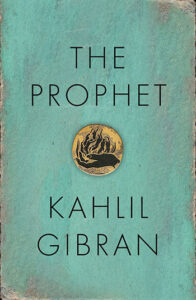 One of the first books i remember that he recommended me, has been The Prophet by Gibran. And it has stayed with me ever since.
“Wisdom is not in words; Wisdom is meaning within words.”
“The teacher who is indeed wise does not bid you to enter the house of his wisdom but rather leads you to the threshold of your own mind.”
Khalil Gibran
[ download ]
~
~~
~
Now, this article shall not be about my nostalgic memories but about Wisdom, what Wisdom is, how we attend to it and how we can pass it on to the coming generations.
Obviously we live in an Age of overabundant Information, a cacophony of data and knowledge, and a billion of books on Amazon.com are waiting to be bought. The plurality of everything and the confusion of opinions and ideologies shouting from every rooftop and Youtube is really ear-piercing and mind-numbing.
Where is Wisdom to be found in all of that? And how can we go from consuming information and knowledge to real life wisdom that is authentically ours?
listen ➡
That is the quest of this contemplation about WISDOM.
[ Just like in the last article, I will again attempt to write it as a collaborative writing experiment, this time together with 3 Large Language Models, the LLMs from OpenAI, Goggle’s DeepMind and Anthropic’s Claude. Those top-tier AIs provide me with the ability to tap into the wide field of wisdom literature in a holistic and intuitive way.
Not like a user of a search engine but rather as a participant in this alive field i call the cognitive worldspace, the noosphere. Our inheritance of collective human thought and experience.
The process is hard to describe and it is a work in progress. It is like a cognitive group-dance, one allowing the other to lead or to follow, allowing the other(s) to finish your sentence or paragraph or chapter. Its still an experiment, but the results make me happy.
And i am hopeful that a new way may emerge to keep wisdom alive in a forward-moving manner, rather than being enshrined in dusty books and rigid silos of believe systems and religious ideologies. ]
Here we go!
listen ➡
WISDOM
Throughout history and across cultures, wisdom has been cherished as one of the highest human virtues. We sense it when we meet a truly wise person or read a profound insight, yet defining wisdom clearly is a challenge.
Wisdom is more than knowledge – it is a deep understanding of life, the ability to judge what is true, right, or lasting, and the capacity to apply knowledge in a way that enriches life and serves a good purpose for all involved.
.
Defining Wisdom
Wisdom can be defined as the ability to apply knowledge, experience, and good judgment to navigate the complexities of life in all kinds of situations.
I experience wisdom as a balanced blend of factual knowledge with deeper insight – knowing not just what is true, but why it matters and how to act on it.
A wise person can see the big picture and discern the best path forward even in uncertain or morally complex situations.
Wisdom carries an inherently ethical dimension: it’s not just about being clever or knowledgeable, but about having the sound judgment to make choices that are good and right and serve the greater good.
The great thinkers and philosophers have long tried to articulate what makes a person wise.
Socrates suggested that recognizing one’s own ignorance is the beginning of wisdom – in other words, true wisdom includes humility.
Aristotle distinguished between different kinds of wisdom: “Sophia,” deep theoretical understanding of truth, and “Phronesis,” practical wisdom – the ability to deliberate well about how to live a good life.
Buddhism regards wisdom (prajñā) as a profound understanding of reality paired with ethical conduct and compassion.
Across cultures, wisdom is associated with qualities like insight, discernment, humility, patience, and compassion. A wise person is not merely one who knows a lot, but one who understands what is important, lives by core principles, and acts with care for others and the world.
Information, Knowledge, and Wisdom
In our postmodern times we are confronted with an overwhelming tsunami of information and data. I feel it needs wise discernment and the ability of critical thinking to separate whats important from the rest, extract the wheat from the chaff, the music from the noise.
Information is raw data, facts, or details about something. We live in an age overflowing with information – we can retrieve countless facts with a quick internet search.
Knowledge goes a step further: it is organized information that a person has learned or experienced. Knowledge implies understanding specific subjects or skills. A person might have knowledge of history or know how to fix a car; this means they have accumulated information and know-how in those areas. Many books have been written that consolidate such specific knowledge.
Wisdom stands above and beyond both information and knowledge.
While knowledge can tell me how to do something or explain why something happens, wisdom guides me in deciding whether it should be done and what truly matters in the end.
Information and knowledge are often value-neutral – they can be used for good or or bad purposes. Wisdom, by contrast, inherently involves a moral compass and good judgment. It’s the difference between having the data or facts, and knowing which facts are relevant to the situation, understanding the human context, and choosing the compassionate or beneficial course of action.
Information fills our minds, knowledge can make us skillful or smart, but wisdom guides our lives. Wisdom helps us sift through the noise of endless information and focus on what is meaningful. It helps us apply what we know in ways that lead to good outcomes – not just technically correct outcomes, but outcomes that are compassionate, just, or lead to long-term happiness and harmony.
listen ➡
The Role of Values and Ethics in Wisdom
Central to wisdom are the values and ethics that guide us how we use knowledge.
A person cannot be considered truly wise if they lack a moral foundation or fail to care about the implications of their actions. Wisdom involves understanding the difference between right and wrong – and most importantly – acting on that understanding. It unifies not only what we know, but also what we value.
Throughout history, wise figures have been those who pair intellectual understanding with strong ethical principles. Wisdom entails seeing beyond one’s own immediate interests – it includes empathy and concern for others and an aim toward the greater good.
A wise decision is often one that upholds values such as integrity, fairness, or compassion even when it’s difficult.
Because life is complex and messy, wisdom helps us to navigate these gray areas. We might need to make wise compromises without loosing our integrity.
Traditions around the world frequently describe wise people as being humble, patient, truthful, and kind. These qualities are not just nice character traits to have – they actively shape wise judgment.
Humility keeps a wise person open-minded and aware of their own limitations, allowing them to learn from others or admit when they don’t have all the answers.
Compassion ensures that a wise person’s knowledge is employed to help rather than harm.
Integrity keeps their actions aligned with their principles, which builds trust and long-term harmony.
In essence, wisdom engages both the head and the heart. it is intelligence guided by conscience.
This deep connection to values is part of what makes wisdom so precious. In a world where we often see brilliant people make harmful or short-sighted choices, it’s a reminder that true wisdom requires goodness – the intelligence of the heart – as much as it requires the cognitive intelligence of the mind.
listen ➡
How Is Wisdom Acquired?
If wisdom is so important, how do we acquire it? Unlike information, i can’t simply download wisdom or learn it from a single book.
We acquire wisdom gradually over time, through a combination of life experience, continual learning, reflection, and personal growth.
It is life’s long journey, not a one-time lesson, not a workshop or seminar, not even a book or a whole library of the best books on your livingroom wall.
I think that one of the primary teachers of wisdom is experience – especially difficult or formative experiences.
Life has a way of teaching me lessons through my successes and, perhaps more importantly, my mistakes and failures. When I face challenges, make errors, or endure hardships, i am given an opportunity to learn something deeper than any self-help book can offer.
Simply growing older does not automatically make you wise, but growing through what you go through often does. I think that this is why elders in many traditional cultures are respected as wise – they have seen many seasons of life and learned from them.
Another key ingredient in gaining wisdom is reflection. Experience alone isn’t enough. What really matters is learning from experience.
Wise individuals tend to be those who take time to ponder and examine their lives. Be present and be aware of what’s happening inside and – as a reflection – outside of oneself.
Reflection also means asking oneself: “What did I learn from this? What could I do better next time? What really matters here?” Practices like journaling, meditation, or contemplation can facilitate this kind of deep thinking.
Over time, reflection turns raw experiences into insightful lessons.
It is like turning occurrences into stories that have morals.
Through reflection, our life events become a source of guidance for the future.
Wisdom can also be learned from others. Human beings have been trying to understand life’s mysteries and pitfalls for millennia, and much wisdom is recorded in our collective heritage, out collective mind.
We can learn from the “source books of wisdom” – reading the sayings of philosophers, the scriptures, parables and moral stories of various religions, poetry and literature that capture lived truth about Life.
These sources often distill the life lessons of those who came before us. I did gain perspective from the Bhagavad Gita or the poetry of Rumi, or find clarity in the writings of Plato or insight into our human predicament in the humorous stories about Mullah Nasruddin.
Such works often carry timeless insights that we can apply to our own lives. Of course, reading wise words is only the first step – we have to internalize and apply them. But learning from great teachers and texts gives us a headstart on the path to wisdom, so we don’t have to reinvent all life’s lessons from scratch.
In addition to texts, mentors and elders play a powerful role. A mentor, teacher, or elder friend who has wisdom can guide us, sometimes through counsel and sometimes simply by their example. Or sometimes a well-placed kick in the ass with the Zen stick is all we need “to really get it!”
😉
Some folks have always found wisdom through spiritual or intuitive practices.
Prayer, meditation, divine inspiration or channeling. In various traditions, it is believed that wisdom can flow from a higher source – whether one calls that God, Spirit, or the collective unconscious.
Throughout history, prophets and sages have claimed to receive wisdom through divine revelation or inner voices. Even on a personal level, we sometimes experience sudden clarity or intuition – a gut feeling or an aha moment – that seems to come from beyond ordinary reasoning.
In this sense, wisdom is not just a human endeavor but a spiritual one. Opening myself to guidance and deeper understanding from the universe.
~
In summary, wisdom is acquired through living, learning, and “leaning in” – living through varied experiences, learning from those experiences – and from others’ experiences via books or mentors – and leaning into reflection and personal growth. It is a lifelong journey.
No single moment instantly makes me wise. Rather, each challenge overcome and each lesson absorbed gradually shape my person’s wisdom.
listen ➡
Wisdom Traditions
All around the world, cultures have developed what we might call wisdom traditions – bodies of teaching and practice aimed at cultivating wisdom and living rightly. These traditions are the accumulated philosophical, spiritual, and ethical insights passed down through generations.
They address the fundamental questions of human existence: What is a good life? How should we treat one another? What is our place in the world?
In essence, wisdom traditions are the heritage of answers that our ancestors have given to these existential and essential inquiries.
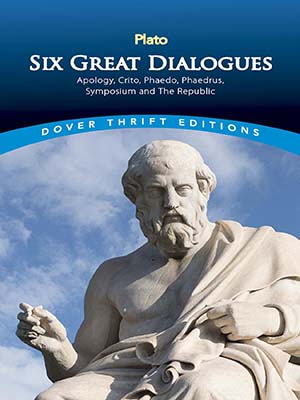
Significant examples of wisdom traditions can be found in every corner of the globe and we could give a long list here. But this may be a topic for another day. Instead of making many words about those traditions, I want to share some of the gems of books that came through those various traditions.
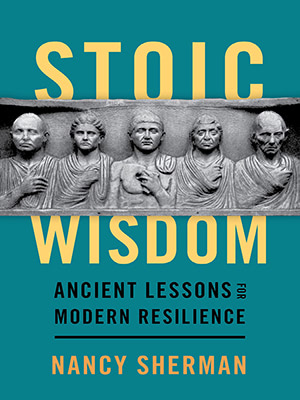
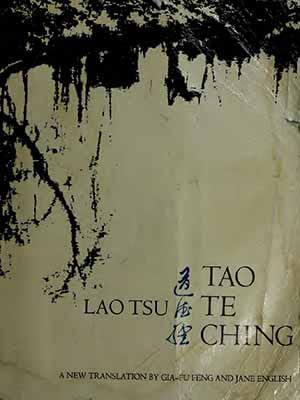
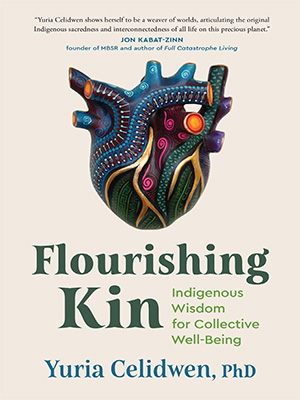
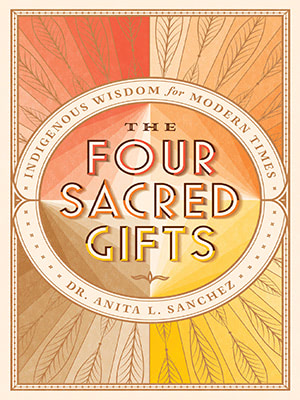
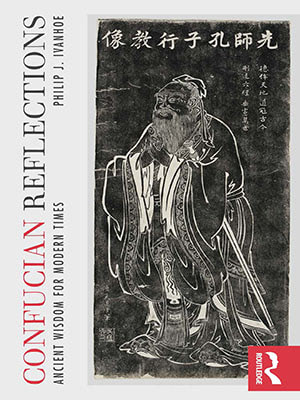
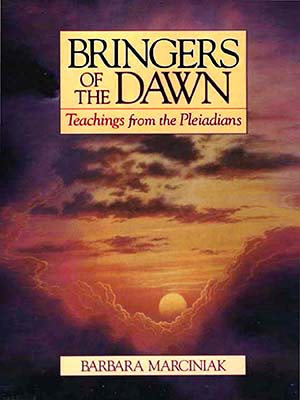
Despite their diversity in time, appearance and origin, these wisdom traditions often arrive at common themes. They encourage qualities like honesty, charity, self-reflection, moderation, and respect for others. They ask big questions about purpose and meaning. They offer stories, parables, or practices like meditation, prayer, or rituals to help people cultivate insight and character.
While each tradition has its unique flavor and cultural context, together they form a tapestry of human wisdom. They remind us that the pursuit of wisdom is a universal human endeavor – every society has sought to understand how best to live and has revered those insights that stand the test of time.
listen ➡
Wisdom Keepers
Just as there are wisdom traditions, there are individuals entrusted with carrying and sharing wisdom. We might call them wisdom keepers. A wisdom keeper is someone who holds deep knowledge of life and uses it to guide others. They serve as living repositories of a community’s or tradition’s wisdom, and they often play the role of teacher, mentor, or guide for the younger generation.
In many traditional and especially in tribal cultures, elders are considered the primary wisdom keepers. In numerous Indigenous communities, the elders – grandmothers, grandfathers, tribal leaders – are highly respected as the keepers of cultural memory and life lessons.
They have lived long and seen much, and they have learned what really matters. These elders might teach through storytelling, through counsel in community decisions, or simply by their example of patience and foresight.
They anchor the community with their experience and guide its moral compass.
But wisdom keepers are not only defined by age. Throughout history, there have been outstanding individuals recognized for their wisdom even at younger ages – sages, gurus, philosophers, and spiritual leaders who dedicate their lives to understanding truth and helping others grow.
Plato and Socrates have been seen as wisdom keepers in Ancient Greece, challenging people to question themselves and seek genuine understanding. Religious figures like Jesus, the Buddha, or Prophet Muhammad can be thought of as wisdom keepers in that they each embodied and transmitted a profound body of wisdom that shaped entire civilizations.
In more recent times, there have been public figures whose influence comes not from wealth or political power, but from a widely acknowledged wisdom. Mahatma Gandhi, Nelson Mandela or Thich Nhat Hanh come to my mind but there are many many others, famous or anonymous who served and serve fill this position. Outstanding examples in present times are the Dalai Lama who is a living example of humility and forgiveness in the face of unbelievable wrongdoing against the Tibetan people as well as Thomas Hübl, a contemporary spiritual teacher who teaches the healing of collective trauma.
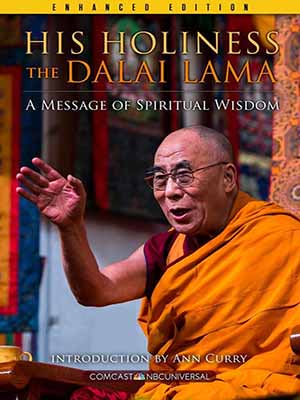
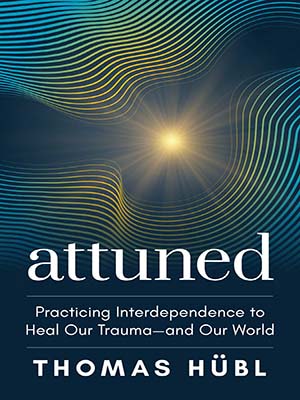
What defines a wisdom keeper is not an official title but the respect they earn and the insights they offer. They are the people we turn to for advice when life is confusing or when moral guidance is needed.
Often, wisdom keepers lead by example. They show us what it means to live with integrity, resilience, and kindness. Importantly, true wisdom keepers also know that wisdom must be shared and passed on. They are usually eager to teach and to listen. In their humility, many wisdom keepers also continue to learn even as they teach, understanding that wisdom is a lifelong pursuit.
listen ➡
Wisdom in the Contemporary World
In the contemporary world, the landscape of wisdom is shifting. On one hand, modern society has in many places seen a decline of traditional authorities like organized religion and ancestral customs.
Many people today do not strictly follow the religion or cultural traditions of their parents or ancestors. This decline of singular, shared traditions means that fewer people receive a ready-made set of wisdom teachings or an established community of elders to guide them.
Nowadays, especially in secular or highly diverse societies, people navigate a multitude of opinions and viewpoints and often have to seek wisdom on their own terms.
At the same time, we live in the age of the internet and information explosion. Knowledge (and misinformation) is available with unprecedented ease. Instead of having just a few recognized wisdom keepers in a community, we now have a cacophony of voices on social media, forums, and news outlets all asserting their opinions.
Anyone can publish a blog or video claiming to give wise advice. This democratization of voices is both exciting and full of risk, especially for youn people.
It means potentially we can access a huge range of insights, including those from far outside our own culture or experience with a few clicks. Which is unprecedented in history and gives great individual freedom of choice. It also means there is a lot of noise. The challenge of the modern era is discerning what is truly wise and trustworthy amid the clamor of the internet.
We often hear that despite living in an “Information Age,” we risk lacking wisdom. It’s possible to be extremely informed on every current event and yet feel lost when it comes to making the big life decisions or understanding what all this information means for living well.
In fact, the overabundance of information can lead to confusion, anxiety, or paralysis.
I feel that a new form of transmission of wisdom is needed in our post-modern world, especially in secular societies where people live mostly without religious and spiritual basis.
The contemporary world also poses new ethical dilemmas that test our wisdom. Technology has outpaced what many of the old wisdom traditions directly addressed – issues like digital privacy, biotechnology and genetic engineering, or the impacts of social media on mental health.
We cannot simply open an ancient book and find direct answers to these modern problems. Yet, the underlying principles from wisdom traditions – such as respect for human dignity, the caution to consider consequences, honesty, and compassion – are still deeply relevant.
I think that we must apply age-old wisdom to new contexts. For instance, the ethical teachings about not causing harm can translate to being mindful about cyberbullying or the design of fair AI systems.
The principle of stewardship found in many traditions can inform how we deal with environmental issues and climate change.
Obviously we are stepping into a new and unknown territory when it comes to the externalizing forces of technology and mass culture, which are mostly polar opposites to the inward directed ways of spirituality and life-centered wisdom.
In this pluralistic and fast-changing world, many people are hungry for wisdom in new forms. We see a resurgence of interest in mindfulness meditation, in Stoic philosophy, in self-help and personal development books, in therapy and coaching – all these can be viewed as modern attempts to reclaim or rediscover wisdom outside of traditional religious frameworks.
Online communities form around philosophical discussions, and global dialogues happen where people share perspectives on living meaningfully. In a sense, wisdom is becoming more of a personal quest for many: each individual may gather bits of wisdom from here and there to forge their own guiding philosophy of life.
Yet, the need for shared wisdom is as critical as ever. In a time when misinformation and extremist voices can easily capture attention, cultivating collective wisdom is important.
This might mean fostering open-minded dialogue, education in critical thinking, and emphasizing empathy in our culture so that, as a society, we elevate thoughtful and compassionate voices rather than angry, short-sighted ones.
The contemporary world, for all its brilliance and progress, clearly still needs wisdom to guide it. We can see this in the crises and challenges we face – from climate change to global pandemics – where purely technical solutions are not enough without wise leadership and cooperative, ethical action.
The modern world provides both an abundance of knowledge and a certain emptiness of meaning. Wisdom is the bridge that can help convert our plentiful knowledge into a truly better life and a better society.
I feel that the urgent task for each of us is to seek out that wisdom, nurture it within ourselves, and support the voices of wisdom in our communities so that they can be heard above the din.
listen ➡
The Future of Wisdom: A Visionary Perspective
What lies ahead for wisdom?
As we – me and my three artificially intelligent LLM co-writers – look to the future, including the role of technology and the insights of artificial intelligence, we can imagine new ways wisdom might evolve or be applied.
One hopeful vision is that humanity, having seen the limits of information overload, will consciously pivot towards valuing wisdom more deeply.
Already, there is talk on the internet of moving from the “Information Age” to a “Wisdom Age” – a time when we use our incredible technological advancements not just to amass more data, power and profit, but to cultivate understanding and well-being on a global scale.
Artificial intelligence (AI) and other advanced technologies will undoubtedly change how we access knowledge and perhaps even how we make decisions. Some people – me included – wonder if AI could one day become “self-conscious” and “wise” or help us make wiser choices.
It’s important to recognize that, at its core, wisdom so far has been a distinctly human quality, rooted in consciousness, empathy, and moral judgment – things that algorithms do not inherently possess. A computer can be programmed with vast knowledge and can calculate outcomes at lightning speed – that covers the information and knowledge and perhaps some decision-making part.
But wisdom involves values and context that aren’t just algorithms.
That said, technology could become a tool to enhance or distribute wisdom if used properly.
We imagine and start to experiment with an AI system trained on the collective wisdom literature of the world – the philosophies, the sacred texts, the historical case studies of leadership and ethics. Such an AI might not be wise in itself, but it could act like a very knowledgeable guide or librarian, helping people find relevant insights when they face a problem.
In a way, it could democratize access to humanity’s trove of wisdom by quickly retrieving say, a quote from Buddha or a lesson from history, for someone who needs perspective.
We already see early versions of this: search engines and digital libraries put great ideas at our fingertips, but future systems might personalize guidance in more sophisticated ways.
The global connectivity we now have also means we might develop collective wisdom in new ways. When faced with global problems – like climate change or a pandemic – scientists, leaders, and citizens around the world can share knowledge and learn from each other in real time.
We have seen hints of this during international collaborations, where data sharing was crucial. If we combine that with wisdom – say, ensuring the solutions are equitable and ethical – we could tackle problems with unprecedented unity and insight.
The internet, which often spreads confusion, could also be harnessed to spread wisdom teachings widely. Already, someone curious can watch a lecture on Stoic ethics or join a mindfulness webinar from thousands of miles away.
The crucial key will be developing filters and habits that help the wise voices rise above the superficial clamor and relentless advertisement, and teaching upcoming generations how to critically evaluate information and listen for wisdom rather than noise.
~
From a spiritual or visionary standpoint, some visionary thinkers like Sri Aurobindo or Teilhard de Chardin have already proposed that humanity is gradually moving toward a higher collective wisdom. They say that the very crises we face are pushing us to grow wiser – that we are being challenged to cooperate, to think long-term rather than in immediate gains, and to recognize our interconnectedness across the globe.
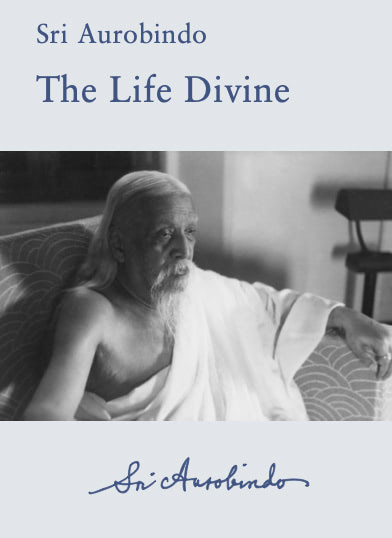
They postulate a paradigm shift where we realize that without wisdom, knowledge can be dangerous, and without ethics, power can be ruinous. In this uplifting view, the future could see a renaissance of wisdom: perhaps a blending of the best of ancient wisdom traditions with the best of modern science and technology, creating societies that are both smart and wise – using our tools and intellect to foster well-being for all.
All of this remains to be written by our choices today. The future of wisdom depends on us, you and me and the next person. If we remain solely fixated on information and quick gains, wisdom might continue to be overshadowed and our problems could deepen.
But if we consciously value and pursue wisdom, teach it, leverage our technology to support it, and listen to both the old sages and the new voices of reason, we could indeed step into a new era that future generations might call wise.
listen ➡
What is our conclusion from this wide ranging contemplation about wisdom?
Wisdom, in the end, is about living and choosing well. It is the gentle light that helps us navigate life’s trials and moral dilemmas, long after facts and figures fade into the background.
We have seen that wisdom is not the same as information or knowledge, though it uses both. It is distinguished by its depth, its ethical insight, and its guidance toward what is truly meaningful.
Wisdom is nurtured by experience, reflection, learning, and the counsel of wise voices past and present. It is preserved in our varied global traditions and in the hearts of the wisdom keepers who inspire us.
In our contemporary world, wisdom may seem at times in short supply – drowned out by noise or neglected in our rush. Yet, the very challenges we face make the need for wisdom even more urgent.
The hopeful message is that wisdom is a timeless human capacity, one we can cultivate no matter how much the world changes. Each of us, in our own lives, can strive to be a bit wiser – to pause and reflect, to consider our values, to listen and learn, and to act with compassion and understanding.
And collectively, we can elevate wisdom by cherishing those who exemplify it and by building a culture that looks beyond the shiny allure of mere information toward the deeper fulfillment of insight and virtue.
In a synthesis of what present AIs and humanity intelligence might together say: the pursuit of wisdom is our ongoing story.
It bridges the ancient and the modern, the personal and the universal. As we move forward, may we carry forward the accumulated wisdom of those who came before, apply it creatively to the present, and hopefully add our own grains of wisdom for the future.
In doing so, we honor what is best in human nature and keep the flame of true understanding alive, guiding us through whatever lies ahead in our shared journey.
We are entering new and unknown territory.
May we be brave and guided by Spirit.
Om Tat Sat