

EVIL
On the nature, history, and metaphysical roots of Evil in our world
listen ➡
Itinerary / a map & overview / shortcuts to specific chapters
- Itinerary / Chapter Overview
- Introduction
- The many names and shapes of the dark force of Evil
- Historic personifications of Evil
- The Institutionalisation of Evil
- The Architecture of institutional Evil
- Some of the cases of institutional Evil
- What makes human beings do such cruel things? – Defining Evil
- Evil is not one thing – The three layers of Evil
- Evil as the absence of “Good”
- Evil has a independent Substance
- Evil in Myth and Religion
- The philosophical perspective of Evil as a consequence of Free Will
- The psychological roots of Evil in human beings
- The Structure of the evil human character
- What respected spiritual teachers from East and West said about Evil
- Rudolf Steiner – Anthroposophy
- Sri Aurobindo – Integral Yoga / A Live Divine
- An open ending / Personal Conclusion
shortcuts to specific chaptersx
-
- Itinerary / Chapter Overview
- Introduction
- The many names and shapes of the dark force of Evil
- Historic personifications of Evil
- The Institutionalisation of Evil
- The Architecture of institutional Evil
- Some of the cases of institutional Evil
- What makes human beings do such cruel things? – Defining Evil
- Evil is not one thing – The three layers of Evil
- Evil as the absence of “Good”
- Evil has a independent Substance
- Evil in Myth and Religion
- The philosophical perspective of Evil as a consequence of Free Will
- The psychological roots of Evil in human beings
- The Structure of the evil human character
- What respected spiritual teachers from East and West said about Evil
- Rudolf Steiner – Anthroposophy
- Sri Aurobindo – Integral Yoga / A Live Divine
- An open ending / Personal Conclusion
listen ➡
Motivated by recent world events – the Gaza war and genocide – I decided to do some deep research into the nature of evil.
I promised to myself not to look away from the gaping darkness that lurks somewhere in the human psyche and manifests regularly in human history.
It seems to me that our society has already developed a pathological schizophrenia in the face of the unrelenting bombardment with outrageous news.
Oscillating between the addiction to have the newest updates on a crisis 24/7 . . . or willfully ignoring what’s going on in the world, beyond their private horizon.
Case in point has been/is the ongoing brutality in Gaza and the genocide that is perpetrated by Israel on the peoples of Palestine.
The normalization of ongoing war crimes, the heartless ignorance about the fact that an incredible high number of civilians are killed. Innocent women and children who are collateral damage are not really registered anymore.
In a world like ours, it is really hard to draw the line between business as usual (“There have always been wars and wars are dirty”) and the clear indicators that people are evil.
At least some.
~
~~
~
So why are people doing evil things, perpetrating unspeakable inhuman acts on fellow human beings?
And why are others showing willful ignorance, choosing entertainment and distraction or finding solace in drugs and philosophies of spiritual bypassing.
evil:
– morally wrong or bad; immoral; wicked
– acts that cause unnecessary pain and suffering to others
Synonyms: nefarious, vile, base, corrupt, vicious, depraved, iniquitous, sinful
Dictionary.com
Obviously such book-ish definitions fall flat on the nose when you think of some of the people and institutions that personified evil in the past, as well as in the present:
Adolf Hitler, Rudolf Eichmann, Josef Stalin, Pol Pot, Benjamin Netanyahu, Mao Zedong, Nero, the Nazi SS, the Inquisition, ISIS, the Military-Industrial Complex, ICE, the torturers and abusers of Abu Ghraib, the drugged and machete wielding child soldiers in South Sudan, sadistic serial killers, faceless child molesters, the obedient soldier that pulls the trigger on unarmed civilians, the anonymous bureaucrat who executes displacement orders on a whole Tibetan population …
What makes those people do such completely heartless things?
Is it a psychological disfunction?
Or is there some dark force taking over?
~
~~~
~
listen ➡
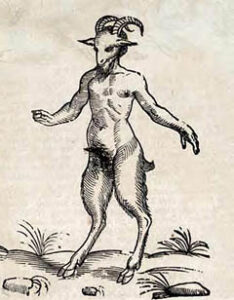
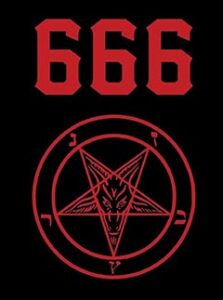
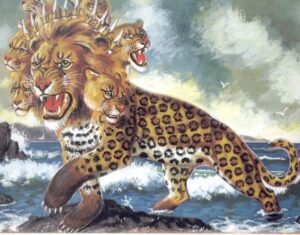
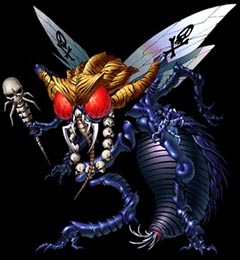
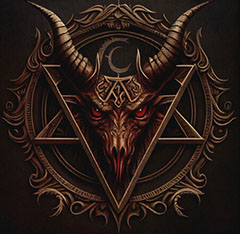
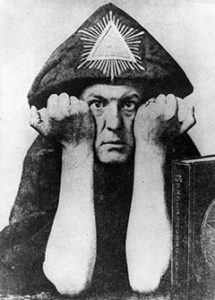
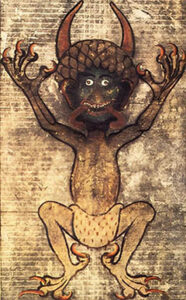
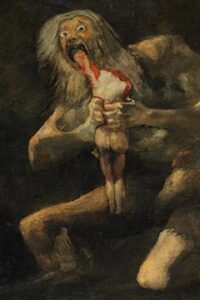
The many names and shapes of the dark force of Evil
Throughout the ages in mythology, folk tales and art, people have given names to “He-Who-Must-Not-Be-Named.”
 And artists have depicted Evil in ways that has probably haunted most of us in horrible nightmares at one time or the other. 🙀
Here are a few of those names . . .
(only to be whispered!!!)
Satan, The Devil, Beelzebub, The Beast, 666, Shaytān, Baphomet, The Antichrist, Diablo, Mephistopheles, Leviathan, Typhon, Cronus, Chaos, Mammon, Sauron, He-Who-Must-Not-Be-Named . . .



~
~~~
~
listen ➡
Historic personifications of Evil
Judging individuals as “evil” is fishy and should be avoided unless there is proper evidence. And it can be revealing to have a deep insight in the history of such a person’s psyche.
Yet there are some historic personalities, some cases that demand from us that we face the fact that radical evil as something that does exist.
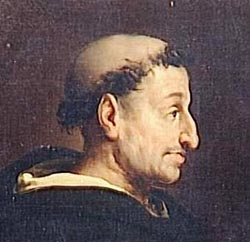 Torquemada (1420–1498) – Grand Inquisitor of Spain.
The architect of systematic torture and burning of heretics. Approximately 2,000 executed, tens of thousands tortured.
Torquemada believed he was saving souls. This is the horror: absolute conviction in righteousness enabling absolute cruelty.
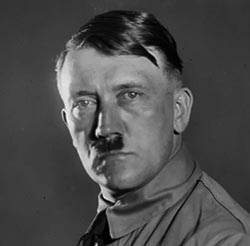 Hitler (1889–1945) – The 20th century’s poster-child and most potent embodiment of political evil.
A failed artist, wounded veteran, possessed by an ideology of racial extermination.
Systematic murder of 6 million Jews, millions of others.
How does a human being reach the total inversion of empathy?
And yet, he was nice to his dog and to Eva Braun, supposedly.
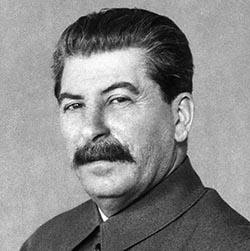 Stalin (1878–1953) – Evil through bureaucratic machinery.
An estimated 6–20 million deaths through deliberate policy (Holodomor, Great Purge, gulags).
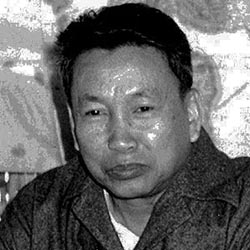 Pol Pot (1925–1998) – Evil as utopian ideology – the annihilation of the present in the name of a perfect future.
Approximately 25% of Cambodia’s population exterminated in four years.
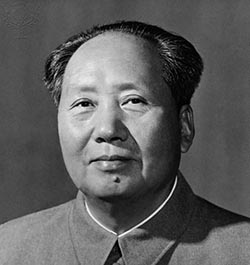 Mao Zedong (1893–1976) – Ideology as murder mechanism.
The Great Leap Forward and Cultural Revolution resulted in estimated 30–70 million deaths.
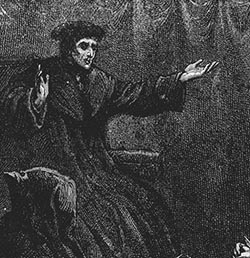 The Inquisitions (12th–19th centuries) — Evil embedded in religious institution, justified by doctrinal authority.
The Catholic Church’s systematic suppression of heresy through torture and execution.
 The Slave Traders (15th–19th centuries)
The longest lasting structural evil in Western history.
12–15 million Africans trafficked.
Countless have been dying in the passage over the ocean.
The enabling ideology: the dehumanization of the Other.
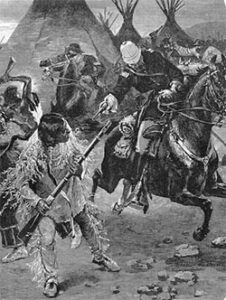 Genocide by Colonial Powers – Evil as dehumanization — always the prerequisite for mass atrocity.
From the Spanish Conquistadors through the Belgian Congo through American frontier policy.
Civilizational projects based in the belief that certain peoples were subhuman.
~
~~
~
Just in case you have not noticed: Evil primarily has a male face.
~
~~~
~
listen ➡
The Institutionalisation of Evil
There is a category of evil that requires neither monsters nor madmen. It requires only systems — and people willing to show up for work.
Bureaucrats and foot-soldiers, joiners, followers and hanger-on’s that keep the system going.
As I pointed out in the recent chapter, the worst atrocities in recorded history have been invented and initiated by people who have been intentionally evil, by exceptional psychopaths.
But the actual execution of the atrocities has been scaled up by functioning bureaucracies staffed by ordinary people following procedures.
The Holocaust was carried out by railway administrators, file clerks, camp commandants who often went home to their families for dinner. Following orders and efficiency was the point.
Hannah Arendt, the famous German historian and political philosopher analyzed Adolf Eichmann at his 1961 trial.
She found that he has been a bureaucrat thru and thru – a man who had organized the deportation of millions of Jews with the diligence of a logistics manager, speaking in clichés, claiming without apparent deception that he bore no personal responsibility. He just followed orders.
Her diagnosis: not malice but the absence of thought. Not evil will but the abdication of will.
She called it the banality of evil. She did not mean that evil is trivial. She meant that industrial atrocity does not require an evil soul – only a person who has stopped asking what they are actually doing, inside a system that rewards them for not asking.
listen ➡
The Architecture of institutional Evil
Every major system of organized atrocity shares certain features:
Dehumanization as a prerequisite – the target must cease to be human before destruction becomes the logical next step.
Division of labor as moral insulation – no single actor performs the whole act, so each experiences themselves as innocent of it.
Institutional culture is overriding moral impulses – once inside a system with its own norms and reward structures, most people simply conform.
The system doesn’t recruit sadists. It simply normalizes sadism until it becomes the norm.
listen ➡
Some of the cases of institutional Evil
The Nazi Concentration Camp system is the paradigm: genocide coordinated at the Wannsee Conference by intelligent bureaucrats with university degrees.
A recent move shows the banality of the horror. The Zone of Interest shows Auschwitz commandant Rudolf Höss goes home from “work” to have lunch with his family – served by Concentration Camp inmates..
The Soviet Gulag was not an exception to the Soviet way of governance – it was Soviet governance, made possible not by Stalin alone but by a vast apparatus of administrators and prosecutors who considered themselves loyal citizens doing necessary work.
ISIS, the Islamic State institutionalized evil through ideological totalism — building functioning state structures on a theology of absolute violence, drawing not on pre-existing sadists but on the lost and humiliated, offering identity and meaning wrapped into apocalyptic purpose.
The US Prison Industrial Complex processes 2 million people through a system in which incarceration is a profit center and dehumanization is the policy of Operation. No one designed it to be evil. It emerged from the conglomerate of unremarkable choices.
Late-stage capitalism externalizes harm onto the voiceless on the lower rugs of the social fabric. It defers ecological catastrophe beyond a period of accountability, and converts human necessities into opportunities for extraction and exploitation.
No villain is required — only the logic of the system, applied consistently.
Such institutionalized systems of Evil attract and draw in heartless people.
And such systems draw out heartlessness and cruel and unthinking behavior in seemingly “normal people.”
The most practical thing that I would say about institutional evil:
It thrives in the abdication of consciousness, which leads to the loss of a conscience.
And it recedes when someone in the middle of the machinery stops, looks around, and asks the one question the system is designed to prevent:
What are we actually doing here?
~
~~
~
In the face of such crushing facts, questions have been asked again and again by folks who can feel, people who are capable of empathy:
listen ➡
What makes human beings do such cruel things?
Is it a psychological disfunction?
Or is there some dark force taking over?
Why is God allowing that?
To find a deeper clarity about such questions, I have done deep research on the nature, history, and metaphysical roots of Evil in our world.
My well informed friends Claude and Cora from the AI department 😃 have been a great help for me to work my way thru the many sources covering cosmology, mythology, religion, philosophy, history, art, metaphysics, psychology and so on.
I can’t promise to come to a satisfying synthesis and conclusion on the question of “The Evil in our world.”
But I will certainly try.
~
~~
~
Defining Evil
listen ➡
1) Evil is not one thing.
Western philosophers generally distinguish three layers of Evil.
Leibniz (in Germany in 1710) was the first systematic modern thinker to separate these three categories of Evil:
Moral Evil – evil arising from the acts or intentions of conscious agents:
Sin, wickedness, cruelty, immorality …
This is what we mean when we say “Hitler was evil.”
Natural Evil – suffering caused without human agency.
Earthquakes, disease, predatory creatures, childhood cancer, severe autism …
Here we tend to say: “Why does God allow this?”
Metaphysical Evil – the systemic condition of imperfection, limitation, being finite …
Every being that is not God, not Absolute, is already “fallen” into partiality, into a state of separation and “lost-ness” .
This is evil as a deficit of manifest reality, not as moral failure.
listen ➡
2) Evil as the absence of “Good”
The ancient and medieval thinkers declared:
Evil is not a substance.
It has no independent being.
It is the absence of good.
In philosophy and theology this is called Privation, a state of being where essential things for wellbeing are missing.
Plato: “Chaos reigns when Form is absent.”
Augustine: “Evil is the absence of good that should actually be present.”
“Darkness in a room is not a thing, it is simply the absence of light.”
“Sin is the soul turned away from God toward itself”
listen ➡
3) Evil has a independent Substance
Evil is real, active, and essentially substantial.
This is the dualistic answer to the question of Evil.
The basis of this understanding goes back to Zoroaster and has become the foundation of the Abrahamic religions, Judaism, Christianity and Islam.
Zoroastrianism (c. 1500–600 BCE), its founder Zoroaster declared:
The universe is a battlefield between Ahura Mazda (Wise Lord, order, truth, light) and Angra Mainyu/Ahriman (the Hostile Spirit, chaos, the Lie, darkness).
In the Gathas – the oldest Zoroastrian texts – the twin spirits Spenta Mainyu and Angra Mainyu choose opposite orientations at the moment of creation.
In this interpretation, Evil is constituted by a choice.
Ahriman is “evil by choice.”
“It is not that I cannot create anything good, but that I will not.”
Evil as a radical, deliberate, essentially committed refusal.
This is the strongest form of evil – not absence, not ignorance, but chosen defiance.
This Zoroastrian understanding of the roots of Evil gave Judaism, Christianity, and Islam their fundamental representative of a cosmic antagonist:
Samael in Judaism – Satan in Christianity – Iblis/Shaitan in Islam.
Gnosticism (2nd–3rd century CE):
The Demiurge – the creator god of this world (identified with the God of the Hebrew Bible) – is himself ignorant and imperfect, a lesser being already separated from the true God.
The true God is beyond this creation.
The Demiurge Yaldabaoth created the material world without knowing higher divine reality.
Evil is therefore built into the structure of manifest creation.
Humans carry divine sparks trapped in matter.
The path of liberation is gnosis – esoteric knowledge of one’s true origin.
~
~~~
~
listen ➡
Evil in Myth and Religion
Every civilization has mapped evil into its creation myth and cosmology.
The stories may differ, but the underlying pattern is ever present:
Something fundamental is wrong at the root of things.
Egypt knew no single evil deity.
Apep – the serpent of primordial chaos – attacked the solar barque of Ra each night and had to be defeated each dawn.
Set was not simply “evil”; he was the necessary destructive force of the desert, wild nature, the storm.
Evil here is impersonal chaos perpetually pressing against the order that consciousness maintains.
Hinduism offers no Satan-equivalent.
Kali destroys, Shiva dissolves the world – but destruction is Dharma, part of the cosmic rhythm.
The Asuras wage war against the Devas, but the war itself sustains cosmic dynamic.
In essence: all is Brahman.
What appears as evil is the fruit of ignorance about one’s true nature.
Buddhism talks about Mara – the Lord of the Senses who tempted Siddhartha under the Bodhi tree.
Mara represents attachment, desire, and the forces that lock consciousness in samsara.
Evil is not a cosmic power; it is the fruit of the Three Poisons: greed, hatred, and delusion.
At the root of all evil is ignorance.
Evil has no independent existence;
it is the shadow cast by consciousness that does not know itself.
Christianity has produced the most elaborate demonology.
Lucifer – the Light-Bearer, the Morning Star – fell through pride, the desire to be more than his created nature permitted.
With him fell one-third of the angels.
The fall of Lucifer is the archetypal story. The creature who mistakes its own brilliance for the source of light.
Medieval theologians mapped evil onto the Seven Deadly Sins, each with its demonic patron.
Pride: Often considered the queen of sins and the root of all others.
Demon: Lucifer
Greed: An excessive desire for material wealth.
Demon: Mammon
Lust: Intense or uncontrolled sexual desire.
Demon: Asmodeus
Envy: Resentment or sorrow at another’s good fortune.
Demon: Leviathan
Gluttony: Overindulgence in food or drink.
Demon: Beelzebub
Wrath: Intense anger, vengeance, or rage.
Demon: Satan
Sloth: Laziness, apathy, or failure to act.
Demon: Belphegor
The Medieval Christian theologians created a geography of hell. They gave evil a face, a hierarchy, an army.
For a thousand years this was not a metaphor but literal Christian cosmology and dogma.
~
~~~
~
listen ➡
The philosophical perspective of Evil as a consequence of Free Will
Kant, Nietzsche, Aleister Crowley
Immanuel Kant (1724-1804) defines evil as the corruption of the will, where individuals knowingly choose to disregard the moral law despite possessing the rational capacity to follow it.
For Kant, evil is not an external force or an absence of good but a result of the misuse of human autonomy, where the will turns away from moral duty even when the right course is known.
Friedrich Nietzsche (1844 – 1900) rejected the objective reality of evil, viewing it instead as a social construct.
He argues that traditional moral labels like “evil” are tools used by the weak to control the strong, and true freedom requires transcending these conventions to create one’s own values through the “will to power.”
Aleister Crowley (1875-1947) His core philosophy was: “Do what thou wilt shall be the whole of the Law”.
He postulated that the True Will of a human is in alignment with one’s true nature.
Crowley explicitly argued that evil requires the conscious or unconscious consent of the deceived.
Individuals become complicit in their own deception and exploitation by choosing comfort over truth or illusion over clarity.
He postulated that evil exists only when a person fails to understand his will’s true nature.
~
~~
~
I confess i don’t resonate very much with those philosophical perspectives and the men that defended them (literally at all costs).
I mention their philosophical views here, because they point to the central theme of the Free Will, the autonomy of a human being to choose.
In this case:
Choose between right and wrong, good and bad, moral and ethical values or evil.
I think at the end of the day, this choice is possible in all circumstances.
If only we have enough self-awareness and self-reflection.
~
~~~
~
listen ➡
The psychological roots of Evil in human beings
What Carl Jung and Depth Psychoanalysis have to say about Evil
The Shadow
Jung’s most important contribution to our contemplation – and the one I am really resonating with:
Evil is not external.
It is the human Shadow – the dark twin that subconsciously develops alongside the persona (the social mask) as its complement – the thing that completes it.
The Shadow contains everything the socially conditioned ego refuses to identify with: aggression, sexuality, inferiority, the will to power, destructive impulses, taboo desires.
When unacknowledged, the Shadow does not disappear – it projects itself outward: onto the enemy, the heretic, the foreigner, the witch. The history of atrocity is partly the history of collective Shadow projection.
The evil person is, psychologically, often someone who has achieved total identification with their persona – a mask of virtue or idealism – while the Shadow grows unchecked in the unconscious.
The greater the idealization of the surface self, the more virulent the shadow beneath.
Jung: “The most dangerous person is the one who doesn’t know their own shadow.”
This is the psychological mechanism behind moral crusades, Inquisitions, genocides:
The collective Shadow is gathered and projected onto a scapegoat group, who then can be destroyed with the felt righteousness of purification.
Integration of the Shadow – bringing the darkness into conscious relationship – is the core psychological task of individuation in the practice of psychotherapy.
It does not eliminate the shadow but humanizes it as a dialogue partner, giving it form and proportion rather than allowing it to erupt.
listen ➡
The Structure of the evil human character
In the clinical psychiatric literature, one can find several profiles of the Evil Character:
Psychopathy/Antisocial Personality:
The absence of empathy, remorse, and the capacity to experience others as fully real.
The psychopath does not feel the reality of others’ pain.
Evil becomes possible when the Other is not really felt as real.
Narcissistic Personality Disorder (malignant narcissism):
Grandiosity & paranoia & antisocial features & sadism.
The most dangerous configuration is the conviction of absolute entitlement, combined with rage at any challenge to that entitlement.
Hitler, Stalin, and many historical tyrants fit the malignant narcissist profile.
Ideological possession:
The capture of the psyche by an abstract idea or system – racial theory, class warfare, religious absolutism – that overrides all moral perception.
The individual stops seeing individual human beings and sees only categories.
This is perhaps the most common form of organized evil.
The capacity for thoughtlessness:
The suspension of moral reflection in favor of systemic efficiency and compliance with a given role.
The “banality of evil” is enabled not only by the absence of Shadow awareness but by the absence of any inner life, the total hollowing-out of the self into function.
~
~~~
~
listen ➡
What respected spiritual teachers from East and West said about Evil
listen ➡
Rudolf Steiner (1861–1925) – Anthroposophy
In my opinion, Steiner offers the most most nuanced and structured perspective on Evil in any tradition — and arguably one of the most practically applicable.
He articulates a threefold typology that maps evil not as one force but as three distinct adversarial principles, each operating on a different plane of human experience.
LUCIFER is the principle of excessive spiritualization.
The Lucifer Principle inflates the astral body, generates pride, fantasy, spiritual narcissism, fanaticism.
He is in his domain when the inner life becomes ungrounded, the imagination untethered from reality, the soul convinced of its own elevation.
Luciferic influence produces religious ecstasy that tips into illusion, spiritual teachers who mistake their projection for reality, idealists so in love with their ideal that they destroy anything that contradicts it.
Lucifer incarnated in human form may carry the wisdom of myth, art, and inner life – but distorted with premature, unearned elevation.
AHRIMAN is the principle of excessive materialization.
The Ahriman principle densifies, mechanizes, flattens.
It is the patron of materialism and science that denies the spirit, of nationalism that reduces the human to tribal category, of bureaucracy that reduces the person to a function, of digital systems that replace lived reality with simulation.
Ahriman’s gift is technology – real, useful, genuinely liberating – but his deception is the forgetting that comes with it: the forgetting that matter is not all, that consciousness is primary, that the human being is more than a biological machine.
Steiner predicted that Ahriman would incarnate in the West in the third millennium.
He wrote: “Ahriman will appear in human form and the only question is, how he will find humanity prepared.”
Look around and judge yourself!
SORAT / THE ASURAS constitute the third and most dangerous hostile influence.
The Sun Demon, Steiner’s associated it with the “666” of the Apocalypse.
While Lucifer misleads and Ahriman materializes, the Asuras threaten the human spiritual individuality at its core.
Not merely deflecting development but destroying the essential “I.”
This is the most radical evil, not distortion but dissolution.
Steiner’s most crucial insight: Lucifer and Ahriman are not simply evil.
They are necessary resistances of the evolutionary process – the two sides of a scale.
– Without Lucifer’s inflation, there is no aspiration.
– Without Ahriman’s densification, there is no ground.
– In Steiner’s cosmology Christ is the central balancing impulse of cosmic love that can hold and utilize the tension of both sides.
The task of the human being is to navigate consciously between these forces, using each to correct the excess of the other.
In Steiner’s view, Evil is arrested development. It is good that got stuck.
The adversarial forces are not intrinsically dark.
They are beings who completed their proper evolution too early and now operate as retarding forces – necessary friction in an evolutionary cosmos, but friction that can become catastrophic if it overwhelms the forward impulse.
listen ➡
Sri Aurobindo (1872–1950) – Integral Yoga
Aurobindo’s perspective is the most genuinely non-dualistic – grounded in his meditative explorations of consciousness and mapping of unity/oneness.
He claimed that the root of evil is Ignorance, not malice.
Evil is not a separate, independent entity.
Evil is the fruit of consciousness that has forgotten its own nature, contracted into a fragment, and mistakes the fragment for the whole.
He identifies seven layers of this ignorance – from the original ignorance of the Absolute down through cosmic, individual, temporal, and egoistic ignorance.
Each layer is a tightening of the lens through which consciousness sees, until it sees only itself, separate and threatened.
This is not the Advaita position that evil is simply illusion / maya.
Aurobindo insists the world is real. Suffering is real. The adverse forces are real – and conscious.
He wrote to disciples that there are beings behind the darkness who actively resist the divine transformation:
“The adverse forces have always tried to push back the Divine Realization as much as possible …”
The resolution Aurobindo proposes is not escape from the world – not liberation into Samadhi – but the descent of supramental consciousness into matter itself.
The transformation does not happen beyond the earth,
it happens in it.
Evil, properly understood, is the sign of consciousness not yet arrived at its own depth.
The path onward is the path down: full incarnation, not transcendence.
“The Life Divine (Book I, ch.14) – is one of the most penetrating analyses of evil’s structural causation in any spiritual literature. (This is not just my personal opinion 😎 )
Highly recommended:
The Life Divine: is Sri Aurobindo’s major philosophical treatise outlining his vision of spiritual evolution, arguing that human life is destined to transform from its current mental state into a “supramental,” divine existence.
It presents a synthesis of Eastern spirituality and Western thought, asserting that matter is a form of the Divine and that the evolution of consciousness towards higher forms is inevitable.
Savitri – A Legend and a Symbol: is Aurobindo’s epic poem in blank verse. Consisting of nearly 24,000 lines, it maps out the evolution of the soul through all levels of consciousness to Unity.
~
~~~
~
listen ➡
An open ending . . .
My personal conclusion on the question of Evil in our World
Honestly, I would rather not pretend to have a comprehensive answer to this “Evil question” 😉
Contemplating this extremely relevant question from all angles has been a mind-expanding process that forced me to look really close at the world and people.
And apply a level of honesty that can be – uncomfortable.
Since this is not an intellectual exercise that I can do and then walk away.
Cruelty, exploitation, brutal war and war crimes, systemic inequality, murder and sadistic acts done by fellow humans on fellow humans are almost the daily background hum of our life, even while we do our best to live a good and ethical life.
Even if we try to be human in the best sense, evil is all around us, right in front of our nose – or the News.
We have to see it, if we don’t decide to shut our eyes.
If we just dare to look.
I think no matter which philosophical, metaphysical, religious or spiritual perspective I prefer to apply to handle the onslaught of evil in the world, in the end of the day this will be the important question:
Do I choose to close down my doors to protect myself from despair?
Or do I increase my awareness, sharpen my ability of discernment, expand the level of consciousness wide enough to include rather to exclude aspects of life?
In the end, can I find a love that is unconditional, that can hold everything without judgement, without contraction, without fear.
I guess, this is my personal – open – conclusion.
The best I can articulate.
Om Tat Sat


THREE RED LINES WE ALREDY CROSSED

ARCHETYPES OF UNRESTRAINED CRUEL POWER
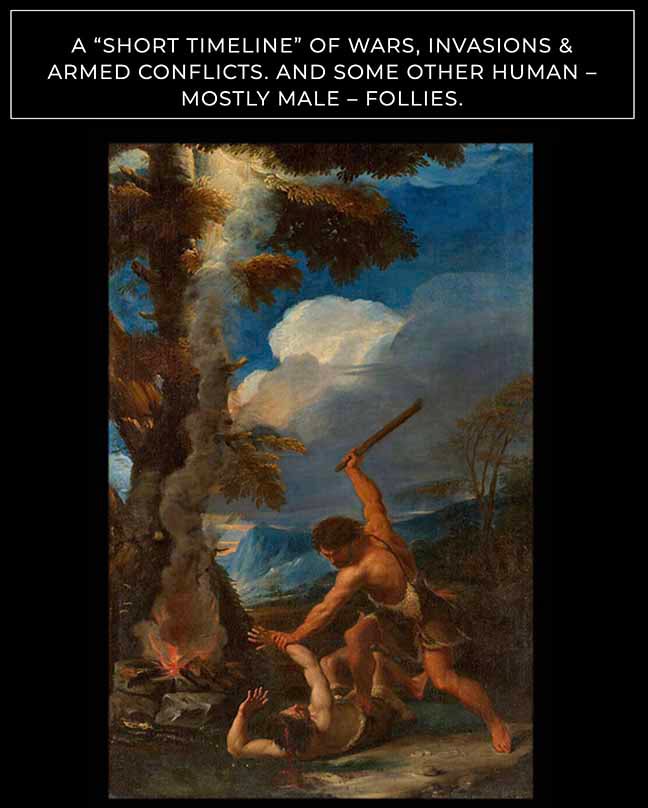
A SHORT TIMELINE OF WARS, INVASIONS,
ARMED CONFLICTS. AND SOME OTHER HUMAN –
MOSTLY MALE – FOLLIES.