
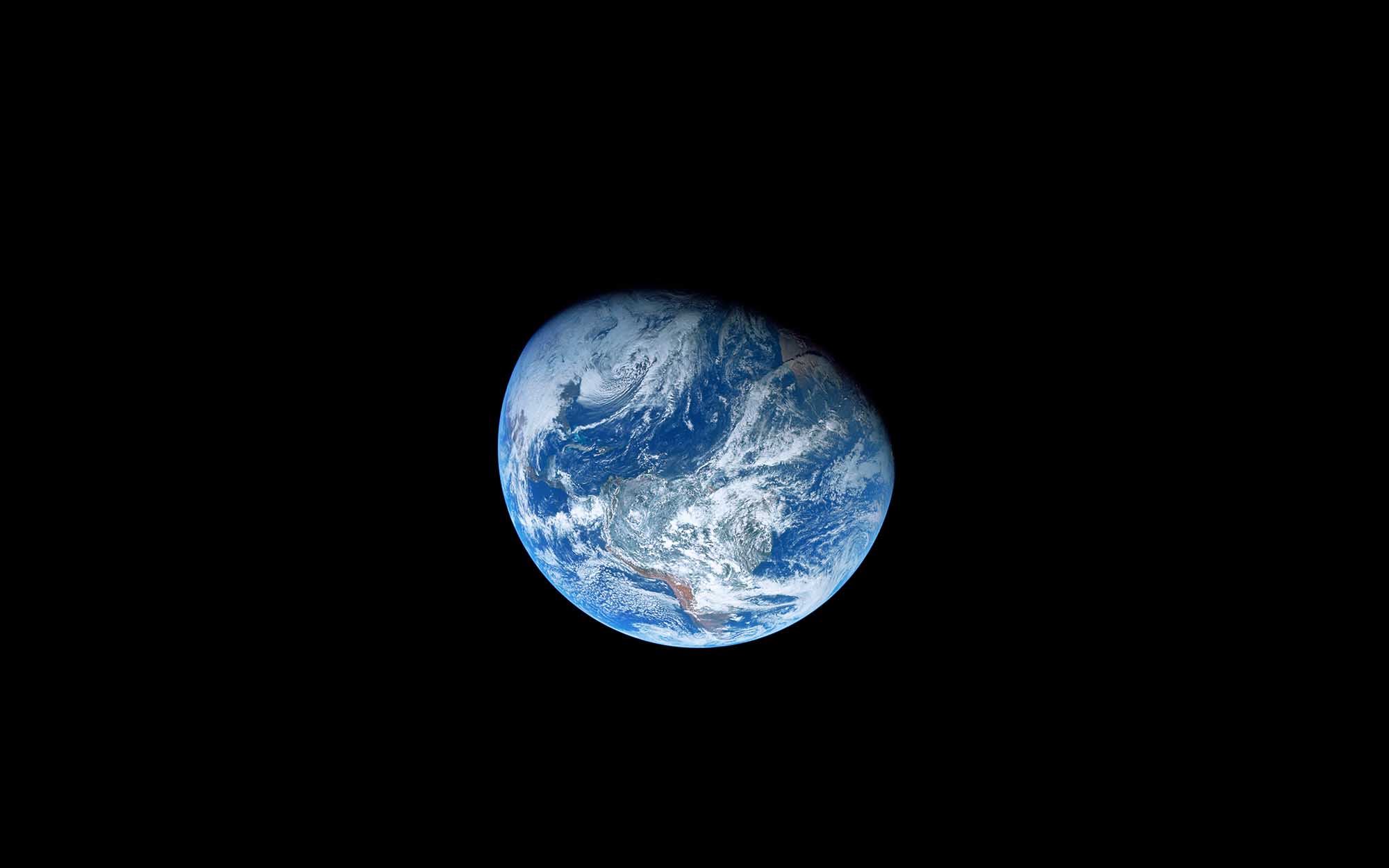
once there was pristine sky
for a very, very, very long time
but then we came
and things got rather messy

Apollo 17 – Dec 7 1972
All looked pretty nice back then!
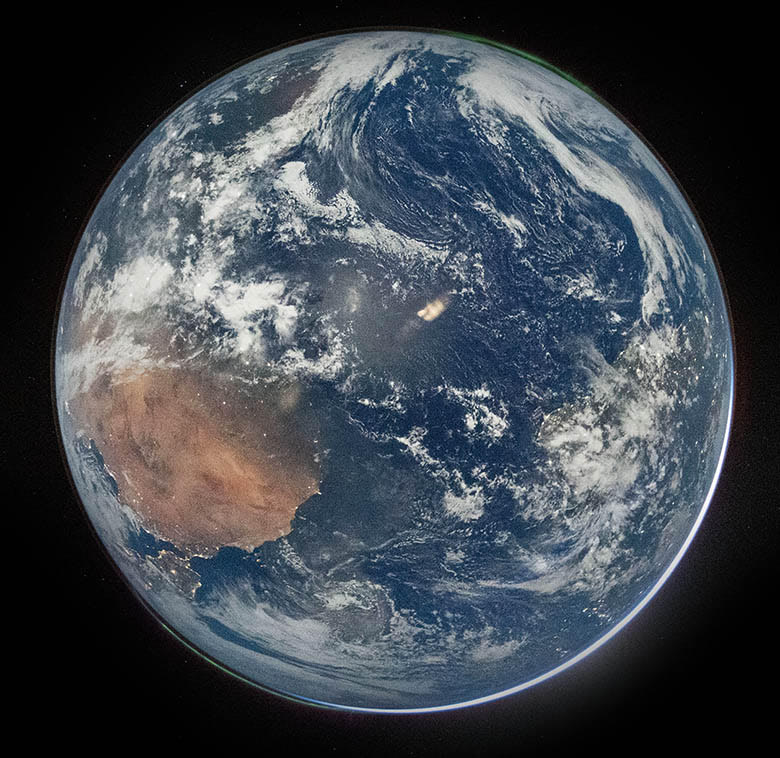
Artemis II – April 3, 2026
50 years later, not so very much …
What you dont see on the photo are huge amounts of man-made objects that are circling our blue planet with the speed of 28000km per hour.
Thats fast! Better not get hit by one of those high tech objects. They are expensive. They are deadly too!
👽
Satellites and space high tech debris may not be big – in relation to earth – but they are many.
As of early 2026, there are approximately 14,000 to 16,000 man made satellites in Earth orbit, with roughly 10,000 to 11,500 of them belonging to the SpaceX Starlink constellation.
In addition to these active satellites, thousands of defunct satellites and over 120 million smaller pieces of trackable or untrackable space debris inhabit low Earth orbit.
Total Active Satellites: Approximately 14,000–15,000.
Starlink Satellites: More than 10,000, with a launch rate of over 50 per week.
Debris (>10 cm): Over 54,000 pieces (discarded rocket stages and fragments).
Debris (1–10 cm): Estimated at 1.2 million.
Debris (1–1 mm): Estimated at 140 million.
SpaceX continues to dominate the orbital environment, contributing to over 8,000–10,000 of the total active satellite count, while one to two Starlink satellites fall back to Earth daily. The rapid increase is causing significant concern regarding astronomical observations and collision risks.
Unfortunately nobody has yet figured out how to remove all this junk from up there, once it will really messy.
Well, 😜 no comment!
I recommend to enjoy this page on a big screen. The various animations are not optimized for phones and may not look all that good on such small screens. Sorry (^_~) !
It is getting very crowded indeed!
Source: TheGuardian – ‘This feels fragile’: how a satellite-smashing chain reaction could spiral out of control
Active satellites and other traced high tech space junk.
CARA (Conjunction Assessment Risk Analysis) is a NASA program that provides orbital safety, collision risk assessment, and mitigation for a small number of satellites.
It analyzes close-approach events with orbital debris or other satellites, guiding operators on whether to maneuver to avoid collisions.
In 2026, SpaceX Starlink internet network exceeded 10,000 satellites and continues rapid expansion. aims to increase orbital density even more.
And then there is the competition!
Amazon’s Jeff Bezos aims to enter the competition, aiming to launch its own massive amount low-Earth orbit satellites, with testing planned for early 2026.
China is also developing its own LEO internet constellations, adding to the crowding of low-Earth orbit.
Up there i’ll soon look like Times Square in NYC at rush hour, or downtown Tokyo.
Now, i ask you seriously:
Are we crazy or what?
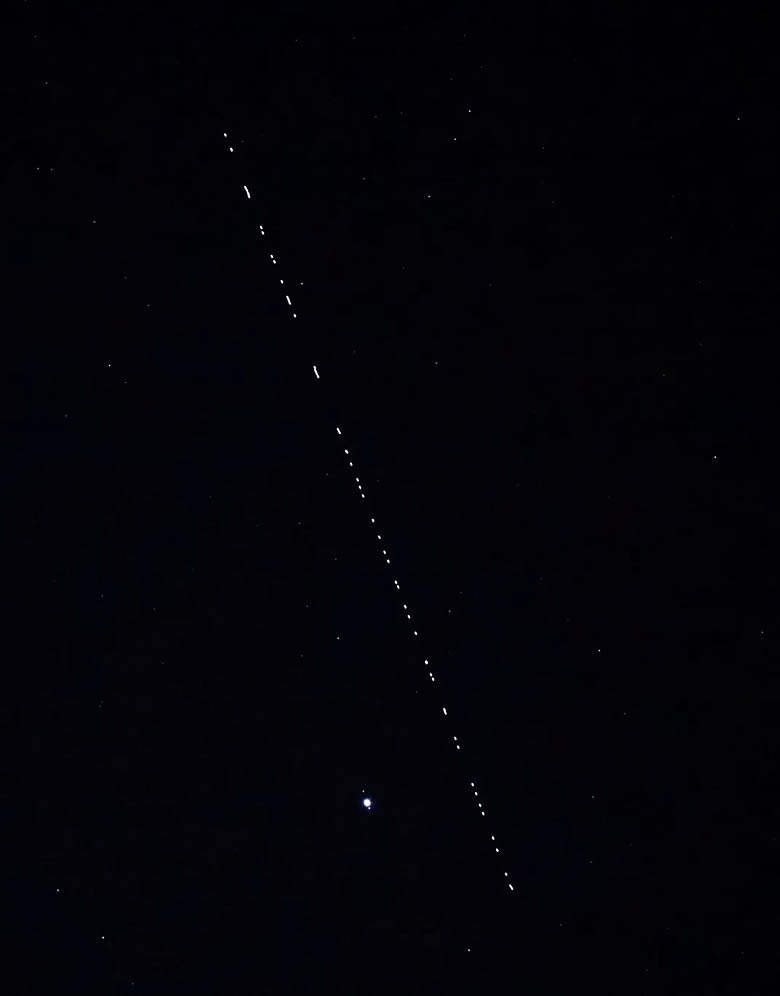
If you see something like that in the night sky, fear not!
The Aliens are not coming to get you (yet).
Its only Elon (Musk) and his armada of Starlink internet satellites streaking across the skies.
Here you can see the flightpath of the Starlink satellites, neatly lined up in rows 🙀.
But wait! Thats not all yet!
Elon Musk is already moving on to bigger projects:
Starcloud – Artificial Intelligence Data Centers in Space.
A SpaceX executive who believes humans will hit the limits of terrestrial energy sources by 2040, said part of the reason Mr. Musk and other A.I. leaders were talking about space data centers was the financial opportunity.
“The hottest thing to invest in right now is A.I., and the second-hottest thing is space,” Mr. Mueller said.
Please, can somebody expel Musk & Co from Earth and send them to Mars.
Or somewhere much colder.
Gracias 🙏🏼 !
end end 🐸