
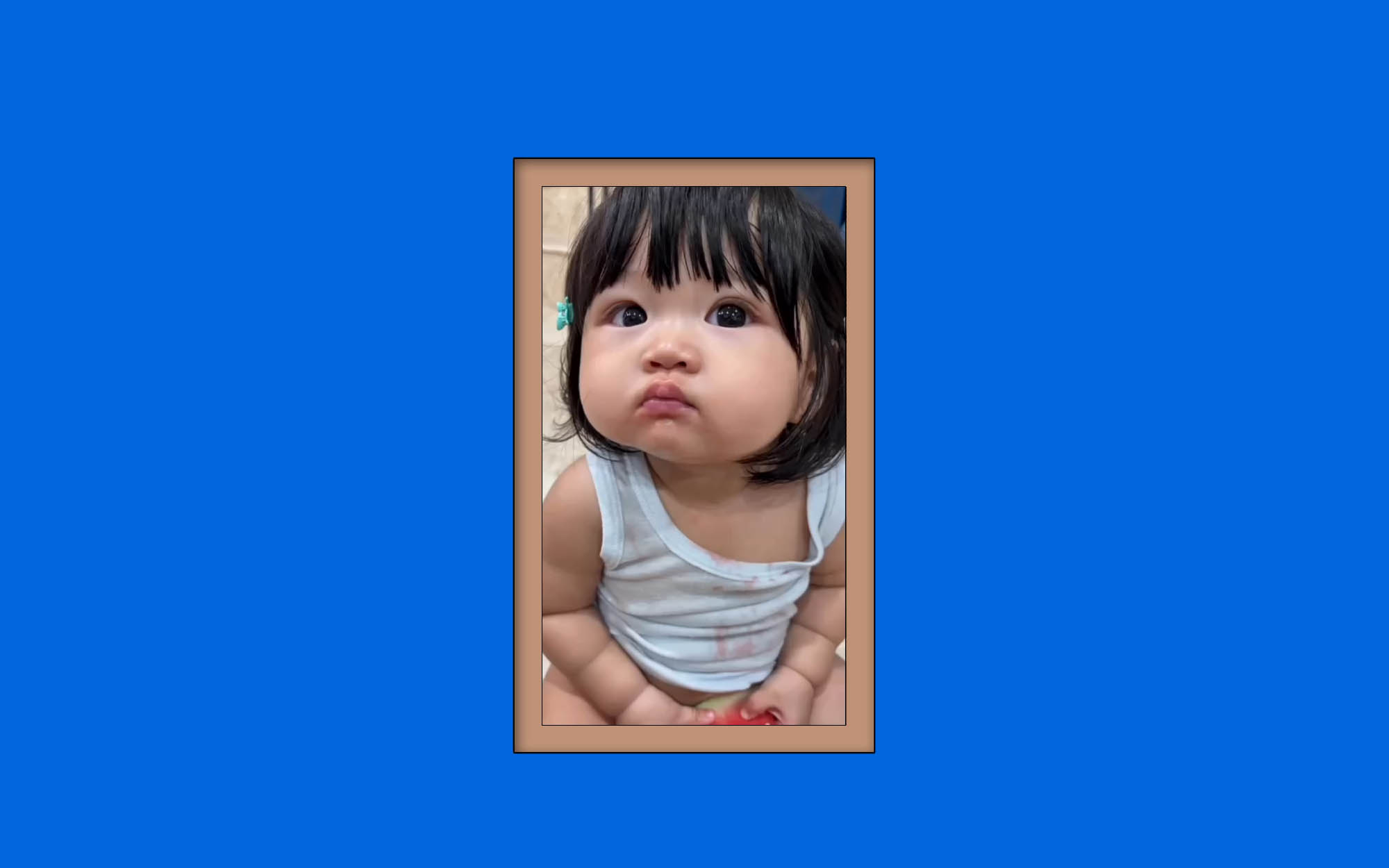
Gen Beta – the kids born between 2025 and 2039.
The generation that will never know a world without AI.
How will their world look like 25 years from now,
when they are all grown up, facing this Brave New World?
~
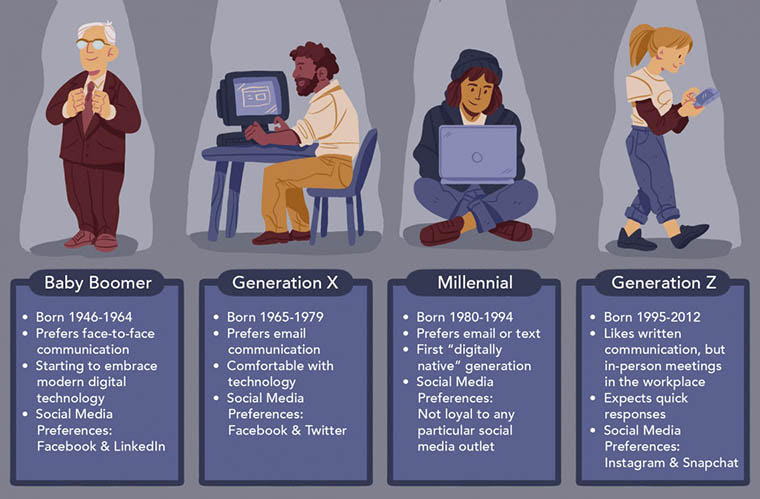
It is considered bad style to categorize people and put whole generations into boxes, so to say.
And still, social scientists and cultural anthropologists need such categories to make sense of the messiness of the human wold and civilization.
I dont like it at all, and … here I am, doing just that!
Talking about Gen Beta.
I could just say: Lets talk about how the world will be experienced by children born around now and growing up into a world that is rapidly changing.
And growing into a society that is changing in exponential ways because because of the rapid appearance of a game-changing technologies that we call Artificial Intelligence, Large Language Models, Chatbots, Generative Visual Creators, Autonomous Agents, Gene-splicing, 3D printing and robots of all kinds.
~
My motivation for this article is not specifically an interest in those future technologies – this trajectory is already quite easy to extrapolate, and predict – but to look at the children and their development.
And to be a little bit prophetic – a bad idea indeed 🤣 – by looking forward 25 years to 2025 or so and do some coffee-ground-reading about their life.
I am not respected social anthropologist or futurist, I rely here mostly on my intuition to divine the future.
Please don’t take it all too serious, this is just a peek thru my personal lens.
I hope you enjoy.
[ I am grounding my own ideas with research from UNICEF, Business Insider, The World Economic Forum and Mark McCrindle, who coined the term GenAlpha / GenBeta ]
~
Generation Beta is defined as those born between 2025 and 2039 by demographer Mark McCrindle, the same guy who coined the term “Generation Alpha”.
They are primarily the children of younger Millennials and older Gen Zs, many of whom are digital natives themselves. This places their parents in a unique position – being aware of technology’s pitfalls yet raising children in an environment where AI is as fundamental and invisible as electricity.
By 2050, the first of the Betas will be 25 years old.
With a projected global population share of around 16% to 18%, they will be a significant demographic force in society, driving global economy, politics, and culture.
Their world will be defined by the convergence of several megatrends:
– frontier technology, mainly AIand robotics
– environmental and climate crises
– geopoliticaliitical instability and open war
– major demographic shifts from older to newer generations (bye bye Boomers ; )
~
[ I am aware of the vast scope of this topic and also of its partly hypothetical nature.
Therefore I will keep the style of the writing of the article in easy readable in notebook fashion.
Short & sweet 😉 ]
~
What happens to a generation that never experienced a world without AI?
I think there is a much deeper question because Gen Beta’s future is not about the technology as such.
It is about anthropology, the society and culture that develops by being immersed into a certain technology.
It is about the kind of humans that emerge when intelligence itself becomes part of the environment.
The first thing I would say is this:
Most predictions about technology are probably wrong because they focus mostly on the technology.
The steam engine did not primarily change engines.
It changed cities, families, education, politics, transportation, warfare, and people’s sense of time.
The internet did not primarily change computers.
It changed knowledge, relationships, commerce, attention, and identity.
And in the same way:
AI will not primarily change AI.
It will change humans.
Generation Beta will be the first generation to grow up inside that transformation.
~
Gen Beta is the Last Generation raised by Humans Alone
Every human being who has ever lived until now was educated exclusively by humans.
– Parents.
– Teachers.
– Friends.
– Books written by humans.
Generation Beta may be the first generation where this is no longer true.
Many of these children will spend thousands of hours interacting with AI tutors, assistants, coaches, advisors, translators, creative partners, and conversational companions and – as teenagers – even counselors and therapists.
UNICEF notes that AI is rapidly becoming embedded into children’s daily digital environments and learning experiences.
Not replacing parents.
Not replacing teachers.
But becoming a permanent third presence.
A new category of caregivers and educational agents.
~
Gen Beta’s Intelligence Will Be Distributed
I feel that this will be the single, most defining shift.
Today, intelligence and knowledge is still largely considered something inside the brain/mind.
Tomorrow it will increasingly be a relationship.
A process.
A network.
When Gen Beta faces a problem, they may not first ask:
“What do I know?”
They may ask:
“What can my intelligence ecosystem help me discover?”
This sounds really trivial, but it is not.
It represents a fundamental shift from learned and memorized knowledge toward navigated knowledge.
The comparison is very similar to what happened when writing replaced oral cultures.
Memory changed.
Thinking changed.
Civilization changed.
~
Schools of the future will be unrecognizable by today’s standards
Many people imagine future schools using AI.
I think the deeper change is that AI will expose our assumptions behind schools themselves.
Current education evolved during an era when information was scarce.
Teachers possessed knowledge.
Students acquired it from them.
AI breaks that model.
Today’s abundance of information forces education to focus elsewhere.
The future educational efforts will likely focus toward:
critical thinking
judgment
creativity
collaboration
adaptability
ethical reasoning
systems thinking
These are already emerging as core future skills identified across educational and workforce research.
The educated person of 2050 may not be the one who knows the most.
The educated person may be the one who can best discern:
what is true
what matters
what is beautiful
what should be done
~
The great Crisis of Trust
This is where I am less optimistic.
Gen Beta may grow up in the first era where seeing is no longer believing.
AI-generated text, images, voices, and video are already becoming increasingly difficult to distinguish from authentic content.
Researchers and organizations such as UNICEF have warned that this may erode public trust and make misinformation far more persuasive and personalized.
For previous generations – mine included reality had somewhat reliable anchors.
A photograph.
A phone call.
A handshake.
A witness statement.
Today many of those reliable anchors are already weakening.
The most valuable skill in 2050 may therefore be neither coding nor prompting.
It may be epistemology, the theory of knowing.
Knowing how to know.
~
The Return of Human Skills
Ironically, the more capable AI becomes, the more valuable certain human capacities become.
Not because AI cannot perform them, or something that looks like them.
But because humans crave relation and heart, long for soul.
– When AI can write excellent reports …
Human authenticity becomes scarce.
– When AI can generate infinite entertainment…
Attention becomes scarce.
– When AI can imitate empathy…
Actual presence becomes scarce.
Scarcity creates a longing in us, creates value.
I suspect Gen Beta will eventually rediscover many deeply human skills that earlier generations abandoned.
Craftsmanship.
Embodiment.
Listening.
Community.
Silence.
Direct experience.
Not as nostalgia.
As necessity.
~
Work in 2050
Nowadays sensationalists and doomsayers usually predict mass unemployment.
I am not convinced.
Historically, technology destroyed occupations but also creates new forms of value.
The challenge is not job extinction, which is definitely real.
The challenge is, how we will transition.
By the time Gen Beta enters adulthood
I could see three broad categories of work
Human-Centered Work
Caregiving.
Counseling.
Leadership.
Community building.
Conflict resolution.
AI-Amplified Work
Architecture.
Medicine.
Research.
Engineering.
Design.
Humans directing increasingly capable systems.
Meaning-Centered Work
Art.
Culture.
Storytelling.
Experience design.
Spirituality.
Because humans hunger for meaning.
~
The Hidden Risk
The greatest danger is not that AI becomes too intelligent.
The greatest danger is that humans become less intentional.
Research on children already shows tendencies toward over-trusting AI outputs and becoming overly dependent on them before learning their limitations.
A calculator can weaken arithmetic skills.
GPS can weaken navigation skills.
AI can weaken thinking itself if used passively.
The question is therefore not:
“Will AI make children smarter?”
The question is:
“Will children learn to dance with AI without surrendering their agency?”
I think the next years will be decisive.
~
A word about the Environment and Climate Change
Obviously, this is even harder to foresee, because we have already pushed the world beyond the thresholds of limited space, overpopulation and catastrophic climate change.
Whatever the consequences will be, the future generations will have to live with it.
~
The physical environment Gen Beta inherits will force them to be pragmatic, highly adaptable, and deeply community-oriented.
Hyper-Urbanization and Local Micro-Systems
– Projections show Gen Beta will be the most urbanized generation in history, yet this urbanization will likely be decentralized.
We will see the rise of smart, sustainable mid-sized hubs and coastal communities where AI optimizes resource management, renewable energy grids, and water desalination.
A “Bridge” Mindset for Sustainability
They are being raised by Millennial and older Gen Z parents, many of them are already hyper-aware of ecological shifts.
For Gen Beta, sustainability won’t be a corporate slogan or left to political debate.
It will be a structural baseline of their life.
Their technology will be judged entirely on how effectively it restores, rather than depletes, the natural world.
I hope they will be brilliant and ethical enough, to find solutions to the world-threatening challenges of today.
~
The Gen Beta adult of 2050, at their best.
My most optimistic prophecy
Cognition / Thinking / Knowing
Cognitively, they are fluent in human-AI collaboration the way we are fluent in reading — it is so natural as to be invisible.
But the best of them have learned when to close the interface and think with the full, slow, organic power of an unassisted human mind.
They have been taught – by parents who saw the danger early, by educators who chose wisely – that boredom is not a bug. It is a feature of creative thinking.
~
Emotion/Feeling
Emotionally, they have had to work harder than any previous generation to maintain genuine human relationship.
They have seen enough algorithmic intimacy to know its limits – the way a hot shower is pleasurable but not the same as being embraced by somebody you love.
The ones who made it through the next coming years will have a depth of emotional intelligence and embodied grounding that is earned, not given.
~
Ecology
Ecologically, they live in a world of constraint that has paradoxically recovered some of what was lost.
The climate crisis has forced a reinvention of agriculture, energy, architecture, and community structure.
The most resilient communities of 2050 will be those that combined AI’s optimization capacities with deep bioregional knowledge and deep ecology – knowing the land the way the land wants to be known.
And knowing that we are part of Gaia, the planet.
And not just living on it and from it.
~
Spirituality
I believe a significant fraction of Gen Beta will represent something genuinely new:
Human beings who have looked the question of consciousness directly in the face, through the strange mirror of AI, and turned inward as a result.
Not as escapism.
But as the most radical act available.
Towards conscious awareness.
Towards consciousness itself.
Sri Aurobindo called it the Supramental.
The next step of possible human evolution.

Teach your children well – they are the future