Teach Your Children Well — They Are the Future
How do we prepare our Kids for a future
that is unpredictable and changing in major ways
“Change is the only constant.”
“You cannot step into the same river twice”
Heraclitus (535–475 BCE)
One does not have to be a philosopher like Heraclitus or a prophet, to say this:
None of us quite knows what the future holds for us in the coming 20 years.
But one thing is sure:
The world our children are inheriting is genuinely unprecedented in its speed of change, its complexity, its simultaneous beauty and danger.
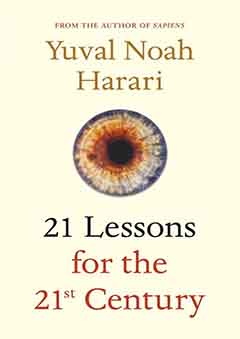 The historian Yuval Harari has said it plainly in his new work – 21 Lessons for the 21st Century – that today nobody has any idea what to teach young people that will still be relevant in twenty years.
[ download ]
I think that he is being honest about the scale of change that we are facing.
This article is my attempt to see what we can actually offer the children of today – the people of tomorrow – to be prepared to navigate any changes that may be on the way.
.
. . .
.
The river – of human society – has changed its course
For most of human history, preparing the next generations for life followed relatively stable patterns: you learned the rules of the river, memorized its bends, and passed that knowledge to your children. The river was the constant. You were its student of its natural laws.
Now the rules of the river have changed. The riverbed that seemed so predictable for so long … are not predictable anymore.
Besides geopolitical instability and actual hot wars, I see four forces are intersect simultaneously — and their intersection is without historical parallel.
~
Technological disruption
Is the most visible and widely publicized reality.
Artificial intelligence is not simply another tool; it is a general-purpose cognitive technology already rewriting what it means to work, to create, and to know.
Jobs that seemed immune, for example legal analysis, medical diagnosis, design, computer coding journalism, even therapy, are being disrupted and transformed.
The World Economic Forum estimates that 65% of children entering primary school today will ultimately work in jobs that don’t yet exist.
This doesn’t mean humans will be irrelevant, it means a radical redefinition of valuable skills.
Human qualities like creativity, original thinking, genuine empathy, ethical judgment, and the capacity for deep relationship, will become more precious as machines become more capable.
The machine handles computation. The human brings consciousness.
~
Ecological disruption
Perhaps the most far reaching and consequential disruptive force across generations.
Children growing up now will spend their most productive adult years in a world already profoundly altered by climate change.
Children and adolescents are already experiencing a complex range of eco-emotions – grief, anger, powerlessness, guilt, and hope – that affect their daily life and sense of security.
This is not a future stress-scenario, it is present reality.
~
Social and political fragmentation
Trust in institutions, in media, in expertise, in each other is more and more fractured.
Children are growing up inside information ecosystems of social media, shaped by algorithms optimized for clickbait and doomscrolling, rather than truth.
The capacity to think clearly, to tolerate ambiguity, to resist the seduction of false certainty, such capacities are necessary survival skills.
~
The collapse of the linear life path
The old, predictable and stable script of education, career, family, retirement has ceased to function as a reliable blueprint for the life of a young person.
The children of now / adults of tomorrow will likely hold many kinds of work across their lifetimes, reinvent themselves repeatedly, and draw meaning from sources their parents can barely imagine.
I am saying all of that not to instill future-anxiety,
but because clarity is the first act of preperation.
We cannot navigate what we refuse to see.
.
. . .
.
What we really preparing our children for!
We are not primarily preparing our children for a specific future. We are preparing them to meet any future.
The question is not “What will they need to know?” – we genuinely cannot answer that with clarity.
I think that the question is: “Who do we want them to be?”
If I would have children now, I would probably teach them by example far more than by words.
Example is the only pedagogy that actually sticks.
Children learn much more from what you are, not so much from what you say you are.
They are watching whether your life matches your speech.
Beyond that living example, though, there are qualities that are worth to cultivate consciously and methodically.
A value and skill curriculum that together can form the scaffolding for a life capable of flourishing in uncertainty.
.
. . .
.
Seven Pillars of Values and Skills
Curiosity as a Way of Life
— I would encourage them to be curious, always – to ask questions and investigate about all things without shyness.
Curiosity is not just an educational skill. It is a spiritual attitude toward existence.
The child who greets the unknown with “I wonder…” rather than “I’m scared…” Is already half-ways on the way.
And curiosity, unlike many qualities, can be directly cultivated by parents through modeling. When did you last say “I don’t know – let’s find out together”?
— I would teach them to take things apart, to look what’s inside, and to put it back together. Hopefully ; ) This is curiosity made physical.
It is also the beginning of systems-thinking – understanding that things have interiors, that surfaces are not the whole story, that careful disassembly reveals what superficial observation misses.
This applies to machines. It applies equally to ideas, to relationships, to one’s own inner life.
.
. . .
.
The Maker’s Attitude — Building, Creating, Expressing
I would teach them to always learn new skills, to build things and create with all possible means at their disposal.
All the time.
And how to get access to things, to tools.
I would show them that they are creators, that they can trust their imagination and dare to express their dreams. Encourage them to dream big and bold and always talk about it.
The maker’s instinct — the capacity to look at materials, digital or physical, and ask “what can I make from this?” – is the disposition that will matter most in an economy of constant transformation.
The World Economic Forum confirmed in a report that creativity, originality, and initiative will retain and increase young people’s value across virtually every sector.
But creativity is not a gift distributed at birth. It is a practice, cultivated through repeated making and remaking, through tolerance for imperfection, through the courage to show unfinished work.
I would teach them to code. Computer code, web code, AI code.
Not because coding is the language of the future, but because these days coding is the discipline of translating imagination into working reality in a highly digital environment.
It is also the discipline of debugging, of correcting errors. Of understanding that failure is way to learn diagnostics and to evolve.
I would certainly teach them music. I would surround them with music, all kinds of music, so they can form their own opinion, their own choices, beyond the trendy influences of media.
And I would encourage them to learn to play instruments – to choose to master at least one, for the pure sake of expression.
Music teaches you something, what almost nothing else does – that discipline and freedom are not opposites.
That practice leads to spontaneity and to the joyful experience, that can make something beautiful out of thin air.
.
. . .
.
Literacy in Its Fullest Sense — with Words, Images, Ideas
With words I would read them mythologies, talk to them about archetypal figures and hero journeys, show them the world in picture books and fairy tales. Later, on the internet.
Mythological sagas is not childish escapism. It is the original psychology – the accumulated wisdom of humanity about how to face impossible tasks, how to meet one’s shadow, how to lose everything and reconstitute oneself.
A child who knows about the hero’s journey, has a understandable blueprint for difficulty. When life gets really hard – and it will – they have a story inside which to place their experience.
I would feed their intellectual curiosity with loads of books, paper as well as digital.
Support their growing individual interests by teaching them how to access the vast treasures of human knowledge.
I would introduce them to poetry, to the forgotten language of the word as art.
And I would introduce them to art itself, to pictures, museums.
The practice of really looking. In detail. Perceiving aesthetic and meaning. Teaching a child to stand in front of a painting and actually see it – not consume it, but dwell in it.
I feel that in an age of infinite scrolling on the phone, this is a radical act.
I would also help them understand how social media companies operate and the dangers they pose for naive young consumers.
Digital literacy is not about using or not using technology.
It is about understanding the motivation of the companies behind it – who profits from your child’s attention, and how it is captured. A child who understands this is genuinely freer than one who doesn’t.
.
. . .
.
Critical Thinking and the Courage to Have an Opinion
I would teach them critical thinking, logical reasoning, and not to take things at face value.
I would encourage them always to look for the truth behind appearance, to try to detect the essence of things.
I would ask them to have an opinion about things and be able to articulate it.
And I would go to great length to instill in them a love for open and transparent communication, for discourse and discussion – talking about all things of interest.
Together over the kitchen table. And in sharing circles. And wherever people gather.
The courage, the willingness to say “I don’t know”, to change one’s mind in public, to disagree respectfully with authority. To ask “How do we know this?” and “Who benefits from this perspective?” – is a kind of hygiene of the mind.
I would ask them to always speak their mind, even when it is not welcomed or appreciated.
I would encourage them to stand out, to be able to stand up for themselves and speak their truth.
And be willing to accept the reaction, the consequences.
I am aware that this is a bold wish?
But a child who learns that their voice matters – even when it costs something – is building the inner spine that will hold them upright when everything around them shifts.
.
. . .
.
Emotional Intelligence and the Inner Life
I think that there is one central competency of the coming decades: the capacity for mental flexibility and emotional resilience – the ability to repeatedly let go of what you know best and learn to feel at home with the unknown.
This does not emerge from instruction, from what a teacher can teach.
It emerges from relationship – from being genuinely seen and genuinely heard, thousands of times, across the years of childhood.
Children who learn to name their inner states – not just “fine” or “angry,” but the full spectrum of human emotions and inner states – develop emotional literacy. This ability to discern what is what matters.
It builds the inner stability that brings an inner stability, even in a storm.
In many ways I would try to help them understand human nature.
The psychology and the deficiencies of people, and the ways to deal with them wisely and compassionately.
I would gently lead them to an understanding of what the world is, and how humans express all the levels of light and shadow that are possible. I would teach them not to be naive and blue-eyed about it.
I would teach them that the world is a mirror.
The world as mirror is one of the most powerful and disorienting teachings available. It means that what we encounter outside us is always in conversation with what lives inside us.
It is the beginning of genuine self-knowledge — and genuine self-knowledge is the most du
rable form of intelligence there is.
.
. . .
.
Community, Belonging, and the Strength of Shared Purpose
I love that ❣️
I would definitely teach them the values of community – the need for shared goals, discipline and compromise, the power of consensus and synergy. The blessing of caring and sharing.
At the same time I would encourage them to believe in their individual strength, their convictions and qualities. To be self-confident, self-sufficient. Able to stand as individuals. Able to stand alone.
Both. Not one at the expense of the other.
The capacity for genuine community – not the performed friendships of social media, but the deep belonging forged through difficulty, through repair, through consistent showing-up – is perhaps the greatest protection against the fragmentation of our age.
The children who know how to build real community, who know how to listen deeply and repair rupture and ask for help and offer it, will have resources that no individual achievement can replicate.
.
. . .
.
Spiritual Rootedness — A Living Relationship with the Larger Mystery
I would – by example as well as teaching – show them a spiritual, integrative view of life and the world.
How a spiritual practice can be lived in everyday life. In very practical ways.
Here I must be willing to go further than most conventional educational frameworks dare to go.
Among the most important questions your child will face – questions that no coding skill or emotional regulation technique will fully answer – are these:
– Why am I here?
– What is worth living for?
– How do I bear suffering?
– What connects me to something larger than my individual story?
These are the core questions of human consciousness. And a generation facing climate grief, technological disorientation, and political despair will need genuine inner roots to meet them. Not New Age platitudes. Not spiritual bypassing. But real experienced connection to a higher power.
Whether planted in a religious tradition, in nature-based spirituality, in philosophy, in art, in contemplative practice, or in some living synthesis does not really matter. What matters is that they are planted.
Children who have learned to sit in silence, who have encountered something that feels sacred, who have been invited into genuine wonder without having it immediately explained away, carry a kind of grounding that will serve them in the storms ahead.
Meditation. Ritual. Storytelling. Poetry. Time in nature that is not recreational backdrop but genuine encounter with the living world.
These are not luxuries. They are probably the most practical preparation of all.
.
. . .
.
For Parents — A Word About Your Own Uncertainty
Your children are watching you navigate your uncertainty. They are learning about the future not primarily from what you tell them, but from how you embody your relationship with the unknown.
If they see you consumed by anxiety – expressed or hidden from them – they will feel it.
Social media or The News doom-scrolling, catastrophizing, reaching constantly for distraction, they will absorb that unconsciously as a template.
If they see you performing false cheerfulness while actually being afraid, they learn to distrust their own perceptions.
What really serves them is seeing you genuinely engaged – curious, uncertain, and still showing up.
Worried sometimes, and still choosing to act.
Grieving what is being lost.
Still finding reasons for gratitude.
Moving through difficulty without being destroyed by it.
Your own inner development is not separate from your parenting. It is parenting.
.
. . .
.
The Only Real Reason
I am sure that most of what I would want to convey to my children or any child in my environment would come about spontaneously. It always does.
Life teaches what no curriculum can plan.
But if I had to distill my years of living, practicing, observing, and loving down to its essence, it would be this:
– That consistently developed qualities of character and consciously chosen values determine our life path much more than outer circumstances and inherited limitations.
– That it is in giving and sharing that we receive – and that the love we can give is all that counts in the end.
– That life always moves on, like a river to the sea.
And most of all, I would just show them lots of tenderness and love.
We would have a lot of fun.
Because isn’t that, after all, the only real reason to have children?
The future is uncertain. It has always been uncertain. The difference now is that we can no longer pretend otherwise.
Perhaps that is not only a burden – perhaps it is also an invitation.
The children of this age will be, of necessity, more awake than any generation before them. They will not have the luxury of sleepwalking into inherited superficial certainties.
Let us give them something better!
The capacity to stand in the open, feel the wind on their face, and choose their direction anyway.
With courage.
With curiosity.
With love.
.
. . .
.
A Few Resources that I found valuable
(besides so many others, too many to mention here)
The Inner Development Goals — an open-source, globally co-created framework of 25 inner skills for navigating our times, organized around Being, Thinking, Relating, Collaborating, and Acting.
World Economic Forum – The Future of Jobs – Employment, Skills and Workforce Strategy for the Fourth Industrial Revolution
Teach the Future – dedicated to teaching futures-thinking to students and educators worldwide, so that every child can navigate uncertainty and help shape what comes next.
Nature immersion, Forrest Kindergarten, Waldorf-inspired pedagogy, Montessori schools, Frenet approaches – all offer philosophically aligned alternatives to purely content-driven education.