Persia was there
Long before Iran
My rather impressionistic cultural-historical perspective
I know a sad little fairy who lives in the sea
and plays the wooden flute of her heart tenderly,
tenderly. . .
A sad small fairy who dies at night with a kiss
and is reborn with a kiss at dawn.
Forugh Farrokhzad – Female Iranian poet – 1934-1967
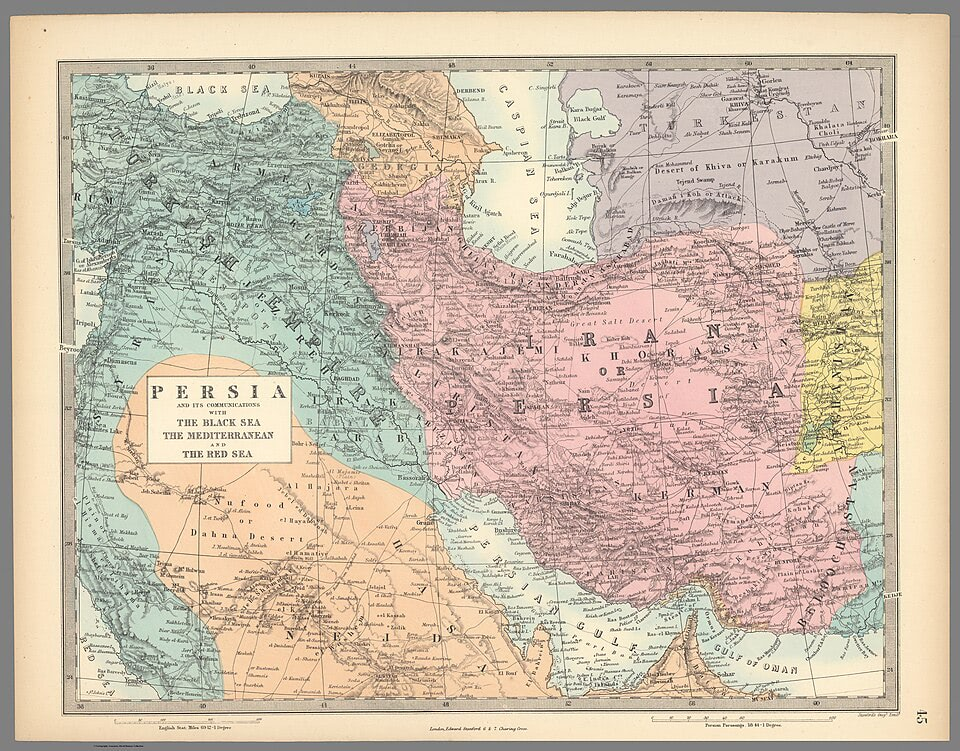
Long before the fanatic radical Islam of the Ayatollahs, long before the cold brutality of the Revolutionary Guards of present day Iran, there was the rich and deep Persian soul expressing itself over many thousands of years.
It is an astonishing heritage, including poetry, philosophy, mathematics, statesmanship, astronomy, art, craftsmanship, mime, and everyday culture that still lives in the soul of its peoples.
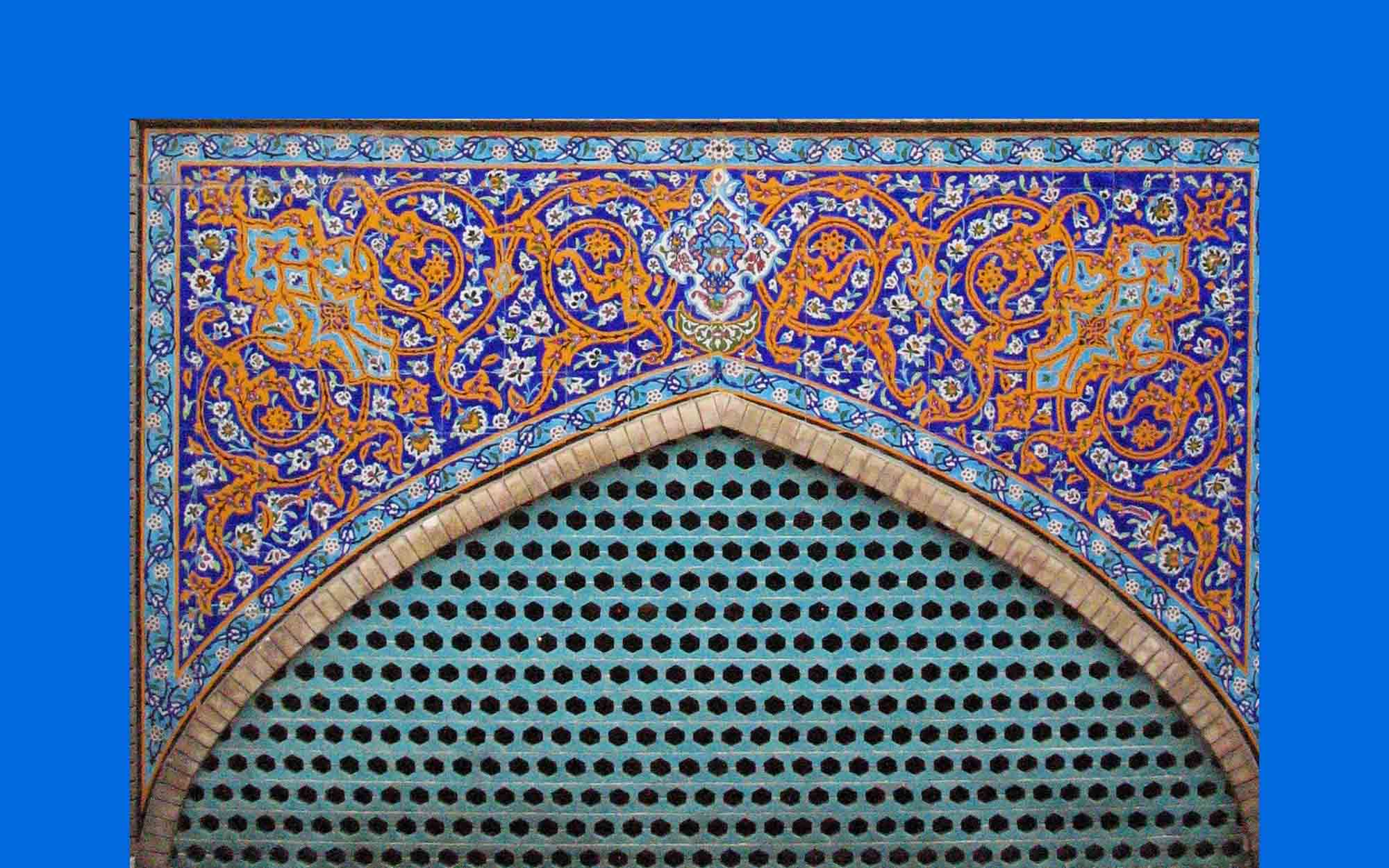
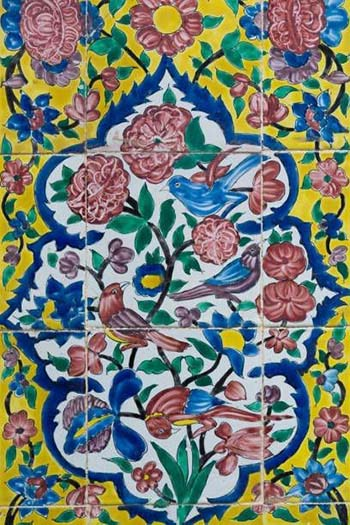
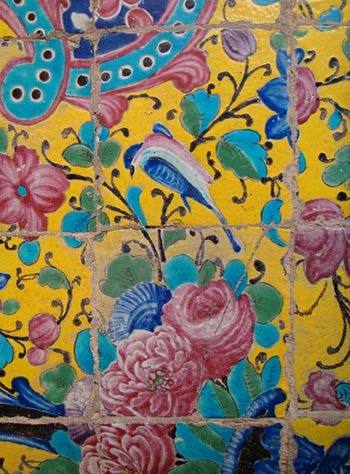
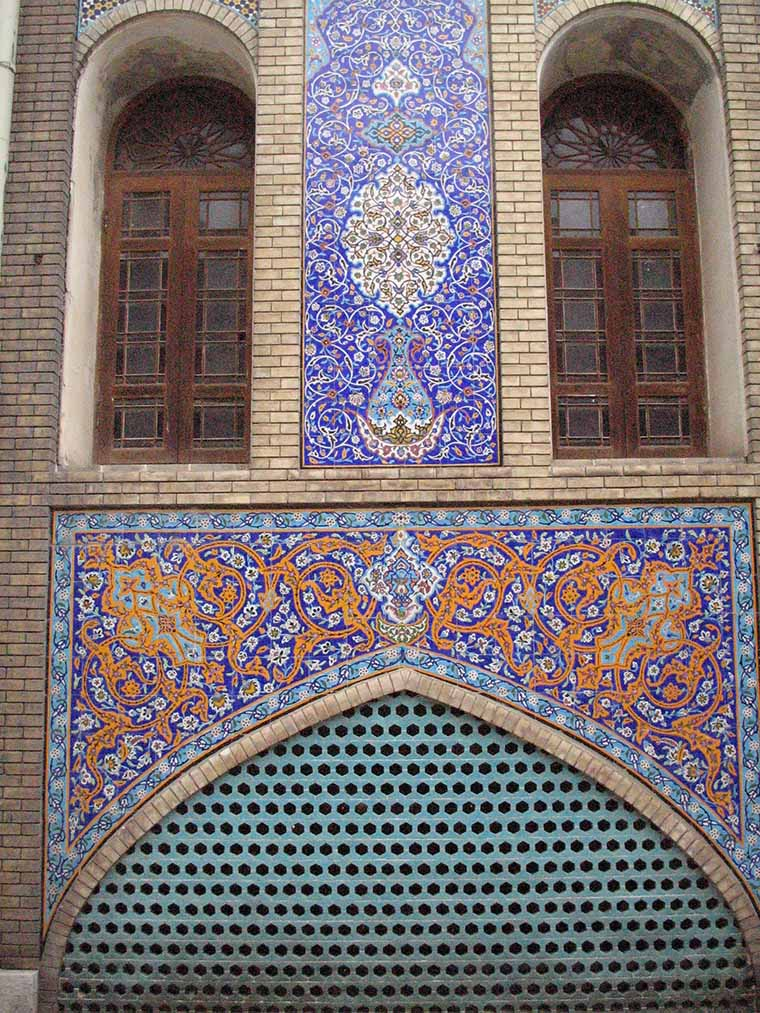
I am not talking about geopolitics, but I am talking about the storytelling of the Tales of one thousand and one nights, the poetry of Rumi, Hafez, Forugh Farrokhzad, the mathematical explorations of Al-Khwarizmi and the groundbreaking medical innovations of Avicenna. Not to forget the great town building and architecture of Babylon and Persepolis and the intricate design of Persian tiles and Persian carpets.
The Zoroastrian religion – an ancient monotheistic religion founded by the prophet Zoroaster/Zarathustra centered on the worship of the supreme deity Ahura Mazda., with the central moral principle of pursuing Good Thoughts, Good Words, and Good Deeds – influenced later Abrahamic faiths, including Judaism, Christianity, and Islam, in significant ways.
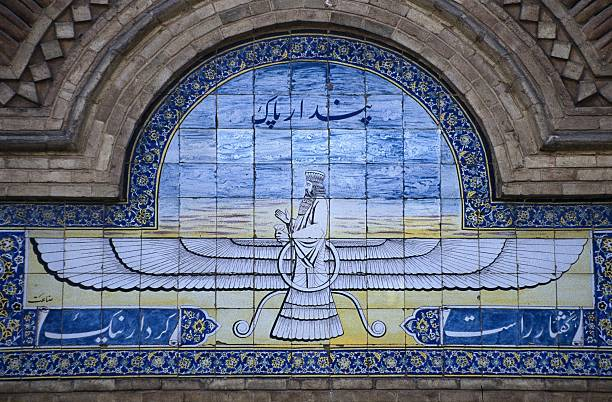
The Persian sphere spans thousands of years, originating with Indo-Iranian tribes in the 3rd millennium BCE and flourishing from the Achaemenid Empire (550 BCE) through to the end of the Sassanian era, which was the last pre-Islamic dynasty.
It ended with the Arab conquest in the 7th century AD.
Yet, Persian culture survived, influencing the broader Muslim world through its language, literature, philosophy, medicine, and administrative practices.
Iran, formerly Persia, is home to one of the world’s oldest continuous civilizations, with settlements dating back to 5000 BC.
Ancient Persia (c. 3000 BC – 651 AD)
- Early Civilizations: The Elamites formed early urban settlements in the southwest.
- Achaemenid Empire (550–330 BC): Founded by Cyrus the Great, this was the world’s first superpower, stretching from Greece to Pakistan.
- Parthians and Sasanians (247 BC – 651 AD): Following Alexander the Great’s conquest, Iran was reunified by the Parthians, followed by the powerful Sasanian Empire, which established Zoroastrianism as the state religion and cultivated a golden age.
Islamic and Medieval Era (651–1501)
- Arab Conquest (7th Century): Arab armies defeated the Sasanians, bringing Islam to the region.
- Persian Renaissance: Despite initial Arabic influence, Persian language and culture resurged during the “Iranian Intermezzo”.
- Mongol and Turkic Rule (13th–15th Century): Genghis Khan’s invasion devastated the region, but later, Ilkhanate rulers and Timurids adopted Persian culture.
Early Modern to Modern Persia (1501–1979)
- Safavid Dynasty (1501–1736): Reunified Iran, establishing Twelver Shia Islam as the official religion, separating Iran from its Sunni neighbors.
- Qajar Dynasty (1796–1925): Marked by shrinking territory and increased foreign intervention (Russian and British).
- Pahlavi Dynasty (1925–1979): Reza Khan (reigned 1925–1941) modernized the country and officially renamed it Iran in 1935.
- Mohammad Mosaddegh (1951-1953): Parliament elected Mohammad Mosaddegh as their prime minister, representing a coalition of nationalists and clerics who tried to nationalize the renamed Anglo-Iranian Oil Company and audit the books of western oil companies.
- Alarmed that Mosaddegh threatened western oil profits and was too close to the Soviet Union, the CIA and British intelligence MI-6 organized Operation Ajax, removing Mosaddegh from power by 1953.
- Ultimately a western consortium, led by British Petroleum, accelerated oil development in the country with profits overwhelmingly benefitting British and American companies, as well as the Shah and his family personally.
- Mohammad Reza Pahlavi (1953-1979): was backed by the 1953 US/UK-backed coup following the nationalization of oil.
The Islamic Republic (1979–Present)
- 1979 Revolution: A popular uprising, led by Ayatollah Khomeini, forced the Shah to flee, ending 2,500 years of monarchy.
- Iran-Iraq War (1980–1988): A devastating war that ended in a stalemate.
- Modern Era: Since 1989, Iran has been led by Supreme Leader Ali Khamenei, navigating international sanctions over its nuclear program.
- By 2026, Iran faced significant international tension, domestic protests, brutal repression of opposition voices and the youth.
What’s going on now is pretty ugly ….
… Check the News
~
I am not a specialist in any of those domains, nor do I want to present some exhausting overview of Persian cultural history – there is information on the internet in abundance for any of that.
I simply feel compelled to look beyond the fanaticism and the brutality of present regimes and its adversaries and remember that much of the rich tapestry of civilization has its roots in the regions that have been called Persia.
~
Here are some impressions that I get when I look into Persia’s soul.
.
. . .
.
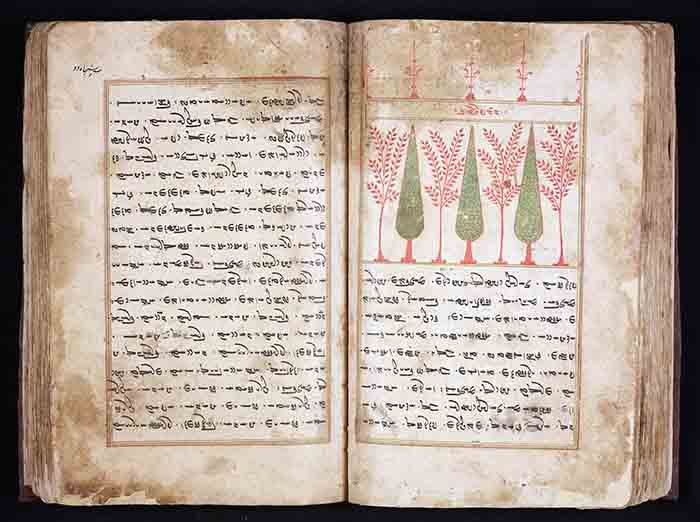
Old Zoroastrian Prayer
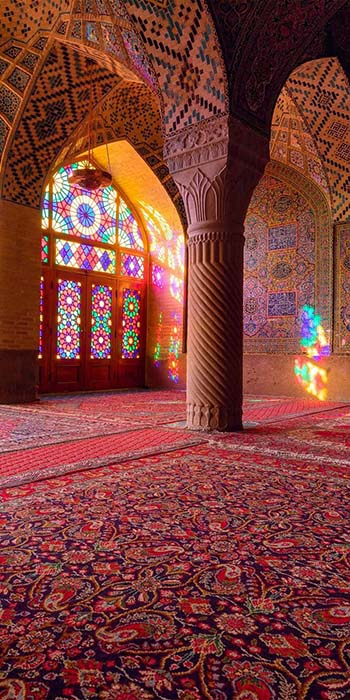
This Is Love
This is love: to fly toward a secret sky,
to cause a hundred veils to fall each moment.
First, to let go of live.
In the end, to take a step without feet;
to regard this world as invisible,
and to disregard what appears to be the self.
Heart, I said, what a gift it has been
to enter this circle of lovers,
to see beyond seeing itself,
to reach and feel within the breast.
Rumi
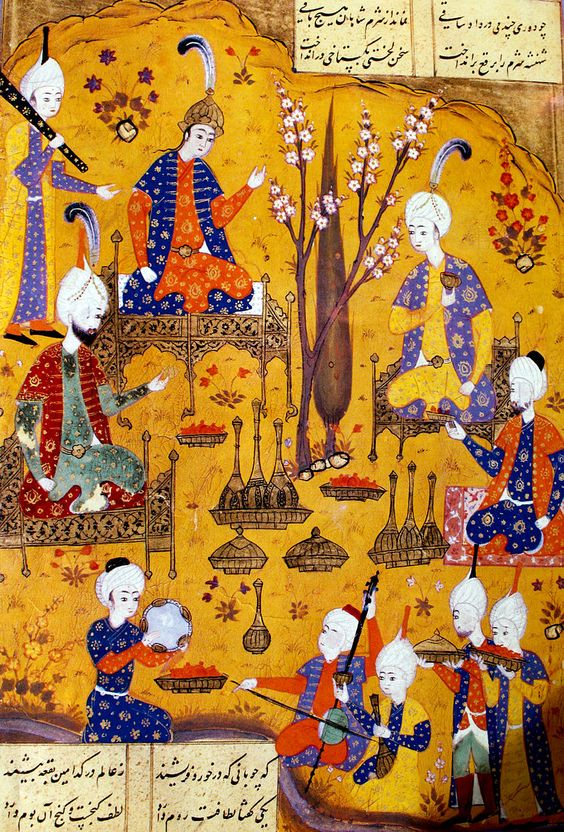
 All the hemispheres
Leave the familiar for a while.
Let your senses and bodies stretch out
Like a welcomed season
Onto the meadows and shores and hills.
Open up to the Roof.
Make a new water-mark on your excitement
And love.
Like a blooming night flower,
Bestow your vital fragrance of happiness
And giving
Upon our intimate assembly.
Change rooms in your mind for a day.
 All the hemispheres in existence
Lie beside an equator
In your heart.
Greet Yourself
In your thousand other forms
As you mount the hidden tide and travel
Back home.
All the hemispheres in heaven
Are sitting around a fire
Chatting
While stitching themselves together
Into the Great Circle inside of
You.
Hafiz – The Subject Tonight is Love
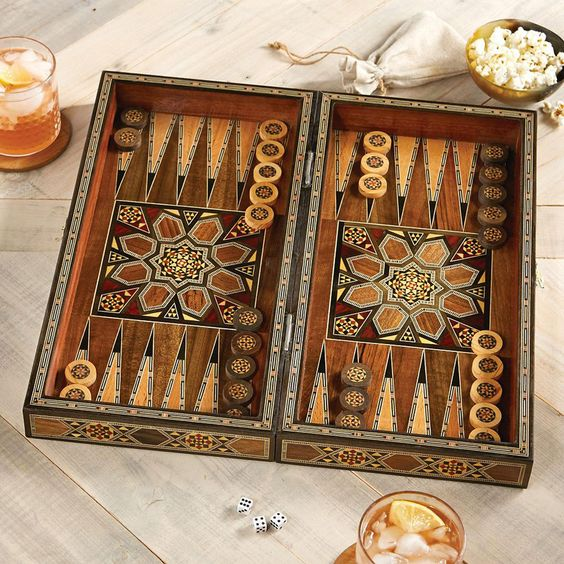
Backgammon has originated in ancient Persia around 3,000 BC
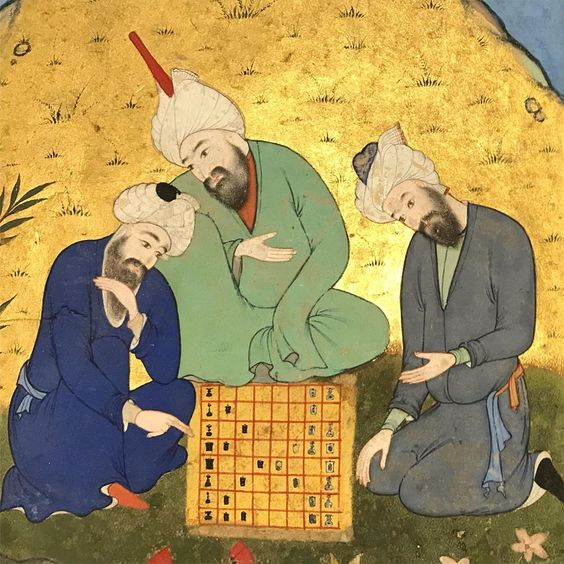
Chess spread from India to Persia in the 6th-7th century CE. Persians adopted it, and it became a popular part of noble education.
 Only Breath
Not Christian or Jew or Muslim, not Hindu
Buddhist, sufi, or zen. Not any religion
or cultural system. I am not from the East
or the West, not out of the ocean or up
from the ground, not natural or ethereal, not
composed of elements at all. I do not exist,
am not an entity in this world or in the next,
did not descend from Adam and Eve or any
origin story.
My place is placeless, a trace
of the traceless. Neither body or soul.
I belong to the beloved, have seen the two
worlds as one and that one call to and know,
first, last, outer, inner, only that
breath breathing human being.
Rumi
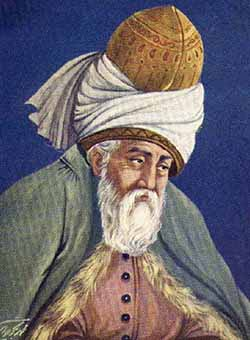 Out Beyond Ideas
Out beyond ideas of wrongdoing and rightdoing,
there is a field. I’ll meet you there.
When the soul lies down in that grass,
the world is too full to talk about.
Ideas, language, even the phrase each other
doesn’t make any sense.
Rumi
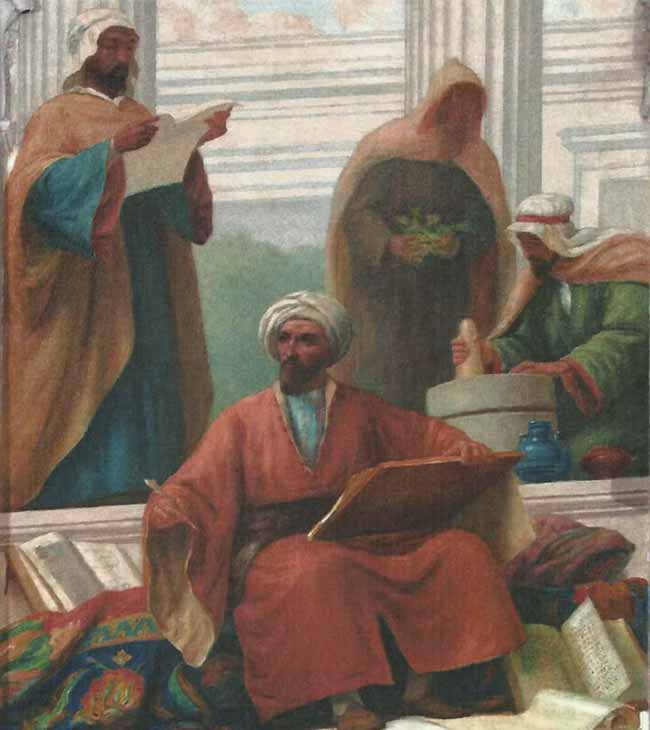
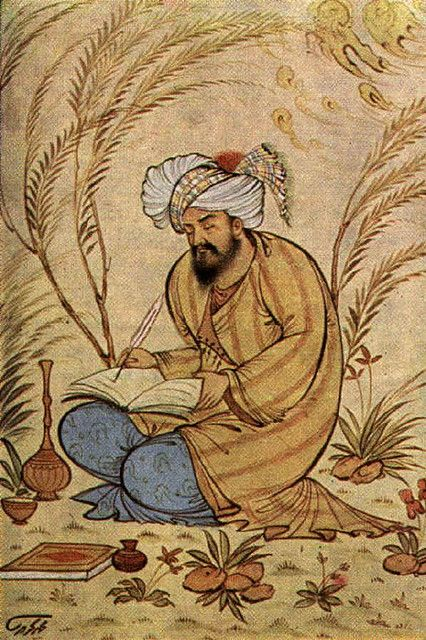
The Persian polymath Avicenna, who shaped much of modern science, medicine and philosophy
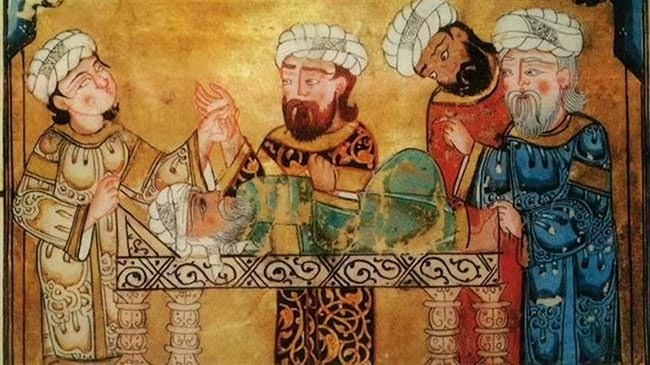
Ancient practice of Holistic Medicine
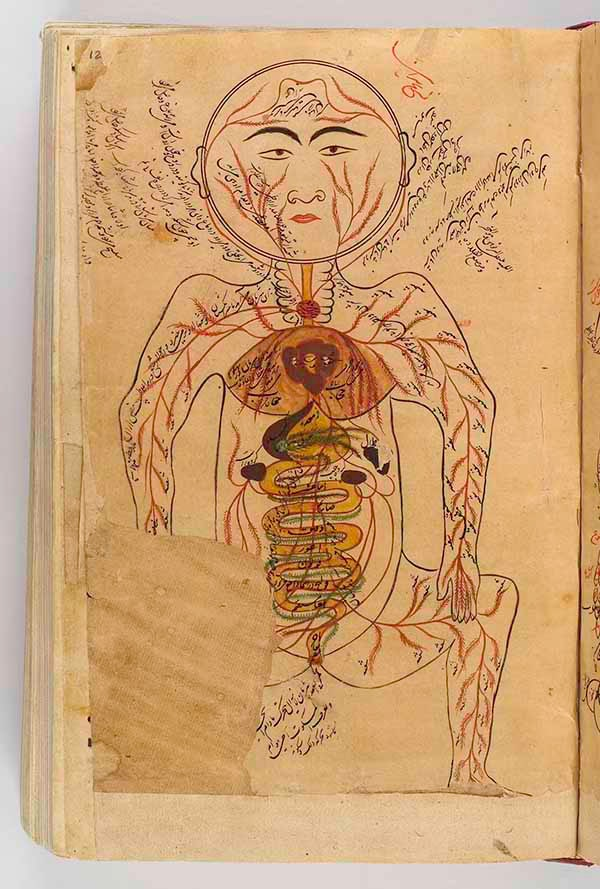
From Avicenna’s anatomical sketchbook
 I Have Learned So Much
I
Have
Learned
So much from God
That I can no longer
Call
Myself
A Christian, a Hindu, a Muslim,
a Buddhist, a Jew.
The Truth has shared so much of Itself
With me
That I can no longer call myself
A man, a woman, an angel,
Or even a pure
Soul.
Love has
Befriended Hafiz so completely
It has turned to ash
And freed
Me
Of every concept and image
my mind has ever known.
Haviz – ‘The Gift’
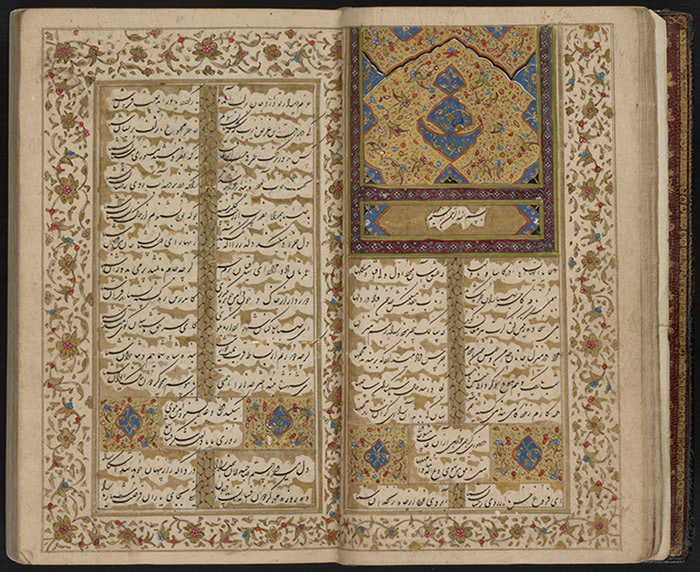
Classical Persian Poetry and Caligraphy
 I want to reach the heart of the earth.
My love lies in there, a place where seedlings turn green and roots meet one another and creation continues even in disintegration.
I think it has always been this way — in birth and then in death. I think my body is a temporary form.
I want to reach its essence. I want to hang my heart like a ripe fruit on every branch of every tree.
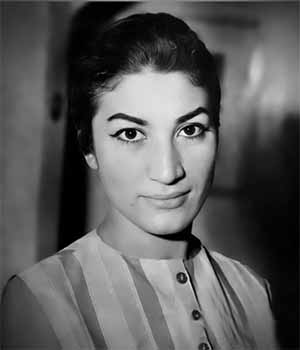
Forugh Farrokhzad – Iranian poet
Voice, Voice, Only Voice Remains
If they silence us,
We will paint the walls with menstrual blood.
If they snuff out the candle,
We will whisper in the dark.
If they tell us to forget,
We will articulate a future on our own terms.
If they cut off our tongues,
We will speak using gestures.
If they tie our hands and feet,
Our words will find wings.
If they burn our words,
We will have photographs and art to immortalize.
If they trap the birds and bury the flowers,
We will lie on the grass, look at the sky and count the stars.
If they snatch away the clouds and lock up the rain,
We will keep holding our umbrellas.
If they take our memories,
We will create another type of forgetfulness.
If they extinguish the spark that glows in us,
The fragrance of those ashes will blow in the wind and reignite us.
If we lose our voices because of them or our ownselves,
We will excavate the remains in the silence.
To protest, to sing, for solidarity, to resist, for joy, for sorrow, for life and death,
We will use our voices.
Our voices echoing down the broken, empty corridors
And up through the cracks in the rubble
For all time.
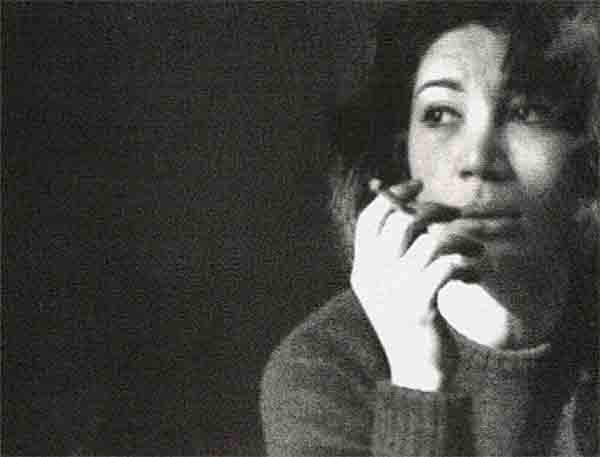
Forugh Farrokhzad – Female Iranian poet – died with 32
Farrokhzad’s feminist poetry was banned for a long time in Iran after the Islamic Revolution.
This article is inspired by her and dedicated to her.
.
. . .
.