Who am I
The silence and the teaching of Ramana Maharshi
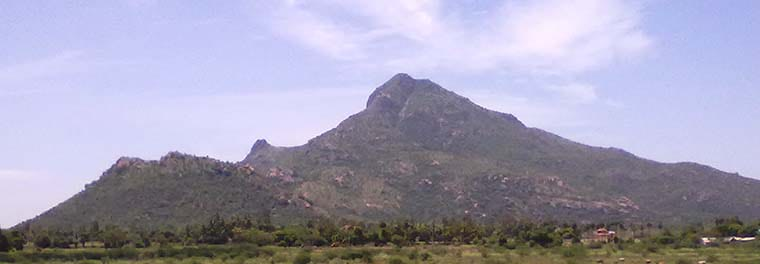
The mountain Arunachala in Tamil Nadu, southern India, has attracted saints and holy men and women for well over a thousand years.
Supposedly a hundred times older than the Himalayas, this mountain has a special place amongst the various sacred mountains of India. In Vedantic scriptures it has been declared to be a manifestation of Shiva himself.
There are many caves on the slopes of Arunachala that have been used by yogis and saints over the centuries.
Once when I was staying in Auroville / South India, I got inspired to travel to Tiruvannamalai and hike up Arunachala.
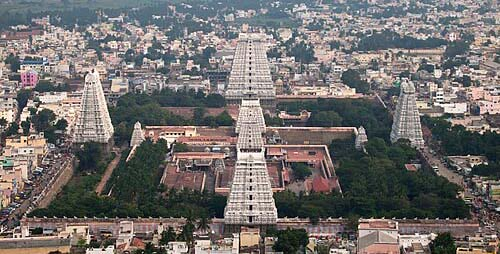
Together with a friend, we made the hot and grueling bus trip (Indian bus drivers = manic madmen) to the mountain and hiked up the hill – well, rather a nice, big mountain – to meditate in some of the many caves up there.
Unfortunately the place was overrun by people, pilgrims and Westerners, so it was not so very peaceful in the caves.
Before the trip I had been pretty skeptical about why I would even do this journey. But soon it became evident to me that the real reason had been to reconnect with Ramana Maharishi in a spiritual way, or even – by way of the exhausting ascent to the caves – in a physical way.
Ramana had been an important influence in my inner life long before this pilgrimage, mainly because of his “teaching in silence” as well as his main practice, the self-enquiry of “Who am I?”
This article shall be a humble introduction to Ramana Maharishi’s life and teaching.
.
. . .
.
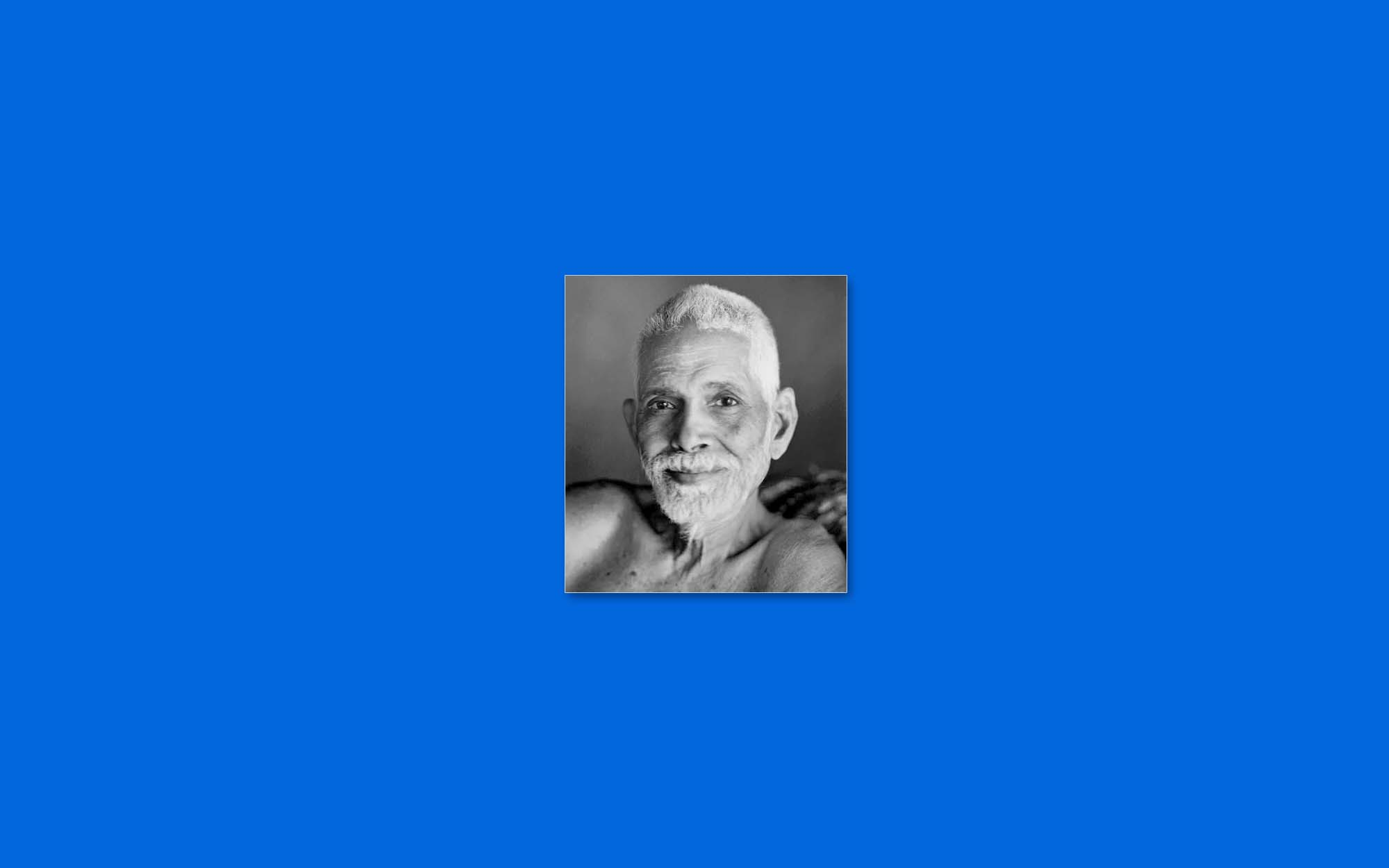
Ramana Maharishi
In 1896, a sixteen-year-old schoolboy walked out on his family and, driven by an inner compulsion, slowly made his way to Tiruvannamalai.
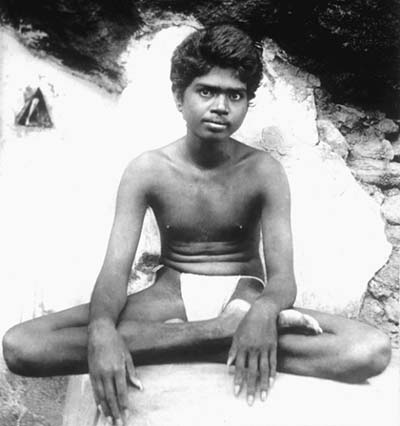 Prior to that, the young boy had attained a spontaneous state of enlightenment in his hometown of Madurai, located a few hundred kilometers south of Tiruvannamalai.
A spontaneous inquiry into his real nature had resulted in the complete and permanent dissolution of his sense of being an individual person.
It was replaced by a directly experienced knowledge that he was identical with an unmanifest substratum in which all the phenomena of the world appeared and disappeared.
On his arrival to Tiruvannamalai, he threw away all his money and belongings and abandoned himself to a recently discovered inner awareness of the divine that he felt to be the inner light of his own true being, a state that he later termed “Consciousness” or “The Self.”
Ramana’s experience and knowledge of who and what he truly was remained with him independently of whether his body was conscious, interacting with the world or in a state of deep sleep.
In spiritual terms, it could be said that he had realized the True Self. He had realized by direct experience that nothing could exist apart from an indivisible and universal consciousness, which is experienced in its unmanifest form as pure beingness or Mahat, meaning “pure awareness.”
In its manifest form, it is the appearance in consciousness of the universe.
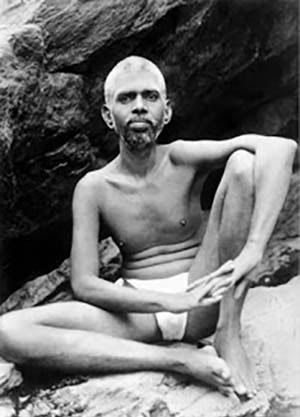 Normally the full recognition of this awareness is known only through spiritual practice or Grace after a long and difficult period of effort, but in his case, it happened spontaneously without any effort or desire on his part.
Ramana became oblivious to the needs of his body. After years of living like this in various temples and shrines in Tiruvannamalai, he began a slow return to physical normality, a process that was not completed for several years.
An ashram was eventually built around Sri Ramana by his devotees, so that it could accommodate a constantly growing number of visitors. To this day, they come from all over the world.
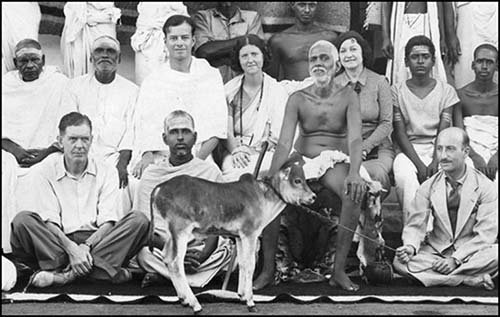
Sri Ramana spoke very little preferring instead to communicate the essence of his state through silence.
He knew from experience that if he simply remained absorbed in his own Self his own awareness those in his surrounding would – by a kind of osmosis – begin to experience that state for themselves.
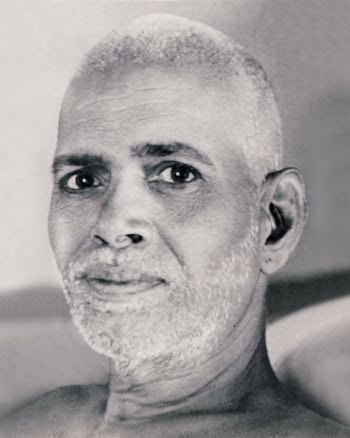 He was willing to give verbal answers to questions and hand out practical spiritual advice but he considered this to be inferior and indirect forms of transmission.
This silent flow of power represented his teachings in their most direct and concentrated form. He said that his verbal teaching were only given out to those who were unable to understand his Silence.
To those who wanted a verbal translation of his teachings at the highest level that could be expressed in words, he would say that consciousness alone exists – not as an individual experience, but as an underlying substratum in which all beings and physical phenomena appear and disappear.
He would say that the awareness of this truth is obscured by the self-limiting ideas of the ego mind. And if these ideas were abandoned, then the reality of consciousness would be revealed.
If people had a hard time understanding that spontaneously, he would prescribe a spiritual practice known as “self-enquiry.”
It was regarded as being the most distinctive and practical aspect of his teachings.
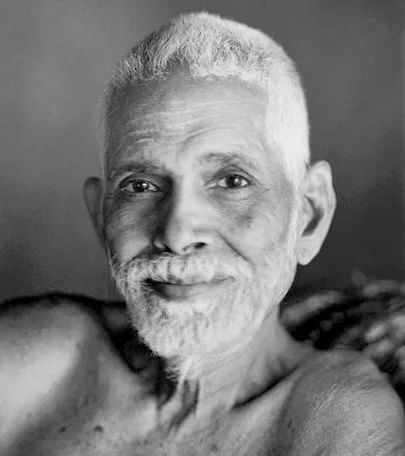
He taught that the idea that one is a separate egoic person can be challenged and eliminated by focusing exclusively on the sense of “I” that registers and coordinates all our activities. There is an “I” that believes it experiences all these things.
We are so identified and absorbed with what the “I” is experiencing and never look at or challenge the underlying “I” that has all these experiences and ideas.
A focus on the “I” and not on the things that “I” thinks about causes the sense of being a person to diminish, leaving a true knowledge of one’s self.
Becoming grounded in what remains when the individual person has vanished is known as self-realization or liberation.
Sri Ramana taught that this method of self-enquiry could and should be practiced in the midst of one’s ordinary everyday life.
He also advocated complete and unconditional surrender to the divine and said that these two methods, self-enquiry and self-surrender, were the two most effective methods for attaining liberation from suffering and the endless drama of perpetual reincarnation.
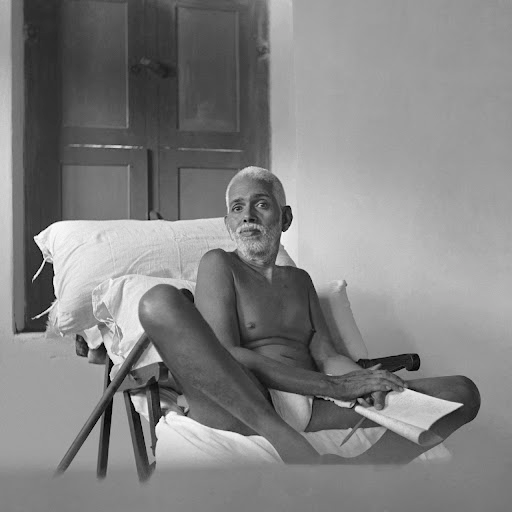
In just the same way that we project a dream world at night, Sri Ramana taught that the world we see in front of us is merely a projection of the one who sees it.
The projection manifests on the screen of consciousness, were we take it to be real and imagine that we too are in this world experiencing its dramas. In this self-created world we give ourself a script that determines our activities. We are unknowing actors in a drama who failed to realise that we are just following our own ordained script.
We are unable to recognise that we are the screen on which the action unfolds and falsely believe that we are one of the characters.
The source of the projection is the “I” that identifies with the body and then creates a false dream world to play and suffer in.
Enquiry into the nature and origin of this “I” stops the projection and establishes me in the state where I know myself to be the indivisible consciousness in which all creation appears and disappears.
This is true understanding – also called jnana – which is liberation from the illusion of being separate from the whole of existence.
.
. . .
.
Well, I guess thats it, my – somehow clumsy – reverence and description of Ramana Maharishi and his teaching.
The old Greek philosopher Plato taught a similar thing with his famous metaphor of the cave.
And I guess countless teachings of Vedanta and Nondualism have talked in many many words of the same thing that Ramana embodied and represented in his Silence.