
There are many things that interest me,
very many things indeed.
The Big Bang, for example,
and what has been before it.
Or what’s on the other side of a black hole.
Or what life is like on the 7th dimension.
Such things.
Or if Shambala really exists in the Altai Mountains.
Or, what consciousness is, beyond my conceptions of it.
What life on Earth will look like, seven generations from now.
Such things interest me very much.
But most of all I am interested – always been fascinated and attracted – by the lives of human beings who seem to be totally surrendered to the Divine.
We might call them mystics, saints, or holy people.
Those rare individuals are far beyond categorization, somehow very far beyond our everyday contemporary life. They may be revered religiously or ridiculed as nuts or frauds, but I guess rarely are they understood for what they are.
Embodied reminders of the Source, the Essence.
Home.
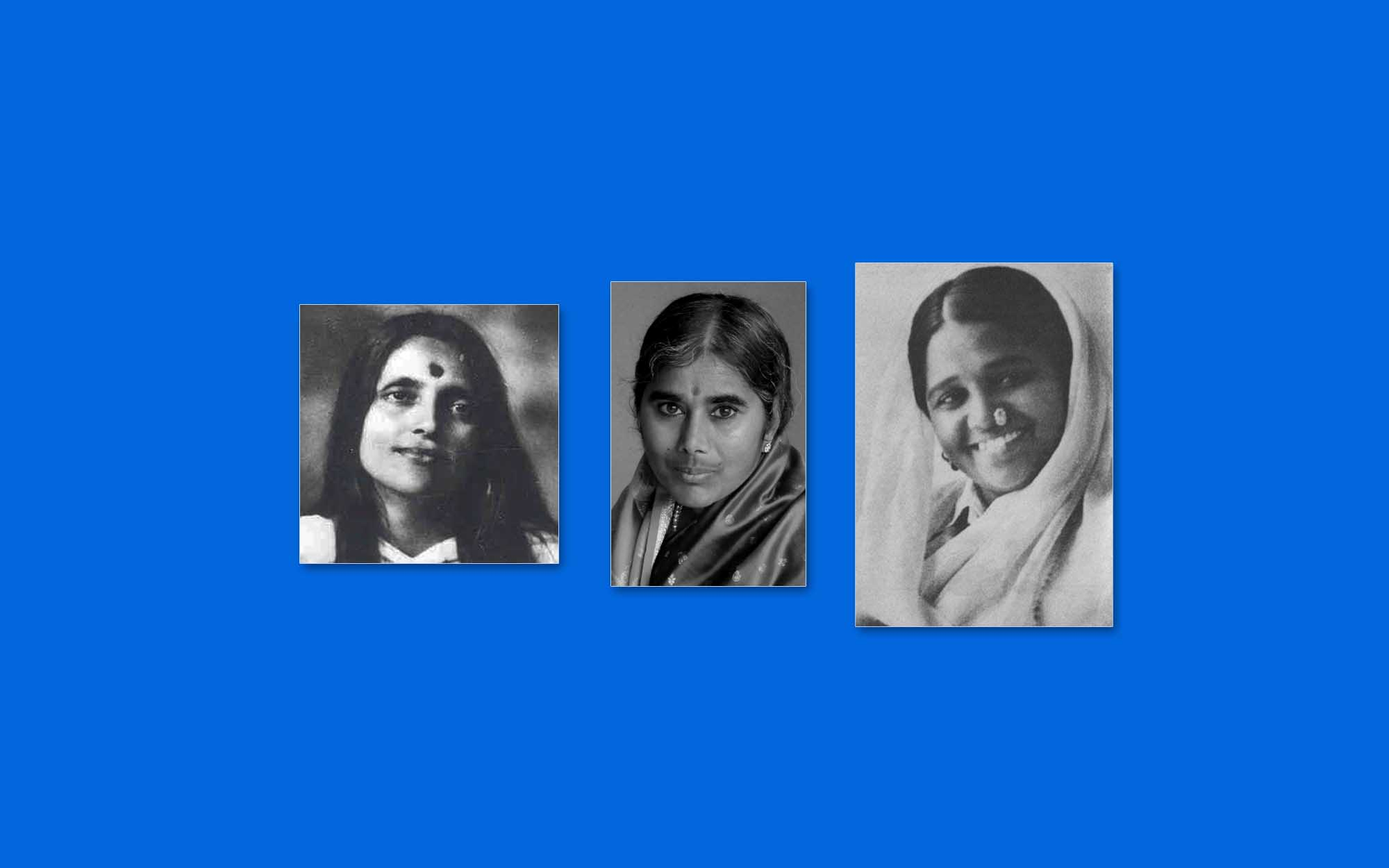
Here i would like to introduce a few of them. They are close to my heart.
.
. . .
.
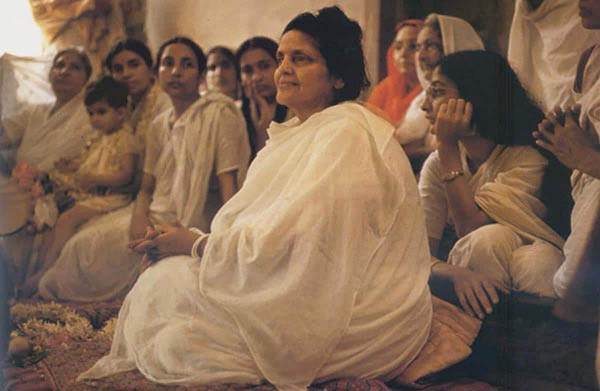
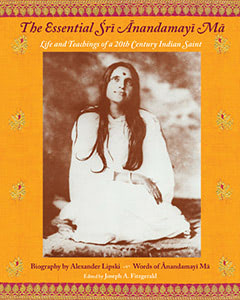
Anandamayi Ma
(1896–1982)
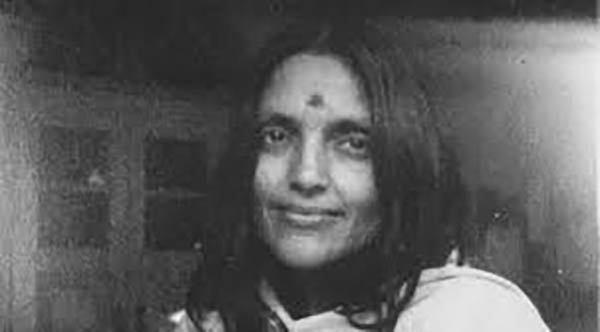
She was born Nirmala Sundari in a small Bengali village in what is now Bangladesh – into an orthodox Brahmin family of respected lineage but material poverty. Her father was a devotional Vaishnavite singer.
 At the age of two, attending kirtan at her uncle’s home, the child was overwhelmed by ecstasy in her mother’s lap. This was not performance, it was her nature – unlearned, unchosen, simply there.
 At thirteen, following village custom, she was married.
Her husband would eventually become her disciple – one of the rarest reversals in Indian society.
Their marriage remained celibate throughout their life. Whenever he approached her with desire, her body reportedly went limp or unconscious.
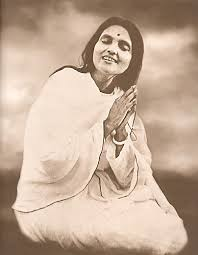 On a full moon night in August 1922, she enacted her own spiritual initiation – spontaneously performing complex ancient rites she had never studied, including yantra, yajna, and mantra.
She later said: “As the master I revealed the mantra; as the disciple I accepted it.”
No guru. No lineage. The transmission was from the Source inside her.
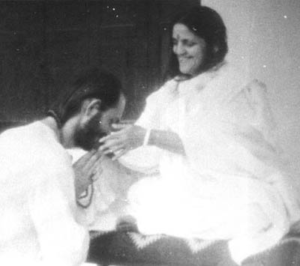 It was a disciple who first called her Anandamayi Ma – “Bliss Permeated Mother.”
The name stuck because it was simply accurate.
Anandamayi Ma wandered India for six decades. Her devotees ranged from prime ministers to renowned saints to humble villagers.
She refused to be called a guru, insisting “all paths are my paths” and welcoming seekers from every tradition – Hindu, Muslim, Christian, Buddhist, Sufi, Zoroastrian.
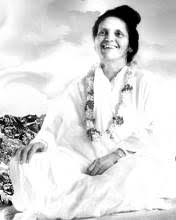 She wrote no books. Gave no formal initiations.
Her teachings emerged entirely in response to whoever stood before her – precise, playful, bold, yet deeply moving.
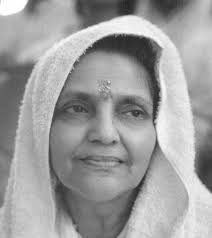 She died on August 27, 1982, and was buried on the banks of the Ganges near the Kankhal Ashram in Haridwar. Around 25 ashrams now bear her name across India and Bangladesh.
One of her most telling comments: *”My consciousness has never associated itself with this temporary body.”*
Perhaps that was simply true from the beginning. Nirmala arrived already elsewhere – and spent 86 years being gracious enough to stay. Being utterly surrendered to whatever was coming to her.
.
. . .
.
Mother Meera
(born 1960)
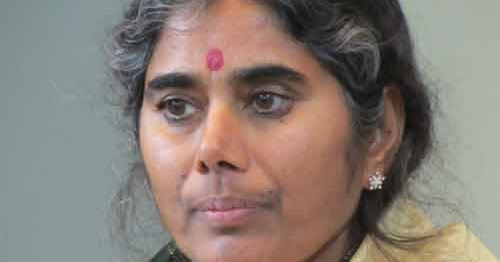
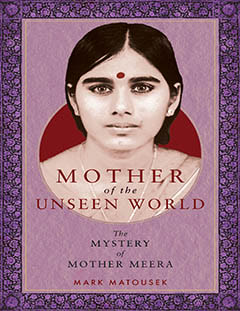
Meera – born Kamala Reddy – arrived in December 1960, in Chandepalle, a small farming village in what is now Telangana, India – born to parents with no particular religious practice, no spiritual ambitions for their daughter, no religious framework whatsoever for what was already living inside her. Which makes her story all the more striking.
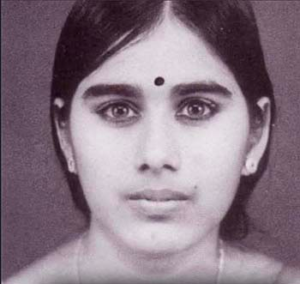
By age three, Kamala would retreat to “different lights” when she needed comfort. By six, she was entering extended samadhi states – profound absorptions that lasted hours.
No guru. No scripture. No living teacher, no religious philosophy, no special discipline. Just a child disappearing into something that apparently had no name in her household.
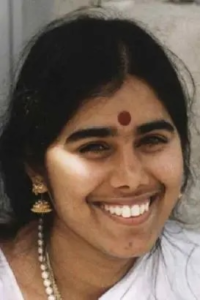 When she was twelve, her uncle visited for the first time and recognized the extraordinary spiritual nature of girl. He negotiated with her parents to take her under his care.
He became, in effect, her worldly guardian – the one who knew what she was before she had the language to say it.
In 1974, he brought thirteen-year-old Kamala to the Sri Aurobindo Ashram in Pondicherry, where she gave her first darshans and encountered Westerners for the first time.
The Aurobindian spiritual current – the descent of divine light into matter, the divinization of earth – clearly resonated with something she was already enacting.
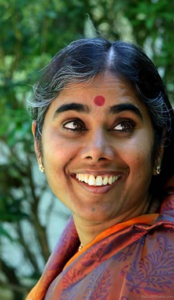 In 1979 she traveled to Montreal at the invitation of early Western followers, giving darshan to larger audiences. By 1982, she had settled in Germany, marrying a German man.
The trajectory is quietly unusual: a uneducated farming girl becomes a German householder receiving thousands of seekers in a converted castle in Germany.
Her darshan is conducted entirely in silence. She touches each visitor’s temples, then holds their gaze. No lectures. No initiation. No fees.
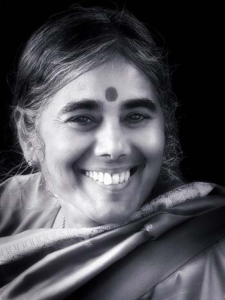 Her stated work: to bring down a light-force from the Supreme – what she calls Paramatman – to make spiritual progress on earth easier, like activating electricity that is already everywhere.
She does not claim to be a guru and refuses to position herself within any tradition, though her affinities with Aurobindo’s work are evident.
She continues to receive seekers at the Waldecker Hof near Balduinstein/Germany.
Quietly. In silence.
.
. . .
.
Sri Mātā Amritānandamayī Devi
known as Amma
(born 1953)
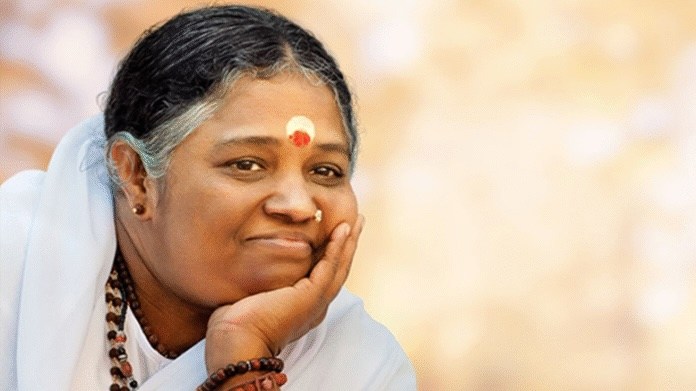
She was born in Parayakadavu – a small fishing village on the Kerala coast – the third of seven children in a family with no wealth and no particular spiritual orientation.
Her birth name, Sudhamani, means “ambrosial jewel”. Her parents gave her this name because, unlike other newborns, she arrived not crying but smiling.
She later said she remembered even birth as a familiar event – already knowing the world to be nothing but the play of Consciousness.
Her childhood was not gentle. As part of her household duties, she gathered food scraps from neighbors for the family’s cows – and in doing so, encountered the raw poverty and suffering of those around her.
She began giving these people food and clothing from her own home. Her family, themselves poor, scolded and punished her for it. That didn’t stop her.
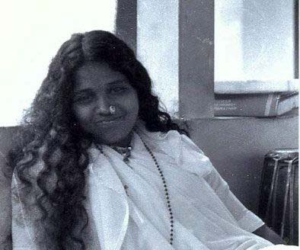 By age five she was composing hymns to Krishna. By her early teens, she was entering ecstatic states – dancing, weeping, losing body consciousness along the seashore – behaviors her family interpreted as mental illness.
Her elder brother eventually ordered her out of the house. She stayed outdoors, rain or sunshine, in states so absorbed that animals reportedly brought her food.
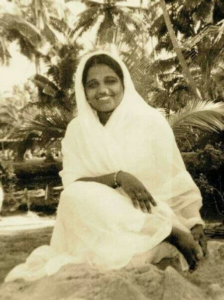 In September 1975, after months of intense longing, the Devi appeared to her and merged within her. From that point, the two streams – the personal Sudhamani and something far larger – ceased to be distinguishable.
She began holding people. Not as a formal practice, not as a received teaching – but simply because she felt compassion she could not contain, moving her to embrace anyone who came to her in suffering.
This spontaneous gesture became the form of her entire mission.
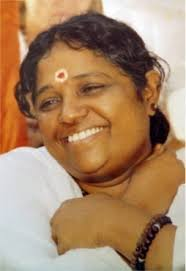 In 1981, spiritual seekers who had begun gathering at her parents’ property formalized their community into the Mātā Amritānandamayī Math – a worldwide foundation she has chaired ever since.
In 1987 she began annual world tours.
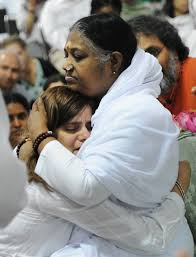 The scale of what followed is almost incomprehensible.
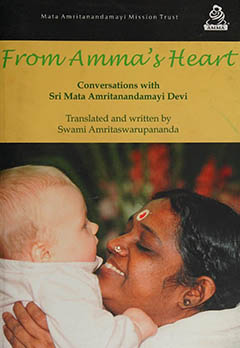
She has personally embraced over 40 million people – averaging two to three thousand hugs per day during tours, sometimes remaining in session for more than twenty hours without pause.
Each embrace typically lasts twenty seconds, during which she cradles the person’s head to her shoulder and whispers a personalized blessing.
And it is not only touch. Her organization provides ten million free meals annually in India, has built over 47,000 homes for the homeless, and operates hospitals, orphanages, schools, and disaster relief programs across 40 countries.
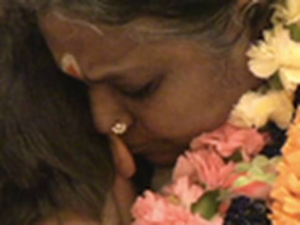 When asked about the hugging, she has said: “I don’t see if it is a man or a woman. I don’t see anyone different from my own self. A continuous stream of love flows from me to all of creation.”
That is the teaching.
Not a concept about unity – a demonstration of it, repeated forty million times.
.
. . .
.
Mirra Alfassa
known as The Mother
(1878–1973)
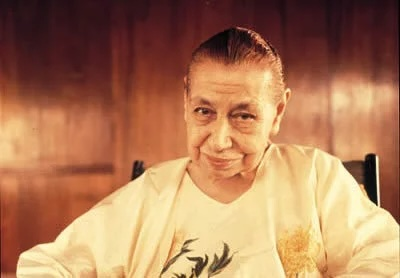
Mirra was born in 1878 to a Turkish banker father from Adrianople and an Egyptian mother from Cairo. Sephardic Jewish blood, Ottoman roots, French upbringing. A being of thresholds.
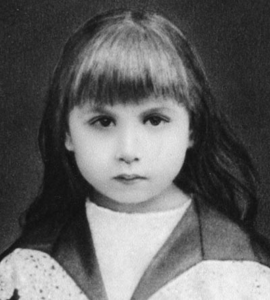 By age five, she had lost interest in worldly life and begun what she called her yoga.
Later she told ashram students: “I had to find it out all by myself. And I found it. I started at five.”
She became an accomplished painter, pianist, and writer – a student at the Académie Julian, fluent in the inner and outer worlds simultaneously.
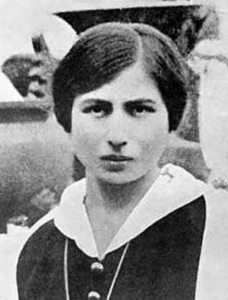 She studied occultism in Algeria, married twice, moved through Paris spiritual circles, and spent years constructing what she called a protective path between the terrestrial and other worlds.
All of this – the marriages, the esoteric training, the art – was preparation for meeting her “inner teacher” who she had seen in her dreams.
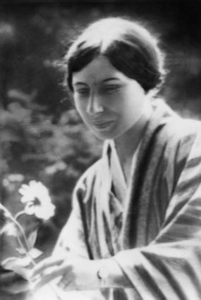 In 1914 she sailed to Pondicherry, India. The moment she met Sri Aurobindo, she recognized him as the figure who had guided her spiritual development for years in her inner visions – the dark Asiatic presence she had called “Krishna.”
She had to leave again because of the First World War, then years in Japan.
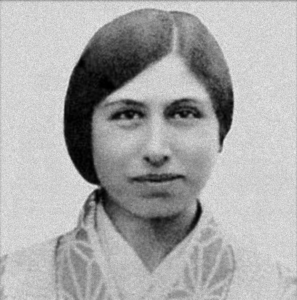 In 1920 she returned to Pondicherry and never left again.
What followed for the next fifty-three years is too much to tell here. Sri Aurobindo considered her his equal in yogic stature and entrusted the Pondicherry ashram’s full spiritual and material charge to her.
She was managing hundreds of people, mediating between the mundane and the supramental, absorbing everything.
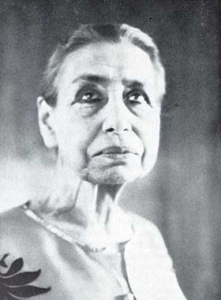 After Aurobindo’s death in 1950 she continued his inner work alone. Both she and Aurobindo had worked toward the manifestation of a consciousness beyond mind – what he called the Supramental.
She did not abandon this project at his death. She was attempting the transformation of her own physical body as the proving ground.
In 1968 she founded Auroville – an international township for peace, spirituality, and harmony – which hundreds came from around the world to inhabit.
Mirra never framed surrender to the Divine as dissolution. She framed it as the hardest possible work. Not merging into the light and disappearing.
But bringing the light all the way down, into the cells, into matter, into the most resistant and reluctant substance of existence.
She died on 17 November 1973, age ninety-five.
Still working on the consciousness of the cells.
.
. . .
.
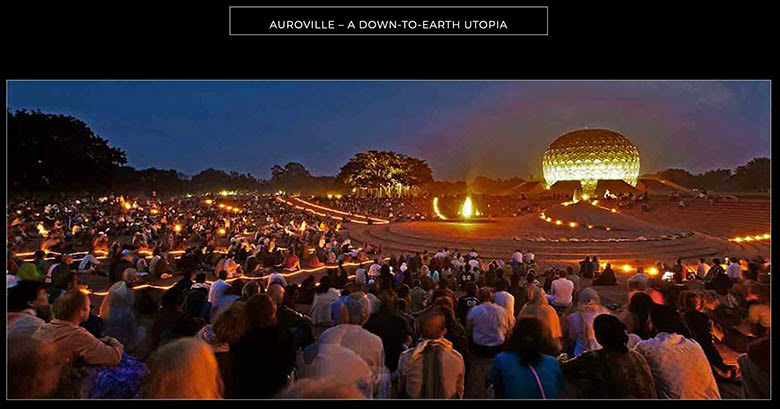
Auroville – a down-to-earth utopia
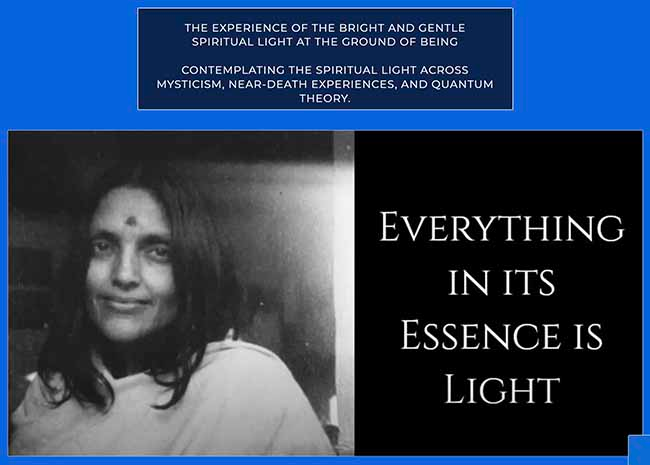
Everything in its essence is light